









Home Blog

Experts urge caution over study linking paracetamol use in pregnancy to reproductive changes

0

Women who used paracetamol during pregnancy have been urged not to panic following a new Danish study that found possible changes in the reproductive organs of baby girls exposed to the medicine before birth.

The study found that exposed girls had smaller ovaries and wombs, fewer ovarian follicles and lower levels of reproductive hormones. However, researchers stressed that the findings do not prove that paracetamol causes fertility problems later in life.

The research involved 302 three-month-old girls whose mothers had been monitored during pregnancy. A separate group of 1,210 girls was also assessed as part of a confirmatory study.

Researchers found that girls exposed to paracetamol during early foetal development had, on average, 40 per cent smaller ovarian volume, while uterine volume was 13 per cent smaller. Some exposure periods were also associated with fewer ovarian follicles.

Lead researcher Dr Margit Bistrup Fischer said it remains unknown whether the differences could affect fertility or the age at which the girls eventually reach menopause.

“Women who have used paracetamol during pregnancy should not be alarmed by our findings,” Fischer said.

She added that long-term follow-up would be necessary to determine whether the changes observed in infancy have any implications for reproductive health later in life.

British scientists have also urged caution, noting that the observational nature of the study means it cannot establish a cause-and-effect relationship.

Paracetamol remains widely used during pregnancy and is generally considered a first-choice treatment for pain and fever when used as directed.

Lagat urges 1,273 new GSU officers to stay ready for challenging assignments

0

Deputy Inspector General of Police Eliud Lagat has urged 1,273 newly trained General Service Unit (GSU) officers to remain prepared for challenging assignments as they begin their service in different parts of the country.

Speaking during the closure of their training at the National Police College–Magadi Field Campus in Kajiado County, Lagat said the rigorous conditions at the camp were intended to build the physical and mental resilience required in police operations.

“You must be ready to serve where you are deployed, whenever you are called upon and whatever the circumstances,” Lagat said.

He said the training exposed the officers to demanding conditions, including intense heat and rugged terrain, while equipping them with skills in survival, discipline, teamwork and the use of technology in modern policing.

Lagat said the additional officers would strengthen the National Police Service’s ability to respond to banditry, criminal activities and other emerging security threats.

He cited ongoing security operations in the Kerio Valley, which he said had achieved an estimated 80 per cent success rate in the fight against banditry.

The officers are also expected to support security operations during the October-to-December rainy season and preparations for the 2027 General Election.

Lagat said police personnel would be deployed to 18 counties identified as hotspots during the anticipated El Niño rains, requiring officers to operate in diverse and challenging environments.

He urged the recruits to maintain discipline and professionalism while respecting the people they serve.

“Stand firm. Stay disciplined. Be fair. Be humane. Serve with courage,” he said.

The officers are scheduled to take part in their formal passing-out parade on September 18 before joining the wider National Police Service.

Digital literacy lights up Samburu as county expands ICT training to beat pastoral marginalization

0

MARALAL — Residents of Samburu County, especially youth and teachers, have started benefiting from digital literacy training through a partnership between the county government and non-governmental organizations. The program aims to equip pastoralist communities with skills to use technology and the internet for learning, work and daily activities, ensuring they are not left behind in a digital world.

Speaking in Maralal, County ICT Officer Jonathan Lengolooni said training has already started, with youth in Samburu Central benefiting from online courses. He said the program will be expanded to all three sub-counties and that efforts are underway to strengthen ICT training centers to reduce travel distances.

According to Lengolooni, an ICT training lab built in Samburu East is ready for use by students and residents seeking computer and internet skills to support education and job search.

County Education Officer Husein Gufu said digital skills are critical for education, enabling teachers to improve delivery and learners to access online resources. He said the CBC system will also benefit as students need digital competence for 21st century learning and employment.

However, the officials warned of challenges including poor internet connectivity and lack of electricity in parts of the county, which hampers learners and teachers in remote areas. They also noted that some devices supplied to schools by the Ministry of Education in 2016 are no longer functional and await repair.

Despite challenges, youth are already using skills gained at ICT centers to search for jobs, learn online and run income-generating activities without leaving their localities.

The initiative is seen as part of efforts to include pastoralist communities in national technological advancement, with hopes that expansion of ICT centers and training will make technology part of daily life for teachers, students and youth in Samburu as a tool for education and economic empowerment.

Mandera prepares for heavy OND rains as residents warned to move from flood prone areas

0

Mandera County has stepped up preparations for heavy rains expected between October and December, with authorities warning that the rainfall could be as intense as the 1997 El Niño rains.

The Director of the National Disaster Operations Centre (NDOC), Colonel (Rtd) David Samoei, is in Mandera to assess the county’s preparedness and coordinate measures to mitigate the potential impact of the rains.

Samoei has urged residents living in flood-prone areas to move to safer locations before the rains intensify.

“We ask the citizens to prepare themselves by moving away from areas where floodwaters will pass so they are not swept away by the water,” Samoei said.

The expected rains could also disrupt transport, particularly along the Mandera–Wajir–Garissa–Isiolo road, which could become impassable due to flooding. Such disruptions could affect the movement of food, medicine, fuel and other essential supplies.

Business operators in Mandera have therefore been urged to stock essential food and other supplies early, before roads become difficult to use.

Authorities are also assessing the potential impact on fuel and electricity supplies if heavy rains disrupt transportation. Mandera town consumes approximately 15,000 litres of fuel every day, equivalent to about 450,000 litres per month.

The county currently has storage capacity of about 200,000 litres, while another facility with a capacity of 500,000 litres is under development.

The national government has started pre-positioning food and medical supplies, while the Mandera County Government is also preparing medicines and other emergency response supplies.

The county has further appealed for additional support, including food rations, non-food items and veterinary drugs for vulnerable households and pastoralist communities.

Samoei has stressed the need for residents to take the rainfall forecast seriously, noting that early preparation will be critical in reducing the impact on communities, livestock, roads and essential services.

Mandera has also adopted a Participatory Scenario Planning (PSP) process to help communities and authorities plan early for possible impacts and coordinate preparedness and response measures.

Elderly herder injured in North Horr cattle raid days after peace meeting

0

MARSABIT — An elderly herder from Qorqa Village is nursing serious injuries following a violent cattle rustling attack by suspected militia at Gara Matakaraa, near El Elema Magado in Charigollo Sub-location. The Thursday evening ambush highlights fragile security in North Horr Ward, occurring mere days after regional communities signed a landmark peace agreement.

Marsabit County Police Commander Leonard Kimaiyo confirmed the incident, stating that the attack was officially reported at the North Horr Police Station. In response, a Directorate of Criminal Investigations (DCI) vehicle was dispatched to rescue the victim and secure the area.

North Horr Ward MCA Tura Ruru Elema noted that this marks the third raid in Charigollo within a single month, following previous attacks at Sinafur Wells and Wanno Wells. While security agencies had previously advised local herders to withdraw from high-risk zones to prevent conflict, those warnings went unheeded.

“I am appealing to security agencies to act swiftly, investigate the attack, protect lives and livelihoods, enforce resolutions reached during the peace meeting, and prevent further violence,” Elema said.

The raid deals a swift blow to recent diplomatic efforts. Just twenty-four hours prior, Gabra and Turkana communities had convened for a peace summit organized by security agencies, local peace committees, and herders from Loiyangalani and North Horr, with support from Caritas Marsabit.

During the summit, both communities agreed to a total ceasefire, joint management of grazing committees, and unified action against armed militias operating along shared borders. Caritas Marsabit reaffirmed its ongoing commitment to supporting these community-led peace initiatives.

Residents now fear that unchecked militia activity could plunge the region into a broader inter-communal crisis. Community elders and peace committees are calling on national security teams to immediately flush out armed groups hiding in neighboring areas to uphold the peace pact and prevent retaliatory violence.

Marsabit Truck drivers lead green drive to beautify town and combat climate change

0

MARSABIT — In a boost to local environmental conservation, the Marsabit Truck Drivers Association (MTDA), in collaboration with the Marsabit Municipality, has planted 55 tree seedlings and over 300 flowers along the median of the busy Marsabit-Moyale highway. The joint initiative aims to beautify Marsabit town, enhance local air quality, restore regional biodiversity, and mitigate the growing impacts of climate change.

MTDA Secretary Shukri Ibrahim highlighted the crucial role trees play in buffering the region against severe weather cycles, including recurrent droughts and flash floods. Calling on government bodies and local stakeholders to join the movement, Ibrahim emphasized that environmental stewardship requires a unified front and active youth education to safeguard public green spaces.

Marsabit Municipal Manager Boru Golicha praised the initiative, noting that it directly aligns with Governor Mohamud Ali’s broader vision for sustainable urban development and an improved quality of life. Golicha urged residents to take advantage of the upcoming short rains to set up tree nurseries and plant both shade and fruit-bearing trees, such as mangoes and avocados, to strengthen local food security alongside beautification efforts.

Addressing urban management challenges, Golicha issued a firm warning against illegal waste dumping, which frequently clogs drainage channels and worsens flood risks. He reiterated that the municipality will strictly enforce environmental cleanliness standards to protect public investments in urban infrastructure.

Local faith leaders also lent their voices to the campaign, urging collective community responsibility to restore forest cover in the semi-arid county. Anglican Church of Kenya (Diocese of Marsabit) priest Canon Kargi Denge emphasized the mental and physical health benefits of green spaces, while advising residents in high-risk, steep-slope areas to relocate ahead of expected El Niño rains in mid-October.

Echoing these concerns, Sheikh Abdullah Ali warned that environmental degradation negatively impacts natural water resources and river flows across the county. He called on every resident to take personal accountability for nature, stressing that unchecked environmental damage leaves the entire community vulnerable to natural disasters.

12,000 litres of illicit brew destroyed in massive Marsabit crackdown

0

MARSABIT — A multi-agency security team destroyed approximately 12,000 litres of illicit alcohol on Thursday, September 10, 2026, during a major raid on brewing dens in Manyatta Daba Village, Jirime Location, within Saku Constituency, Marsabit Central Sub-County.

The joint operation comprised officers from the National Police Service (NPS), National Government Administrative Officers (NGAO), the National Authority for the Campaign Against Alcohol and Drug Abuse (NACADA), and the Directorate of Criminal Investigations (DCI).

Officers uncovered a major illicit brewing den and immediately destroyed 12,000 litres of Kangara, along with an assortment of brewing apparatus. In total, authorities recovered and destroyed about 600 containers, each with a capacity of 20 litres filled with Kangara and Chang’aa. The suspects involved in the production and storage fled the scene shortly before security personnel arrived.

The raid was spearheaded by the NACADA Marsabit County Coordination Office under County Coordinator Mohamed Wako, alongside Marsabit Central OCPD Beethoven Gachago and Senior Chief Enock Kallo, acting directly on information provided by local residents. NACADA confirmed that the operation forms part of the ongoing 100 Days Rapid Results Initiative (RRI), directed by President William Ruto through the Ministry of Interior. Wako noted that the multi-agency strategy deals a major blow to illegal alcohol production in Marsabit Central, aiming to protect young people and shield communities from the severe social and health consequences of alcohol abuse.

Authorities in Marsabit Central have escalated these enforcement actions following rising community concerns linking illicit alcohol to school dropouts, family disputes, and loss of life. The National Police Service praised members of the public for their vigilance and intelligence sharing, while NACADA commended NGAO and NPS for their continued collaboration. Security agencies have affirmed that crackdowns against illicit alcohol and substance abuse will continue across Marsabit County.

Un Warns South Sudan Elections could trigger fresh violence

0

South Sudan’s planned December elections could increase the risk of renewed violence if they are held without an open and inclusive political environment and adequate safeguards for voters, the United Nations Commission on Human Rights in South Sudan has warned.

The warning follows the Commission’s latest fact-finding mission to the country, its 14th visit in a decade. The independent investigators said renewed violence, political tensions, shrinking civic space, corruption and a lack of accountability continue to threaten civilians and South Sudan’s political transition.

During the four-day mission, the Commission met government officials, political and security representatives, civil society groups and other stakeholders. Chairperson Yasmin Sooka also travelled to Jonglei State, where she met survivors of recent fighting.

Survivors described killings, sexual violence, displacement and separation from family members. Some also reported a lack of medical, psychosocial and other essential support.

Sooka said civilians continue to bear the consequences of violence and insecurity, while political and security authorities have failed to adequately address the situation.

“The human cost continues to grow. South Sudanese people deserve better than to have their lives shaped by recurring cycles of violence and uncertainty,” Sooka said.

The Commission also raised concerns over attacks on civilians, displacement, disruption of humanitarian operations and increasing risks faced by aid workers.

It called on authorities to urgently protect civilians, ensure humanitarian assistance reaches those in need and create conditions for genuine and inclusive political dialogue ahead of the elections.

Commissioner Barney Afako said implementation of the 2018 Revitalised Peace Agreement has stalled but remains essential to achieving a peaceful and democratic South Sudan.

“Even as the country heads for elections, political and civic space has narrowed, while many of the safeguards and conditions for peaceful and credible polls are still missing,” Afako said.

He said South Sudanese have the right to vote, but that right must be protected by ensuring citizens can participate freely, candidates can compete fairly and electoral disputes can be resolved through credible legal processes.

The Commission has called for broader political dialogue involving the Sudan People’s Liberation Movement-in-Opposition (SPLM-IO), led by Riek Machar, other holdout groups, civil society, women and young people.

The investigators also highlighted corruption as a major obstacle to peace and security, saying the diversion and misuse of public resources continue to undermine human rights.

The Commission further expressed alarm over a recent attack on a UN Mission in South Sudan (UNMISS) patrol in Jonglei that killed two peacekeepers and injured others. It called for an investigation and accountability for those responsible.

South Sudan gained independence from Sudan in July 2011 but descended into civil war in 2013 following a power struggle between President Salva Kiir and his then-deputy Riek Machar. Fighting has continued despite the 2018 peace agreement.

TERROR ON ETHIOPIA’S ROADS: More than 8 truck Drivers abducted, fuel tankers torched

0

Ethiopia’s commercial transport sector is facing renewed security concerns after an armed attack in the Oromia Region reportedly saw more than eight heavy truck drivers abducted and several fuel tankers set ablaze.

The attack reportedly took place on September 6 in Gimbi, West Wellega Zone, as the trucks travelled towards Assosa. According to the Ethiopian Heavy Truck Drivers Association (EHTDA), the trucks were carrying diesel from Berbera to Assosa.

The association received information about the attack from a driver who managed to escape. However, EHTDA General Manager Solomon Zewdu said the association has since been unable to contact the driver and has not established his whereabouts or condition.

According to an anonymous source familiar with the incident, 15 trucks were travelling together when one stopped because of a technical problem. The remaining 14 trucks continued along the route before reportedly coming under attack by armed men.

The attackers allegedly opened fire on the trucks, set several of them ablaze and abducted more than eight drivers. The attackers are also reported to have demanded ransom for the release of the abducted drivers.

Some of the trucks reportedly belonged to prominent Ethiopian businessman Belayneh Kinde.

Footage circulating on social media and purportedly showing the aftermath of the incident appears to show several fuel tankers engulfed in flames.

Solomon said the association immediately notified the relevant government authorities, who are monitoring the situation.

“Currently, the area is calm,” Solomon said, adding that the association had not received information about the whereabouts or condition of the abducted drivers.

He said heavy truck drivers in Ethiopia continue to face robbery, killings, harassment, abductions and other security threats, particularly in parts of Oromia.

The association has previously requested government assistance in areas considered particularly dangerous, including security escorts and convoys accompanied by federal police.

The latest attack came days after another heavy truck driver was reportedly shot dead on August 31 in Kolo Meshecha, Eastern Gojjam Zone of the Amhara Region.

The incident reportedly occurred along the road between Mota and Adet, a route used by commercial vehicles transporting goods and supplies. Solomon said he had not received confirmation that the driver killed in Eastern Gojjam was a member of the association.

Despite the continuing incidents, Solomon said attacks targeting heavy truck drivers have decreased this year compared with the previous year.

“We appreciate the decrease, but we need the attacks and violence against drivers to stop completely,” he said.

He called on the government, communities and the media to work together to protect truck drivers, saying their safety is a shared responsibility.

The EHTDA has more than 4,500 members and has continued to engage the federal government over security threats facing drivers. In areas considered particularly dangerous, the association has sought security escorts and police-accompanied convoys.

The latest incident adds to a wider pattern of insecurity affecting Ethiopia’s commercial transport sector, with drivers previously reporting armed robberies, kidnappings, extortion, destruction of vehicles and threats to their lives along several major transport corridors.

The West Wellega–Assosa route has previously been identified as one of the areas where truck drivers have faced repeated security threats.

Kindiki pledges major dual carriageway across Mt Kenya East

0

Deputy President Kithure Kindiki says the government is planning a major dual carriageway linking key towns in Mt Kenya East, in a move expected to boost trade and transport across the region.

Kindiki said the proposed road will run from Makutano through Mwea, Embu, Chuka, Meru and Maua, following the completion of the Rironi-Mau Summit Road.

He said the project would provide a major economic boost to residents and businesses along the corridor.

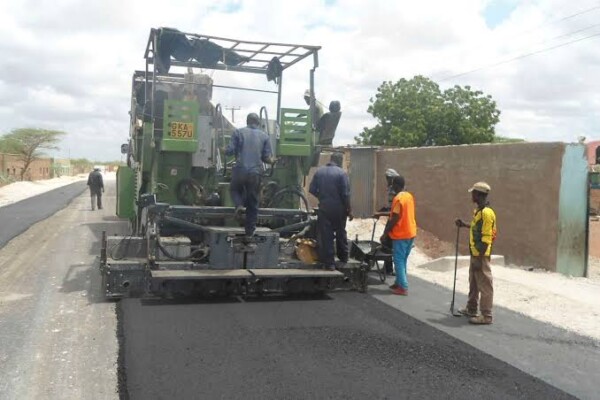
Kindiki spoke on Thursday while inspecting the Sh2.5 billion Kibugua-Mukuuni-Itugururu-Kabururu-Kamaindi-Murugi Road Junction project in Chuka Igambang’ombe Constituency, Tharaka Nithi County.

The road is expected to improve transport and help farmers access markets for their produce.

The Deputy President said the National Infrastructure Fund would help mobilise resources for major infrastructure projects, instead of spreading government resources across short stretches of road.

“We have to stop with things of five, six kilometres, 15 kilometres, because if we continue at that speed, this country will remain behind for a long time,” Kindiki said.

He said the government wants Kenya to become a major construction site over the next 10 to 15 years, with the country targeting first-world status within two to three decades.

In Maara, Kindiki also inspected the Marima-Makutano Road, which he said would extend the completed Kathwana-Makutano road and connect it to the Thuci-Nkubu road.

He also praised young people working on the road projects, saying infrastructure development was creating employment opportunities for skilled workers and artisans.

The Deputy President, however, turned his attention to politics, challenging former Deputy President Rigathi Gachagua to account for his development record while in office.

Kindiki challenged Gachagua to identify the roads, water projects and electricity connections he helped secure before criticising the current administration.

He said leaders who criticise the government should place their development records on the table for Kenyans to compare with the Kenya Kwanza administration’s record.

With the 2027 General Election approaching, Kindiki said the political contest would ultimately be settled on the ground, expressing confidence in the government’s ability to compete.