Home Blog Page 68

Rolling for Reconciliation: Skaters bridge Turkana and Pokot on 710km journey

0

Julius Esinyen Ekeno is leading a five-member team on a skating expedition covering more than 710 kilometers from Nairobi to Lodwar, Turkana County, in a special campaign aimed at promoting peace, unity, and youth empowerment.

The expedition, dubbed “Ride for Peace, Unity and Adventure,” officially flagged off on August 3, 2026, at in Nairobi by the PokotFest organizing team, led by the event’s founder, Brian Ruto. The team will travel through various parts of West Pokot County before arriving in Lodwar, carrying a message of peaceful coexistence, reconciliation, and stronger relations between the Turkana and Pokot communities.

The skating journey forms part of the preparations for PokotFest 2026, a major cultural festival scheduled to take place in November at the Kenyatta International Convention Centre (KICC) in Nairobi. The festival is expected to bring together people from different communities to celebrate cultural heritage, promote tourism, and strengthen regional cooperation.

Beyond spreading the message of peace, the expedition seeks to encourage cultural exchange, foster closer ties between neighboring communities, and showcase the tourism potential of both West Pokot and Turkana counties. The organizers believe that sports can serve as a powerful platform for uniting communities while creating meaningful opportunities for young people.

The team is also using the expedition to advocate for the construction of a modern skating facility in Turkana County. They say such a facility would provide young people with a safe environment to develop their skating talents, promote healthy lifestyles, and create new opportunities in sports, employment, and community development.

At every stop along the route, the skaters are expected to engage with residents, community leaders, and youth groups through discussions that encourage peacebuilding, friendship, and social cohesion. Organizers believe the journey will help bridge long-standing differences between communities while laying the foundation for lasting cooperation.

Speaking during the flag-off, Julius Esinyen Ekeno and fellow team member Derick expressed their excitement about the expedition, which is expected to take approximately two weeks to complete. They said the team had prepared extensively for the challenging journey ahead.

“We have spent a long time preparing for this expedition. We are ready to face the challenges on the road and ensure that we deliver our message of peace to every community we meet. We call upon everyone to support us throughout this journey for peace,” said Derick.

The expedition is expected to conclude in Lodwar, where the campaign’s message of peace, unity, and youth development will continue to gain momentum as preparations for PokotFest 2026 move forward.

As the team continues its journey to Lodwar, the organizers have called on residents, community leaders, government agencies, development partners, and the private sector to support the peace initiative and join efforts to empower young people through sports.

Old Fish, New Gold: How a ferry and a dry port could turn lake Turkana into Kenya’s next economic frontier

0

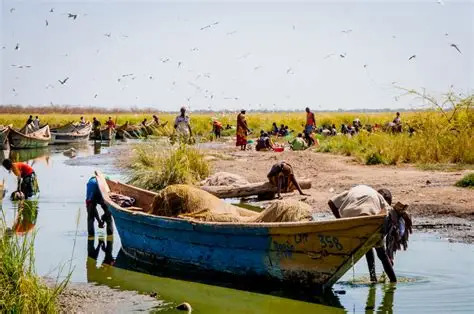
TURKANA – By the time the first fishing boats glide back to Impresa Beach, the Turkana sun is already beginning to bite.

Women hurry to spread fresh tilapia on smoking racks. Others carefully turn fillets over charcoal fires, racing against a heat that can erase a day’s income before noon. Traders move from boat to boat inspecting the night’s catch, while children weave between wooden canoes dragged onto the sand after hours on the lake.

It is another ordinary morning on the shores of Lake Turkana.

For Stephen Ekuwom, however, the beach has been quietly changing.

He has watched more people arrive every year, not tourists, but people searching for another way to survive. Former pastoralists who lost entire herds to relentless drought now mend fishing nets. Young men who once followed cattle into the rangelands now spend nights on the lake. Families walk in from villages where the pasture has disappeared, hoping the water can provide what the land no longer can.

“More people are coming to fish every day,” Stephen says, watching another canoe scrape onto the shore. “They are coming from everywhere.”

Fishing has become Turkana’s employer of last resort.

Yet it is also home to one of Kenya’s greatest economic paradoxes.

Last year, President William Ruto sparked debate after remarking that fish in Lake Turkana “grow old and die while people go hungry.” The comment spread quickly across social media, becoming a joke, a meme and another political talking point. Many dismissed it as an exaggeration.

But behind the awkward wording lay an uncomfortable truth.

Long before the President repeated those words, fisheries experts studying Lake Turkana had reached almost the same conclusion. A regional fisheries assessment under the Indian Ocean Commission’s ECOFISH programme warned that the lake’s greatest problem was not a shortage of fish but the inability to move them efficiently to consumers. Lake Turkana can sustainably produce more than 30,000 metric tonnes of fish every year, yet annual catches fluctuate between 5,000 and 15,000 metric tonnes. In some years, Kenya harvests barely one-sixth of what the lake can sustainably provide.

The problem has never been the fish.

The problem begins the moment they leave the water.

Without enough cold storage, ice plants, processing facilities and reliable transport, fish spoil before reaching distant markets. Some are smoked to extend their shelf life, but even then, quality declines before buyers can collect them. Others never make it beyond the beaches where they are landed.

Standing at Impresa Beach, the contradiction is impossible to ignore. Every delayed journey chips away at the value of the catch. Every spoiled crate represents money lost by fishermen, traders and families who depend on the lake.

Ironically, demand has never been the problem.

Buyers already travel to Kalokol from Uganda, South Sudan and the Democratic Republic of Congo. Fish from Impresa regularly finds its way to Kitale and Nairobi despite poor infrastructure. Regional markets are hungry for affordable protein. The fish are there. The buyers are there.

What is missing is the connection between them.

That is where the proposed Lake Turkana ferry enters the story.

At first glance, it looks like a transport project. In reality, it could become the missing link in a much larger economic corridor stretching from the shores of Lake Turkana through Marsabit to Moyale and into Ethiopia.

Today, traders transporting fish between Kalokol and Loiyangalani often face a long, expensive journey around the lake. A ferry would dramatically reduce that travel time, allowing fresh fish to reach markets more quickly and at lower cost. Combined with investment in cold storage and processing, it could significantly reduce post-harvest losses that currently eat away at fishermen’s earnings.

But the ferry is only the beginning.

Beyond Loiyangalani lies Marsabit and, further north, Moyale, Kenya’s busiest gateway into Ethiopia. Plans for a dry port there could transform the region into a logistics hub linking northern Kenya with one of Africa’s largest consumer markets.

Instead of ending at the lakeshore, fish harvested before dawn at Impresa or Kalokol could travel across the lake, through Marsabit and into Ethiopia, where demand for affordable protein continues to grow. Livestock traders could move animals more efficiently across the border. Farmers could reach new buyers. Even artisanal gold from Lomeguro and Naduat could enter more formal supply chains through improved transport and customs facilities.

For decades, these have been separate economies: Fishing, Livestock, Gold mining.

Each rich in potential but isolated by poor infrastructure.

Together, they tell a different story.

Two hundred kilometres west of the lake, miners descend hand-dug shafts searching for gold hidden beneath the hills of Lomeguro and Nameyana. Along the Kenya-Ethiopia border, livestock worth millions of shillings crosses every year, much of it through informal trade. On the shores of Lake Turkana, thousands depend on fishing even as much of the lake’s potential remains untapped.

The challenge facing all three industries is remarkably similar.

Producing wealth is one thing.

Moving it efficiently to markets is another.

That is why many development planners increasingly view the Lake Turkana ferry and the Moyale dry port as complementary investments rather than separate projects. One connects communities across the lake. The other connects northern Kenya to regional and international markets.

Together, they could begin rewriting the economic story of Kenya’s north.

History, however, urges caution.

Northern Kenya has heard promises of transformation before. Oil discoveries in Turkana were expected to usher in prosperity, yet many communities closest to the wells still struggle with poor roads, unreliable electricity and limited economic opportunities. Infrastructure alone does not create development. It must be matched by investment in cold storage, fish processing, roads, financing and policies that ensure local communities benefit from the wealth generated around them.

Back at Impresa Beach, Stephen Ekuwom watches fishermen unload another night’s catch.

The lake before him has never lacked abundance. Its waters hold one of Africa’s richest inland fisheries. Its hills conceal gold. Its rangelands sustain millions of shillings worth of livestock.

For generations, the challenge has never been finding wealth.

It has been finding a way to move it.

Perhaps that is why the story of Lake Turkana is no longer simply about fish.

It is about whether a ferry, a dry port and a corridor through Marsabit can finally connect one of Kenya’s richest but most isolated regions to the markets waiting beyond its horizonand in doing so, ensure that the wealth of the lake no longer grows old before it reaches the people who need it most.


A lab to learn, a game to unite: Ngurnit’s weekend that changed young lives

0

NGURUNIT, MARSABIT— The Kenya Drylands Education Fund (KDEF) is betting on both books and balls to secure the future of young people in Kenya’s drylands.

In a two-part weekend intervention in Ngurunit, Laisamis Constituency, KDEF launched a modern science laboratory on Saturday and followed it on Sunday with a major inter-county sports tournament bringing together youth from Marsabit and Samburu.

Lab launch: Learning by doing 

On August 1, KDEF director Ahmed Kura officially opened a state-of-the-art science laboratory at Ngurunit Senior School.

Built and equipped by KDEF, the facility gives students in the arid region access to hands-on learning, experiments, and improved understanding of science subjects.

For years, learners in remote areas have struggled with lack of infrastructure and equipment. KDEF says the lab is meant to close that gap.

“This laboratory is equipped with essential facilities to support students conducting experiments and developing practical scientific skills,” Kura said. “Real community development begins by equipping young people with quality education and an enabling environment to achieve their dreams.”

He noted that improving education in dryland communities requires more than classrooms and teachers. It also demands modern infrastructure and learning materials that motivate students.

The lab is expected to boost interest in Science, Technology, Engineering and Mathematics (STEM). For teachers, it links theory to practice. For students, it marks a shift from theory-only science to learning by doing.

“For KDEF, this is more than a building. It is an investment in knowledge, talent, innovation, and the future of Ngurnit’s youth and the wider Laisamis community,” Kura added.

Sports: Building peace through play 

A day later, the focus shifted to the field. Twenty-eight teams from Marsabit and Samburu gathered at the KDEF camp in Ngurunit for volleyball and basketball tournaments aimed at nurturing talent and strengthening cohesion.

Kura, who presided over the opening, said the games are designed to bring youth from different communities together through friendly competition.

“Sports build peace. They give our youth a platform to interact, learn discipline and respect each other,” he said. He warned participants to uphold discipline, noting that anyone causing disruption would be banned from future games.

For players, the tournament is more than competition. 

“This has given us a chance to make friends and build peace between Marsabit and Samburu communities,” said one participant.

On the courts, teams competed before fans, using sport as a tool for entertainment, talent development and unity.

A dual approach to youth empowerment 

KDEF says the back-to-back initiatives reflect a deliberate strategy: invest in education infrastructure while also creating spaces for youth to build life skills.

“Investment in youth does not end in the classroom,” an organizer noted. “Sports are also a classroom where young people learn discipline, teamwork, resilience, leadership and respect.”

The message to the community, KDEF says, is that when given opportunity, equipment and the right environment, young people in pastoral areas can use both knowledge and talent to build united, peaceful and progressive communities.

The Ngurnit laboratory and the weekend tournament now stand as symbols of that commitment, one strengthening minds, the other strengthening bonds.

ODM members will decide party’s 2027 direction, says Winnie Odinga

0
East African Legislative Assembly (EALA) MP Winnie Odinga

East African Legislative Assembly (EALA) MP Winnie Odinga has said the Orange Democratic Movement (ODM) should allow its members to determine the party’s direction ahead of the 2027 General Election through the National Delegates Convention (NDC).

Speaking during an interview, Winnie said no final decision has been made on whether ODM will field its own presidential candidate or endorse President William Ruto for a second term.

She maintained that such a crucial decision should be made through the party’s established structures rather than by a few individuals.

“We will have a National Delegates Convention later this year, and that is where such decisions will be made,” she said.

The daughter of the late former Prime Minister Raila Odinga cautioned against a situation where a handful of leaders prioritize their personal political interests over the wishes of ODM supporters.

According to Winnie, the party must listen to its members and give them an opportunity to decide its political path heading into the 2027 elections.

“The party needs to let the people decide and listen to what supporters want,” she said.

She further claimed that some individuals within ODM are more focused on political survival than representing the interests of party members.

“There is a lot of briefcases carrying and people are looking for self-survival, and there the will of the people may not be a priority,” she said.

On whether her father, the late Raila Odinga, would have contested the presidency in 2027 had he been alive, Winnie said the current political and economic climate, including public dissatisfaction and slow development, could have influenced him to join the race once again.

However, she clarified that her remarks should not be interpreted as criticism of President William Ruto’s performance, noting that her point was that more could still be done to address the concerns of Kenyans.

Winnie also reiterated that she cannot speak on behalf of all ODM members regarding the possibility of endorsing President Ruto, insisting that the final decision rests with the party membership through the National Delegates Convention.

High court halts law society of Kenya boycott to restore order in Judiciary

0
Milimani law courts|File Photo

Pending a threshold ruling on its own jurisdiction, the High Court has issued conservatory orders prohibiting the Law Society of Kenya (LSK) from executing any actions that disrupt or impede proceedings before judges and judicial officers.

Delivering the ruling, Justice David Mburu emphasized that the interim directives were necessary to restore calm within the Judiciary and guarantee uninterrupted access to justice while the case proceeds. The court barred LSK from taking any further action that could paralyze judicial functions across the country until the jurisdictional challenge is formally heard and determined.

The legal battle stems from a petition filed by advocate Adrima Kamotho, who argued that the boycott undermines judicial independence, threatens access to justice, and risks causing severe case backlogs for thousands of litigants nationwide. Supporting the petition, advocates Danstan Omari and Peter Wanyama representing the affected judges criticized the LSK’s directive instructing lawyers to boycott specific judicial officers.

Counsel representing the Judicial Service Commission (JSC) further informed the court that judges and magistrates have been operating under an atmosphere of fear, noting that disruptions had already impacted several stations, including the Supreme Court and Murang’a law courts.

The ongoing standoff between the bar association and the bench arose after LSK announced a boycott targeting Chief Justice Martha Koome, Deputy Chief Justice Philomena Mwilu, and several other judicial officers over concerns regarding judicial administration. While the High Court initially declined to halt the strike to allow dialogue between JSC and LSK leadership, Justice Mburu ultimately intervened to safeguard court operations after talks failed to yield an immediate resolution.

LSK, however, maintains that operations have largely continued and opposes attempts to end the boycott before the substantive petition is fully argued.

Closely watched by legal professionals and court users, this high-stakes dispute raises fundamental questions surrounding the relationship between the Bench and the Bar, judicial accountability, and the limits of advocate-led professional protests within Kenya’s administration of justice.

Tourism stakeholders warn mandatory visitor insurance could hurt Kenya’s tourism sector

0

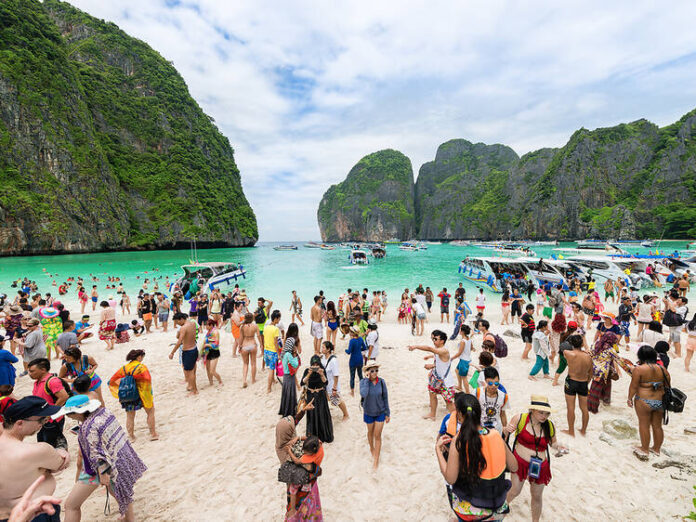
Nairobi, Kenya – Tourism stakeholders have raised concerns over the government’s plan to require all foreign visitors entering the country to have mandatory health insurance, warning that the move could increase travel costs and make Kenya less attractive to international tourists.

The stakeholders argue that the new requirement could discourage visitors at a time when the country is seeking to strengthen its position as a leading global tourism destination.

The concerns follow a notice published in the Kenya Gazette on July 30, 2026, and signed by Health Cabinet Secretary Aden Duale, requiring all visitors entering the country to have health insurance coverage of at least Sh6.45 million.

The insurance package will cover medical expenses of up to Sh2.58 million, emergency medical evacuation of up to Sh3.22 million, prescribed medication worth up to Sh38,700, mental health treatment of up to Sh129,000, and repatriation of mortal remains valued at up to Sh645,000.

The government says the measure is aimed at ensuring visitors can access medical services in case of emergencies while in the country.

However, tourism players have opposed the move, saying it will add to the cost of visiting Kenya and could affect the country’s competitiveness in the international tourism market.

Kenya Association of Hotelkeepers and Caterers (KAHC) Chief Executive Officer Dr Sam Ikwaye said the policy could discourage potential visitors.

“This move will increase costs for tourists. As a tourism sector, we oppose this measure. This is not the direction we should be taking; we should be developing strategies to attract tourists, not discourage them from visiting our country,” Ikwaye said.

Stakeholders noted that the mandatory insurance requirement would come on top of other charges already paid by visitors, including the Electronic Travel Authorisation (ETA) fee and recently increased park entry fees.

Tourism expert Tony Kirimi said many international travellers already arrive in Kenya with comprehensive health insurance purchased in their home countries, questioning the need for an additional mandatory cover.

“There is no reason to force them to purchase another insurance policy in Kenya. We accepted the ETA fee, park entry charges were increased, and now we are introducing mandatory health insurance, which is more expensive than in some European countries. What was the purpose of removing visas only to introduce other costs?” Kirimi questioned.

He warned that Kenya should avoid introducing measures that could push tourists to consider alternative destinations as the country continues efforts to grow its global tourism brand.

Another tourism expert, Mohammed Hersi, said the policy would create an unnecessary financial burden for visitors.

“A tourist pays for insurance in their home country before travelling to Kenya, then they are required to buy another one here. What would happen if every country introduced such a requirement?” Hersi said during a discussion on Facebook.

The stakeholders are now calling on the government to suspend implementation of the policy and hold consultations involving the Ministries of Health and Tourism, insurance companies and tourism industry players.

The debate comes at a time when Kenya’s tourism sector is showing signs of growth. Data from the Kenya Wildlife Service (KWS) indicates that national parks have received more than 3.5 million visitors this year, compared to two million last year.

However, about 60 per cent of the visitors are domestic tourists, with industry players warning that additional costs could affect Kenya’s efforts to attract more international travellers.

KWS Director General Prof Erustus Kanga said the organisation’s revenue has increased from Sh2.9 billion in 2022, when he took office, to Sh10.5 billion this year, driven by increased visitor numbers and promotional efforts.

Despite the sector’s recent gains, tourism stakeholders maintain that the mandatory insurance requirement could undermine growth if implemented without broader consultation.

Morocco host Senegal in high-stakes group A finale

0

RABAT, Morocco — Tournament hosts Morocco prepare to wrap up their Group A campaign against Senegal in a crucial Women’s Africa Cup of Nations (WAFCON) 2026 fixture. With knockout stage qualification on the line, both sides enter the final group game looking to secure their place in the quarter-finals.

A win or draw against Senegal guarantees Jorge Vilda’s side top spot in Group A, keeping momentum high as they look to reach back-to-back WAFCON finals.

Senegal sit on 3 points in Group A after bouncing back from an opening 2-0 defeat against Algeria.

Seynabou Mbengue’s powerful first-half strike gave Senegal a crucial 1-0 victory over Kenya.

Senegal need a positive result against the hosts to guarantee automatic qualification to the quarter-finals without having to rely on third-place advancement calculations.

Tottenham Hotspur revisit deal for Cody Gakpo

0

LONDON / LIVERPOOL — Tottenham Hotspur have stepped up their search for summer attacking reinforcements and have made fresh enquiries regarding Liverpool forward Cody Gakpo.

Spurs have identified the 27-year-old Dutch international as a primary candidate to bolster their frontline following a combination of squad injuries and collapsed transfer alternatives.

Gakpo and his representatives have held initial discussions with Tottenham. The forward is understood to be receptive to a potential move to North London, where he would be offered a prominent, starting role in the attack.

Liverpool remain relaxed about the situation and currently intend to keep Gakpo as part of new head coach Andoni Iraola’s plans. However, reports suggest the Reds have set a valuation around £72 million (€85m) should Spurs make a formal bid.

Tottenham value Gakpo’s versatility, as the Dutchman is equally capable of operating on the left wing or centrally as a versatile forward.

While Spurs continue to explore multiple attacking avenues—including Manchester City’s Savinho—their interest in Gakpo has intensified following an injury to target Eli Junior Kroupi. Liverpool are not actively pushing to sell, meaning any deal will depend on Tottenham testing the Reds’ resolve with a major formal offer before the transfer window closes.

Borana elders distance themselves from claims of joining DCP.

0

Isiolo, Kenya – The Borana Council of Elders (BCE) has reaffirmed its political neutrality ahead of the 2027 General Election, dismissing reports linking the council to former Deputy President Rigathi Gachagua’s Democracy for Citizens Party (DCP).

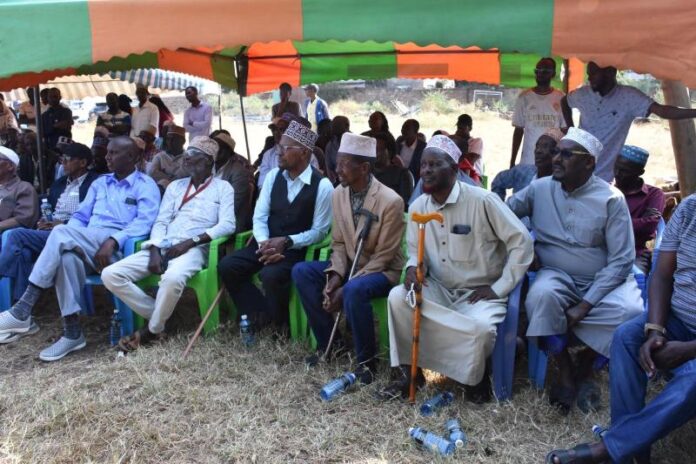
Speaking at a press briefing in Isiolo, the council’s leadership said it had not endorsed any political party and urged the public to disregard claims suggesting it had resolved to join DCP.

The clarification follows reports that the council’s technical adviser, Yusuf Huka Jillo, recently visited DCP Secretary General Senator John Methu at his Mugumo home in Nyandarua County.

During the visit, Jillo reportedly presented four goats as a gift and claimed he had been sent by the Borana Council of Elders to initiate political ties with the party.

However, the council’s Chairman, Mohamed Konso Halo, accompanied by Deputy Secretary General Hussein Boru and Treasurer Hassan Shano, distanced the council from the visit, saying Jillo neither represented the elders nor had authority to speak on their behalf.

“The Borana Council of Elders has not made any decision to join the Democracy for Citizens Party or any other political party. Mr. Yusuf Jillo acted on his own and was never delegated by this council to represent us before Senator Methu or any other political leader,” Halo said.

The elders emphasized that their priority remains addressing issues affecting the Borana community rather than engaging in partisan politics. They cited unresolved community land registration disputes, insecurity, and governance concerns as key matters requiring urgent attention.

The council also opposed the reported allocation of disputed land in the Magadho area by the neighbouring Meru County Government for the construction of a police training facility, arguing that the local community was not adequately consulted before the decision was made.

In addition, the elders expressed concern over insecurity affecting pastoralists in Isiolo County, alleging that some herders had lost their lives during security operations involving armoured vehicles. They said repeated appeals for investigations and accountability had yet to yield satisfactory action.

“The pain within our community remains unresolved. Families have lost loved ones, and many questions remain unanswered. These issues continue to concern us deeply,” the council leaders said.

The Borana Council of Elders maintained that it will continue focusing on advocating for the welfare of the community while remaining independent of political parties as the country heads toward the 2027 polls.

NTSA intensifies crackdown on jaywalking as pedestrians arrested in Nairobi

0

Nairobi – The National Transport and Safety Authority (NTSA) has stepped up enforcement against pedestrians who fail to use designated footbridges and pedestrian crossings, warning that the nationwide crackdown will continue until road users comply with traffic regulations.

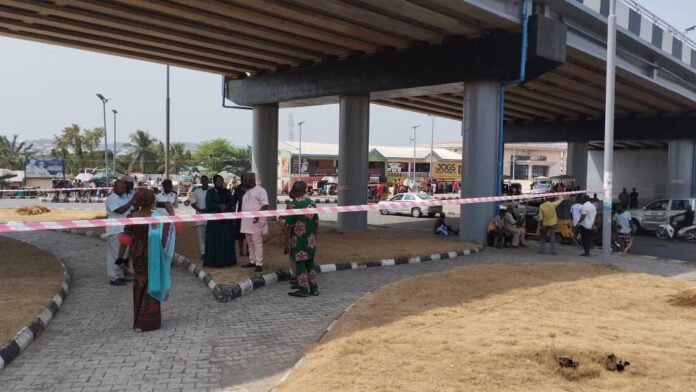
The latest operation was conducted on Monday morning at the Transami footbridge in Nairobi’s Pipeline area, where NTSA officers, working alongside law enforcement personnel, arrested several pedestrians accused of crossing the busy road at undesignated points.

According to the authority, the operation targeted pedestrians whose actions obstruct the free flow of traffic and endanger both themselves and other road users.

In a statement, NTSA said, “Joint pedestrian enforcement currently underway at Pipeline Transami footbridge targeting pedestrians who fail to use the footbridge and obstruct the free flow of traffic. The offenders are expected to be arraigned in court this morning.”

Several suspects were escorted into waiting police vehicles as officers continued the enforcement exercise.

The authority said the operation forms part of ongoing efforts to reduce road accidents caused by pedestrians crossing major highways at undesignated locations despite the availability of footbridges and marked crossings.

NTSA further urged members of the public to observe traffic regulations, stating, “The Authority urges pedestrians to use designated footbridges and crossings at all times, as crossing in undesignated areas not only endangers their lives but also puts other road users at risk and disrupts traffic.”

The Pipeline operation follows similar enforcement exercises conducted at the GM footbridge along Mombasa Road and at Allsops on Thika Road, where pedestrians were also arrested for violating traffic rules.

The authority has repeatedly expressed concern over the growing tendency by pedestrians to ignore footbridges in favour of shortcuts. In areas such as Ngara, Pangani and other sections of the Thika Superhighway, many pedestrians continue to cross busy roads at dangerous points despite the presence of nearby footbridges.

NTSA has maintained that the enforcement campaign will continue as part of broader efforts to improve road safety and reduce pedestrian-related accidents across the country.