Home Blog Page 67

Somalia Deputy PM voluntarily surrenders Kenyan passport amid diplomatic scrutiny

0

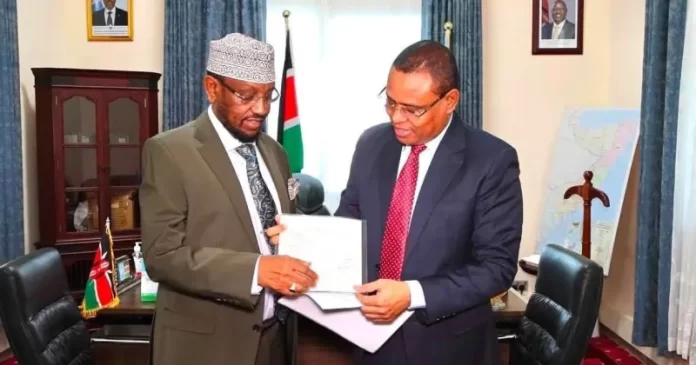
Somalia’s Deputy Prime Minister, Jibril Abdirashid Haji, has announced the voluntary surrender of his Kenyan passport, framing the move as an administrative decision aimed at ensuring full transparency and accountability in public office.

Clarifying that the travel document was authentic, legally acquired, and issued in full compliance with relevant procedures, Haji emphasized that his decision was not prompted by any dispute or official request from Kenyan authorities.

The development comes against the backdrop of heightened diplomatic tensions between Kenya and Somalia over border control and immigration protocols. Recent reports indicated that Kenyan immigration authorities had turned away several Somali government officials at entry points, following intensified scrutiny into foreign officials holding Kenyan passports.

The diplomatic dynamic was also a key topic during a bilateral engagement between Kenya’s Prime Cabinet Secretary Musalia Mudavadi and Somali Foreign Minister Abdisalam Ali on the margins of the 49th African Union Executive Council session in Addis Ababa, where both nations agreed to strengthen cooperation in migration management, consular affairs, and cross-border mobility.

Reaffirming his profound respect for Kenya’s institutions and its citizens, Deputy Prime Minister Haji expressed gratitude for Kenya’s longstanding hospitality towards Somalis. He reiterated that his primary allegiance remains with the Federal Republic of Somalia, noting that relinquishing the document reinforces his unwavering commitment to his official duties and the diplomatic ties between both nations.

Multi-agency coalition crackdown: politicians face legal sanctions, disqualification over hate speech ahead of 2027 polls

0

A high-level coalition led by the National Cohesion and Integration Commission (NCIC) has launched a unified enforcement strategy targeting hate speech and ethnic incitement ahead of the 2027 General Election, warning political leaders of direct prosecution.

The joint declaration came hours after the arrest of Mukurwe-ini Member of Parliament John Kaguchia, following the circulation of a video containing controversial remarks targeting supporters of President William Ruto. The arrest brought sharp focus to the state’s renewed stance against inflammatory political rhetoric.

The multi-agency task force comprising the NCIC, Independent Electoral and Boundaries Commission (IEBC), Ethics and Anti-Corruption Commission (EACC), Directorate of Criminal Investigations (DCI), National Police Service (NPS), Office of the Director of Public Prosecutions (ODPP), Office of the

Registrar of Political Parties (ORPP), Communications Authority of Kenya (CA), and Political Parties Liaison Committee (PPLC) expressed concern over a dangerous surge in divisive political discourse both online and at public rallies.

In a joint statement, the agencies warned that unchecked incitement and ethnic contempt directly threaten national cohesion and could compromise preparations for the 2027 polls.

To ensure swift action, the coalition announced the establishment of a High-Level Multi-Agency Steering Committee, supported by a Technical Operations Committee, to streamline intelligence sharing, investigations, prosecutions, and enforcement against politically motivated offenses.

The agencies stressed that while freedom of expression is constitutionally protected, it does not extend to propaganda for war, incitement to violence, hate speech, or advocacy of hatred that constitutes ethnic incitement or discrimination. Political parties, candidates, elected leaders, and supporters found guilty of electoral violence or incitement face severe penalties, ranging from criminal prosecution to disqualification under election and political parties’ laws.

Addressing political leaders directly, the coalition called for restraint and responsible leadership, emphasizing that public discourse must prioritize peace, issue-based campaigns, and national stability over divisive rhetoric.

Countdown to Kenya health summit 2026: Technical teams intensify final preparations ahead of August landmark event

0
Principal secretary for public health and professional standards, Mary Muthoni

Preparations for the highly anticipated Kenya Health Summit 2026 have entered their final phase as technical committees ramp up multi-sectoral coordination to ensure seamless execution. Scheduled to take place from 18–19 August 2026 in Nairobi, the landmark national event is positioning itself as a pivotal gathering for the country’s healthcare landscape.

Principal Secretary for Public Health and Professional Standards, Mary Muthoni, convened a high-level technical planning meeting on Monday, bringing together leadership teams to review critical milestones, workstream deliverables, and operational readiness across all planning divisions.

During the strategic review session, committees presented updates on proposed plenary sessions and core thematic tracks, ensuring the agenda fosters high-impact dialogue on priority health reforms and the future of healthcare delivery in Kenya.

Discussions also covered logistical progress, including exhibition booth bookings, partner engagement, financial commitments, and the strategic allocation of resources required to support the summit’s ambitious scope.

Held under the theme “Reforms Delivered, Health as a Right,” the Kenya Health Summit 2026 will assemble key stakeholders from national and county governments, healthcare professionals, private sector innovators, development partners, civil society, and local communities.

Together, delegates will evaluate progress made in structural health sector reforms, address persistent system challenges, and agree on practical, actionable strategies to guarantee quality healthcare access for all Kenyans.

Mudavadi urges joint strategy for Nairobi rivers ahead of El Niño

0
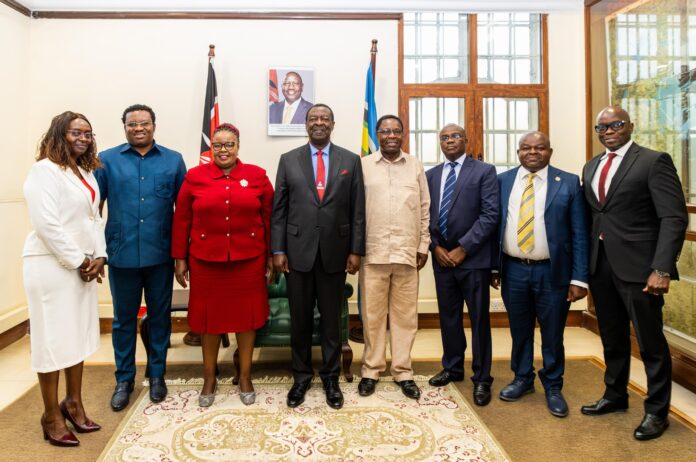
Prime cabinet secretary Musalia Mudavadi, Bishop Margaret Wanjiru, chairperson of the Nairobi rivers commission, alongside her technical leadership team

Prime Cabinet Secretary and Cabinet Secretary for Foreign and Diaspora Affairs Musalia Mudavadi has issued a strong call for seamless, multi-agency coordination to accelerate the restoration of Nairobi’s river system, warning that the country must bolster its environmental defenses as an imminent El Niño phase approaches.

Speaking following a high-level review meeting with Bishop Margaret Wanjiru, Chairperson of the Nairobi Rivers Commission, alongside her technical leadership team, Mudavadi emphasized that restoring the capital’s water bodies is no longer just an ecological goal, but an urgent matter of public safety, public health, and urban climate resilience.

The strategic session was convened to evaluate ongoing cleanup and rehabilitation efforts across the river basin and map out actionable strategies to scale up their overall impact.

Underlining the administration’s focus on long-term sustainability, the Prime Cabinet Secretary reiterated that safeguarding water corridors and riparian ecosystems requires an all-hands-on-deck approach involving government ministries, local administration, and institutional partners.

Strengthening river integrity is central to protecting vulnerable communities from catastrophic flooding, safeguarding municipal water infrastructure, and transforming the city into a cleaner, greener, and more sustainable capital.

Reaffirming the national government’s unwavering commitment to the initiative, Mudavadi assured that the administration will continue to actively support and resource collaborative partnerships that protect the environment.

He noted that through sustained action and inter-agency synergy, the ultimate objective remains turning Nairobi’s rivers from high-risk hazard zones into thriving, valuable ecological assets that will serve current residents and safeguard future generations.

Vision for prosperity: President Ruto calls for constitutional national plan to drive Kenya to first-world status

0
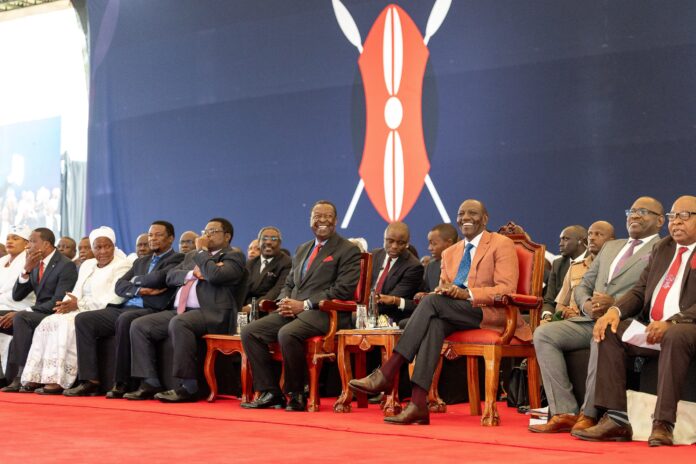
President William Ruto hosting of over 5,000 Friends Church (Quakers) faithful at State House, Nairobi

In a major policy address during a hosting of over 5,000 Friends Church (Quakers) faithful at State House, Nairobi on Monday, President William Ruto outlined a bold trajectory to transform Kenya from a lower-middle-income nation into an upper-middle-income economy, urging the country to unite behind a long-term, constitutionally anchored development roadmap.

The President reaffirmed the government’s commitment to working alongside faith-based organizations to drive social and economic progress across the nation, stating, “We continue to enhance our partnership with religious institutions in the delivery of quality healthcare, education, and community support.”

Recognizing the vital role faith organizations play in community development and essential service delivery, the administration seeks to deepen these alliances to reach vulnerable populations across all counties.

Reflecting on global economic shifts over the past six decades, the President highlighted that Kenya possesses all the necessary fundamentals to achieve high-income status.

In the early 1960s, Kenya was economically comparable to nations like South Korea and ahead of China. Today, both countries stand as global economic powerhouses. The President emphasized that Kenya can replicate this success by fostering national confidence in local potential and maintaining long-term economic discipline.

To safeguard long-term economic growth from political volatility, the President reiterated the importance of the newly proposed National Development Charter. The charter is envisioned to be anchored directly into the Constitution of Kenya, ensuring that national development priorities remain consistent regardless of changes in administration or political transitions.

This constitutional protection aims to maintain policy continuity, boost investor confidence, and establish a binding commitment to development across successive governments.

Concluding with a strong appeal for national unity, the President invited all stakeholders, civil society, and citizens to participate in shaping the country’s collective future: “We must therefore now come together, discuss, agree, and plan for our country’s destiny. This is an all-inclusive plan that will sustainably drive Kenya towards a first-world economy.”

Turkana County and Days for Girls Sign 3-Year health MoU for refugee women

0

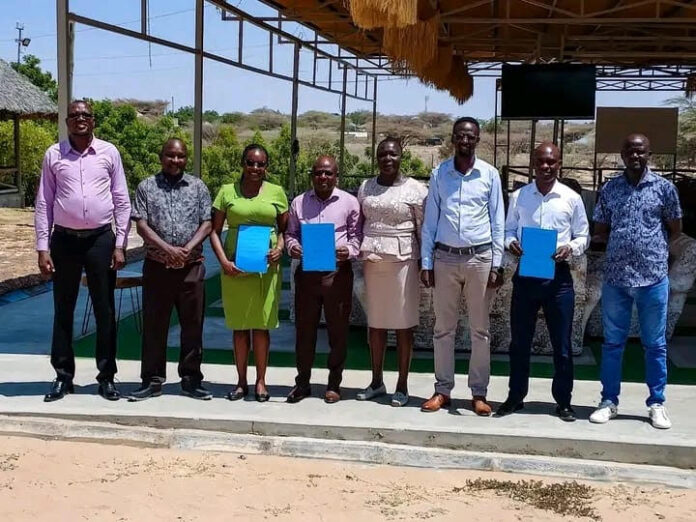
LODWAR, TURKANA — The County Government of Turkana has signed a three-year Memorandum of Understanding (MoU) with Days for Girls Kenya (DfGK) to significantly improve menstrual and postpartum health for women and adolescent girls in the Kakuma refugee camp and the Kalobeyei integrated settlement.

Under the partnership, up to 4,000 women and girls are set to benefit from custom-made menstrual and postpartum dignity kits designed to improve hygiene and restore confidence during period cycles and childbirth recovery.

Turkana County Deputy Governor Dr. John Erus officially signed the agreement on behalf of the county government, alongside Days for Girls Country Program Manager Annette Muchendiza. The signing ceremony was witnessed by the Director for Legal Audit, Ekal Lokoruka.

Rollout will begin immediately. In the first six months, DfGK will distribute hygiene kits to 2,426 women and girls within the refugee settlement. Additionally, 800 postpartum mothers from the local host community will receive specialized maternal kits to support their recovery.

To ensure seamless execution, Dr. Erus directed the organization to work directly through the County Steering Group (CSG) framework. “The county has created a structure for partners at the CSG level. I direct Days for Girls to join the CSG and align with the appropriate sector working group for proper coordination,” Dr. Erus emphasized.

Beyond kit distribution, the initiative focuses heavily on long-term education and advocacy. Ms. Muchendiza noted that the project aims to tackle stigma and shift community perceptions around menstruation and postpartum care through targeted training sessions.

Over the three-year timeline, the project will roll out health education based on an international curriculum, generate field data to inform future public health interventions, and advocate for the systematic integration of menstrual health into broader humanitarian programs.

The launch event was also attended by key regional officials, including Gladys Arika, Imoit Seamus Ekuwam, Mike Aupe and Simon Mobegi.

4,000 West Pokot households to benefit from government empowerment drive

0

WEST POKOT — More than 4,000 households in remote Kerelwa, Batei Ward, Kipkomo Sub-county are set to benefit from a government empowerment programme targeting food security, environmental conservation, and improved livelihoods in one of Kenya’s most drought-prone areas.

The Kerelwa Community Empowerment Event, held at Koporoch Girls High School, brought together national and county officials, development partners, and residents to launch interventions focused on climate resilience and agriculture. Forestry Principal Secretary Gitonga Mugambi represented Chief of Staff Felix Koskei at the event. Also in attendance were Sports PS Elijah Mwangi, Public Works PS Joel Arumonyang, and West Pokot County Commissioner David Saruni.

Speaking at the event on Saturday, PS Mugambi emphasized that the government is aggressively pushing climate-smart agriculture in Arid and Semi-Arid Lands (ASALs) as a long-term solution to recurring food insecurity. He noted that the government has subsidized fertilizer to make farming affordable while urging farmers to embrace fruit farming, adding that the President has already secured international markets for avocados in China and Japan.

To support the transition, PS Mugambi announced the distribution of 100,000 avocado seedlings to over 4,000 households and 30 schools in the area. Experts from the Kenya Forestry Research Institute (KEFRI) and the Kenya Forest Service (KFS) will train local farmers on fruit tree management. The broader distribution effort included coffee and fruit seedlings, farm inputs, and water tanks, while local schools received sports equipment.

The initiative directly aligns with the national goal to plant 15 billion trees by 2030. PS Mugambi noted that West Pokot has so far planted about 5 million trees against its annual target of 14.9 million. Beyond environmental conservation, the Forestry PS also commissioned new classrooms and a dormitory at Koporoch Girls High School, constructed through the Ward Development Fund.

Local administration underscored environmental protection, with West Pokot County Commissioner David Saruni warning residents against environmental degradation. Saruni stressed that tree planting is both an environmental and economic investment, warning that authorities will not tolerate illegal charcoal burning and offenders will face the full force of the law.

Beyond agriculture and infrastructure, Saruni announced a one-month mobile ID registration drive targeting remote areas, urging local youth to register for national IDs, the Social Health Authority (SHA), and voter rolls. Overall, the multi-faceted initiative ties into the government’s Bottom-Up Economic Transformation Agenda (BETA), aimed at raising household incomes, boosting community infrastructure, and building long-term climate resilience in Kerelwa.

Turkana University College student showcases AI healthcare innovation at regional conference

0

NAIROBI – A Turkana University College (TUC) student showcased an artificial intelligence-powered healthcare innovation during the 17th Inter-University Council for East Africa (IUCEA) Annual Meeting and Conference, held from July 29 to 31, 2026, in Nairobi.

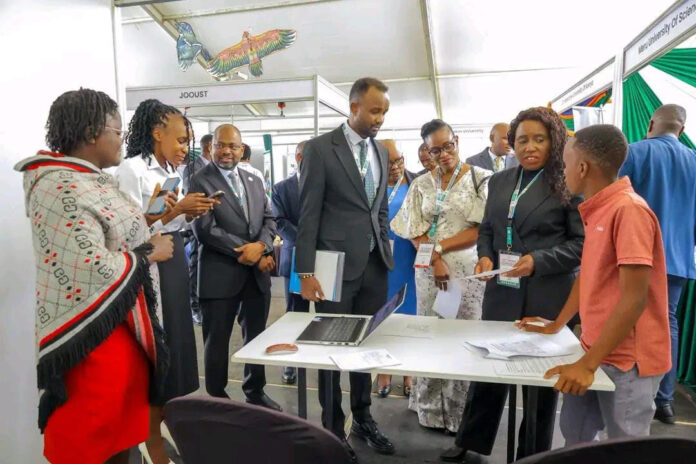
Dennis Gunjiri, a student innovator at the institution, presented MediBot, an AI-powered clinical triage and patient engagement assistant designed to improve healthcare delivery, particularly in remote and underserved communities. The project was presented to university leaders, government officials, researchers, development partners and other higher education stakeholders from across East Africa.

The conference, held under the theme “Powering the Future of Higher Education in East Africa through Strategic Partnerships and Collaborations,” focused on strengthening partnerships, advancing innovation and shaping the future of higher education in the region.

Among those who visited the Turkana University College exhibition stand were Dr. Beatrice Muganda Inyangala, Principal Secretary in the State Department for Higher Education, and Prof. Rose Nanyonga, Chairperson of the IUCEA Executive Committee. They were received by Turkana University College Principal Prof. George N. Chemining’wa and Deputy Principal for Research, Innovation and Linkages Prof. Peter A. Edome.

During the exhibition, Gunjiri demonstrated how MediBot uses artificial intelligence, natural language processing (NLP) and large language models (LLMs) to provide real-time clinical triage, patient engagement and health guidance.

According to Turkana University College, MediBot is designed to improve access to healthcare services in Kenya’s Arid and Semi-Arid Lands (ASALs), particularly in Turkana County. By providing timely health information and clinical support, the system is expected to complement existing healthcare services and improve patient outcomes.

MediBot previously won first place in the Emerging Technologies and Innovation category during the inaugural Kisii University Research and Innovation Week in April 2026. The project was developed under the mentorship of Dr. Jeremiah Onunga Osida, Head of the Department of Renewable Energy and Technology, whose guidance has helped foster student-led innovation at the institution.

The conference also marked the launch of the IUCEA Strategy, the AI Network of Universities and the IUCEA Strategic Plan 2026–2031, initiatives aimed at promoting artificial intelligence, strengthening research collaboration and enhancing the global competitiveness of universities across East Africa.

Speaking during the conference, Dr. Beatrice Muganda Inyangala, Principal Secretary for Higher Education and Research in Kenya’s Ministry of Education, urged universities across East Africa to strengthen collaboration with industry and translate research into practical solutions.

“Our universities should become living laboratories where students work alongside industry to solve real problems,” she said.

She added that stronger links between knowledge and enterprise, research and revenue, and discovery and deployment would help universities drive innovation, entrepreneurship and industrial transformation across the region. Dennis Gunjiri’s participation highlighted the growing role of student-led innovation at Turkana University College. The presentation also demonstrated how student led research can contribute to improving healthcare services in Kenya and across the East African region.

Airtel Money expands 50% cashback offer, launches business wallet for SMEs

0

Airtel Money Kenya has expanded its Rudishiwa cashback programme, offering customers 50 per cent cashback on eligible transactions as part of a broader push to strengthen digital financial services for individuals and small businesses.

The enhanced cashback initiative was unveiled alongside the launch of Bizna Wallet, a dedicated business wallet designed to help small and micro-enterprises better manage their finances by separating business income from personal funds.

Speaking during the launch, Airtel Money Kenya Acting Managing Director Michael Bonke said the company is responding to the growing financial needs of Kenya’s rapidly expanding digital economy.

“As Kenya’s digital economy continues to grow, so do the needs of businesses and consumers. We are continuously investing in technology and developing innovative solutions that make financial services simpler, more secure and more relevant for our customers,” Bonke said.

Under the new cashback programme, all registered Airtel Money customers will receive 50 per cent cashback on qualifying transactions of KES 101 or more, including Paybill payments, transfers to other mobile money networks, bank-to-wallet transfers and transfers from Airtel Money to bank accounts.

Unlike previous rewards that were issued as airtime, the cashback is credited instantly as cash into a dedicated Cashback Wallet, allowing customers to transfer the funds to their main Airtel Money wallet and use them across Airtel Money services.

Alongside the cashback programme, Airtel Money introduced Bizna Wallet, a solution targeting kiosk owners, market traders, boda boda riders, matatu operators and other small businesses.

The wallet enables entrepreneurs to separate business and personal finances, monitor daily sales, access mini statements, receive payments across different mobile money networks and safeguard business payments from unauthorized reversals.

Bonke said the solution was developed to address the practical financial management challenges facing Kenya’s small business sector.

According to the Mastercard SME Confidence Index, 95 per cent of Kenya’s small and medium-sized enterprises now accept mobile payments, highlighting the increasing demand for digital financial solutions that support business growth beyond simply receiving payments.

Airtel Money said both the cashback initiative and Bizna Wallet are part of its strategy to make digital financial services more accessible, rewarding and efficient for customers across Kenya.

Politicians face disqualification over hate speech ahead of 2027 polls

0

NAIROBI,Kenya-Politicians who engage in hate speech and incitement ahead of Kenya’s 2027 General Election risk being barred from the ballot, following a warning by four state agencies that have pledged to crack down on divisive political rhetoric.

The National Cohesion and Integration Commission (NCIC), the Independent Electoral and Boundaries Commission (IEBC), the Directorate of Criminal Investigations (DCI), and the Office of the Registrar of Political Parties have formed a high-level multi-agency committee to investigate and prosecute leaders accused of incitement and hate speech.

NCIC Chairperson Bishop Kepha Nyamweya Omae said politicians found violating the law could face prosecution and, where applicable, disqualification from contesting elective positions.

“This is a warning against leaders engaging in divisive and inciting conduct. If left unchecked, this trend will set the nation on a dangerous trajectory,” Omae said.

He added that the commission would work with the Office of the Registrar of Political Parties and other relevant institutions to ensure legal action is taken against offenders.

Political Parties Liaison Committee (PPLC) Steering Committee Chairperson Evans Misati said more than 15 individuals could be locked out of the 2027 election for failing to meet the required legal and ethical standards.

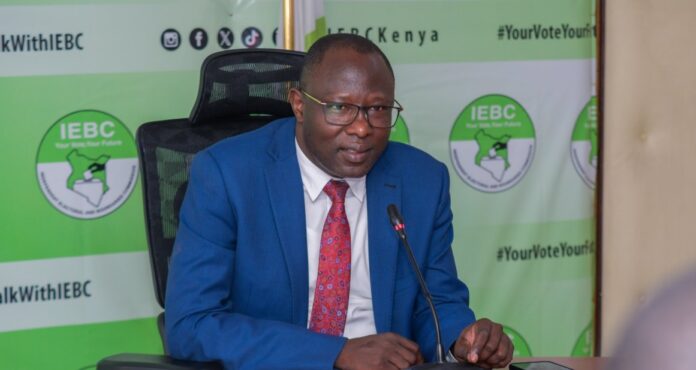
IEBC Chairperson Erastus Ethekon said the electoral commission would soon gazette the election period, stressing that a credible election cannot be conducted in an environment dominated by hate and political intimidation.

He also urged Kenyans to reject leaders who thrive on divisive politics and reminded voters that elections are conducted through a secret ballot.

DCI Director Mohamed Amin warned politicians against making reckless statements at political rallies and on social media, saying security agencies are prepared to take firm action against anyone found violating the law.

Meanwhile, Registrar of Political Parties John Cox Lorionokou reminded political parties of their responsibility to ensure members comply with the Political Parties Code of Conduct, warning that breaches would attract legal consequences.

The agencies said the joint initiative is aimed at safeguarding national unity and ensuring the 2027 General Election is conducted in a peaceful, lawful and credible environment.