
Home Blog Page 66

KDEF to sponsor viral maasai boy ‘Siritai’ through school

0

NGURUNIT, MARSABIT— The Kenya Drylands Education Fund (KDEF) has pledged full sponsorship for 14-year-old Lparakuoni Lepeere from Laikipia County, who recently went viral on social media as “Siritai”, the young Maasai cultural icon.

Lparakuoni made headlines after publicly stating he had no intention of continuing with school, a decision that sparked widespread debate online about the future of pastoralist children and cultural preservation.

Announcing the sponsorship during inter-county basketball and volleyball games for youth from Marsabit and Samburu at the KDEF camp in Ngurunit, KDEF Director Ahmed Kura said the organization will fund the boy’s education to completion.

“The aim is to give hope to children facing challenges and ensure talent and dreams are not lost due to lack of finances,” Kura said.

The tournament brought together more than 28 teams from Samburu and Marsabit counties.

Kura said the games are aimed at promoting peace, love and unity among youth through sports.

Kura also distanced himself from politics, saying he has no plans to vie for office and will focus on education in ASAL areas.

He said he had previously considered running for Laisamis parliamentary seat but decided to wait.

His priority, he added, is leading KDEF and investing in education and school infrastructure in dryland areas.

He called on the county governments of Marsabit and Samburu to work closely with the national government and partners to improve education in ASAL regions, noting that progress requires collaboration between government, organizations and communities.

Kura spoke during the official launch of a modern science laboratory built and fully funded by KDEF at Ngurunit Secondary School.

The facility is expected to improve science learning and give students access to practical training.


Governor Kachapin orders speedy completion of health projects as West Pokot moves to improve healthcare delivery.

0

West Pokot Governor Simon Kachapin has directed county officials to fast-track the implementation of key health projects as the county moves to strengthen healthcare delivery, improve access to medical services and enhance efficiency in public health facilities.

Governor Kachapin issued the directive yesterday, during a strategic performance review meeting with the County Executive and technical teams from the Departments of Health and Public Works, where progress on major health projects was assessed and implementation challenges reviewed.

The meeting, held in Kapenguria, focused on evaluating ongoing health initiatives and charting the way forward on priority projects under the county’s development agenda.

Among the projects discussed were the operationalization of the Radiology Unit and County Morgue at Kapenguria County Referral Hospital, completion of the Makutano Mother and Baby/Newborn Unit, commissioning of the Sigor Sub-County Hospital Theatre, rollout of the County Emergency Medical Services (EMS) Plan and ambulance services, and commissioning of completed health infrastructure projects.

The county leadership also reviewed plans for the groundbreaking of the Kapenguria County Referral Hospital (KCRH) Amenity Private Wing, which is expected to expand specialised healthcare services and improve revenue generation for the facility.

The meeting further assessed progress in the implementation of digital health systems and the uptake of the Social Health Authority (SHA), initiatives aimed at improving healthcare financing, strengthening revenue collection and widening access to quality healthcare services for residents.

Governor Kachapin said the county government remains committed to building a healthcare system that responds to the needs of all residents, while urging departments to work together to ensure timely completion of priority projects.

“We are very focused on building a healthcare system that is accessible, efficient and responsive to the needs of every resident. We must fast-track the implementation of priority projects and work together to improve health outcomes across West Pokot County,” said Governor Kachapin.

The governor directed the relevant departments to address implementation delays and ensure projects are delivered within the required timelines to benefit residents.

The meeting was attended by County Executive Committee Member for Health and Sanitation Clare Parklea, Chief Officer for Health Dr. Irene Lopakale, senior county government officials and technical officers from the Departments of Health and Public Works.

Turkana South caregivers lead fight against child malnutrition

0

TURKANA SOUTH – Caregivers in Turkana South Sub-County are playing a key role in improving the early detection of child malnutrition after receiving training to monitor their children’s nutritional status from home.

The progress was highlighted over the weekend during a three-day validation meeting of the R-SWITCH project, implemented by the Turkana County Government in partnership with the International Rescue Committee (IRC).

Over the past 18 months, the project has trained parents and caregivers to use Mid-Upper Arm Circumference (MUAC) tapes and mobile phone reporting to identify signs of malnutrition, before children’s conditions worsen.

Veronica Ereng, the Medical Officer of Health for Turkana South and Aroo Sub-County, said the initiative has changed how families respond to child malnutrition.

“Before, families had to wait for a Community Health Promoter or a health worker to notice something was wrong,” Ereng said. “Now, a mother can catch it herself, twice a month, and get her child help before it becomes serious.”

She said the approach has helped bridge the gap between homes and health facilities by ensuring children with signs of malnutrition are identified and referred for treatment at an earlier stage.

Joseph Karagu, the Turkana County Nutrition Coordinator, said caregivers have embraced the new skills and technology, making them active participants in safeguarding their children’s health.

“They picked up the Mid-Upper Arm Circumference (MUAC) tapes and the phone reporting so quickly,” Karagu said.

“It’s given health facilities some breathing room, and it’s turned ordinary parents into champions for their children’s nutrition.” He added.

William Abong, the Turkana South Sub-County Nutrition Coordinator, said the programme has increased early identification of malnutrition cases, with trained caregivers referring affected children to health facilities for timely treatment.

However, Dorothy Maasai, the Health Records Officer, said several challenges continue to affect the programme.

She noted that livelihood activities, particularly mining in Aroo Sub-County, often keep caregivers away from home, making regular child monitoring difficult.

Maasai added that boys who spend long periods herding livestock are more vulnerable, while shortages of essential nutrition supplies and reporting tools have at times discouraged families from seeking healthcare services.

Tana River strengthens disaster communication strategy to enhance emergency preparedness

0

The Tana River County Government has launched a review of its Flood Early Warning Communication Strategy with the aim of expanding it into a comprehensive Disaster Risk Management Communication Strategy that will address all major disasters affecting the county.

The revised strategy seeks to improve the way early warning information is communicated to residents during emergencies, including floods, drought, strong winds, disease outbreaks, livestock diseases, and human-wildlife conflict.

The review is being spearheaded by the Tana River County Government’s Department of Communication in collaboration with the Kenya Institute for Public Policy Research andAnalysis (KIPPRA). Experts from KIPPRA are facilitating the exercise to ensure the strategy aligns with current disaster risks and best practices in disaster communication.

The five-day workshop has brought together officials from the departments of Disaster Management and Special Programmes, Health, Agriculture, Fisheries, Climate Change, Communication, Finance and Planning. Also participating are development partners, Community Managed Disaster Risk Reduction (CMDRR) groups, and representatives from local radio stations.

The primary objective of the strategy is to strengthen early warning communication systems, improve coordination among government institutions and stakeholders, and ensure that residents receive accurate, timely and easy-to-understand information to enable them to take preventive action before disasters strike.

County officials say the enhanced communication framework will help communities prepare for emergencies, reduce the loss of lives and property, and strengthen resilience against the growing impacts of climate change and other disasters.

The review exercise, which is expected to run for five days, is funded by the Kenya Red Cross Society through the Early Action to Climate-Induced Disasters Project. The project is supported by the European Civil Protection and Humanitarian Aid Operations (ECHO) through the Finnish Red Cross, in partnership with other disaster management stakeholders in Kenya.

Police vow to sustain illegal firearms crackdown in Tana North and Bangale

0

The government has vowed to continue its operation to recover illegal firearms in Tana North and Bangale sub-counties of Tana River County until all weapons held unlawfully are surrendered.

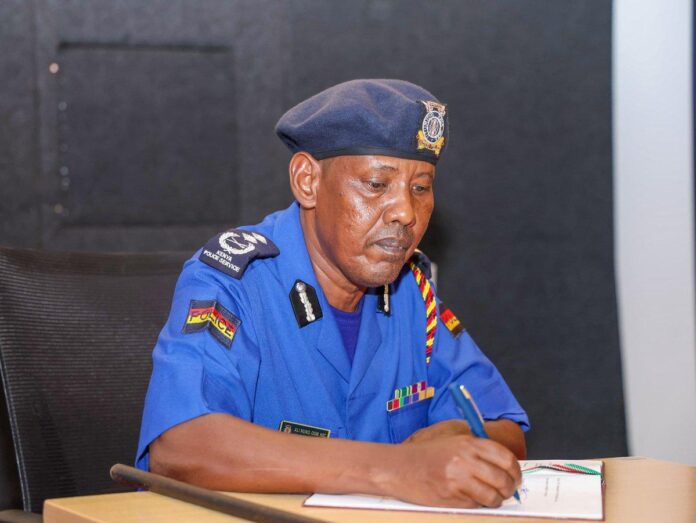
Coast Regional Police Commander Ali Nuno said security agencies will intensify the ongoing crackdown, stressing that the operation will only end once every illegal firearm has been recovered.

According to Nuno, the exercise is part of the government’s broader efforts to restore peace and security in the two sub-counties, which have experienced recurring insecurity linked to the proliferation of illegal firearms.

“We will not relent. The operation will continue until the last illegal firearm is surrendered,” Nuno said.

He revealed that some residents have voluntarily surrendered their weapons, but noted that security agencies believe many more illegal firearms remain in the hands of civilians.

The police commander assured residents who choose to hand over their firearms voluntarily that the government will guarantee their safety and protect them throughout the process.

“Those who surrender their weapons willingly should have no fear. The government will ensure they receive adequate protection,” he said.

However, Nuno warned that anyone who fails to surrender illegal firearms will face the full force of the law, adding that all security agencies at both county and sub-county levels have been directed to intensify the operation until every illegal weapon is recovered.

Meanwhile, Tana River County Commissioner Joseph Mwangi urged residents of Tana North and Bangale to surrender any illegal firearms before the government’s deadline expires.

Mwangi said the government has intelligence on individuals believed to be in possession of illegal firearms and warned that those who ignore the directive will face legal action.

“We know those who are in possession of illegal firearms. We urge them to surrender the weapons immediately before the operation concludes. Anyone who defies this directive will face the full force of the law,” he said.

The ongoing operation forms part of the government’s efforts to improve security, curb armed crime, and promote lasting peace in Tana River County, where illegal firearms have long been associated with banditry, intercommunal conflicts, and other criminal activities.

Besigye’s wife demands fair trial and medical care as Ugandan opposition leader remains hospitalised

0

The wife of Ugandan opposition leader Kizza Besigye has called on the Ugandan government to respect his constitutional rights, saying he remains in a weak condition after being admitted to the intensive care unit following his collapse during a court hearing.

Speaking outside Mulago National Referral Hospital in Kampala, Winnie Byanyima said her husband is conscious but is still too weak to speak or write.

“My first impression was shock. He looks very weak. He remained asleep for a long time. When he could open his eyes, he still cannot talk,” Byanyima told reporters.

She said Besigye has shown slight signs of improvement after being able to take soup, having previously been fed through intravenous lines.

“So today, there was a sense of progress,” she said.

Despite the improvement, Byanyima urged authorities to uphold Besigye’s right to life, proper medical treatment and a fair trial, arguing that these rights were being disregarded.

“I’m not asking for favours. I’m not asking anyone to bend the law. I’m simply asking that the Constitution of Uganda is respected and is applied fairly and equally to Dr. Kizza Besigye,” she said.

The 70-year-old opposition figure, who is facing treason charges, has been in detention since late 2024 after he was allegedly abducted in Kenya and taken back to Uganda.

Besigye collapsed during a court session on July 30, shortly after protesting the court’s decision to appoint lawyers to represent him. During the proceedings, his lead lawyer Erik Lukwago was arrested, while former Kenyan Justice Minister Martha Karua, a member of his legal team, was denied entry into Uganda.

A longtime political rival of President Yoweri Museveni, Besigye was once Museveni’s personal doctor during the 1980s bush war before the two fell out politically. He has since contested the presidency several times, with his campaigns frequently marked by arrests and allegations of political repression.

Private sector to drive 70% of Tanzania’s vision 2050, president Samia says

0

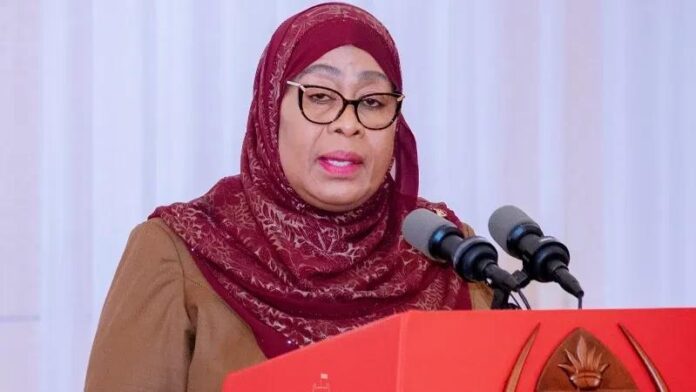
President Samia Suluhu Hassan has said the private sector will play a central role in the implementation of Tanzania’s National Development Vision 2050, with businesses expected to deliver nearly 70 percent of the country’s long-term development agenda.

Speaking at State House in Dar es Salaam during the launch of the implementation, monitoring and acceleration tools for Vision 2050, President Samia reaffirmed the government’s commitment to working closely with the private sector to transform the country’s development goals into tangible benefits for citizens.

“The government will continue to create an enabling environment, address existing challenges, and ensure that Vision goals are translated into tangible outcomes that touch the lives of citizens,” President Samia said.

The launch also featured a high-level dialogue between the government and private sector leaders, culminating in the signing of a Joint Declaration aimed at strengthening accountability, collaboration and investment in implementing the Vision.

President Samia said the rollout of the implementation tools fulfills a directive she issued on July 17, 2025, when she officially launched the National Development Vision 2050 in Dodoma.

“When I launched the National Development Vision 2050, I directed that implementation, monitoring and acceleration materials be prepared to ensure the Vision is effectively delivered,” she said.

She further directed the President’s Office responsible for Planning and Investment, together with other relevant institutions, to intensify public awareness campaigns on the implementation of the Vision.

The Tanzanian leader also urged citizens to safeguard peace, unity and stability, saying these remain essential for the successful delivery of the country’s long-term development objectives.

“I urge Tanzanians to continue maintaining peace, unity and stability so that this Vision does not remain merely an aspiration or a policy document, but is implemented successfully for the benefit of our nation,” she added.

The development comes just days after Kenyan President William Ruto unveiled Kenya Vision 2060, the country’s proposed long-term development blueprint that will succeed Vision 2030 and guide Kenya’s economic and social transformation over the next three decades.

President Ruto said the new framework is intended to build on the achievements of Vision 2030 while positioning Kenya as a globally competitive, inclusive and sustainable economy by 2060. He also announced the formation of an advisory team to spearhead nationwide consultations involving policymakers, experts, the private sector, academia and the public.

Kenya launches landmark urban expansion planning programme to guide sustainable growth in Western region

0

Kenya has set a bold new standard for sustainable growth following the launch of the Kenya Urban Expansion Planning (UXP) Programme, aimed at transforming the country’s rapidly growing cities.”

The initiative was unveiled during a five-day Urban Expansion Planning Workshop convened by the Council of Governors, under the leadership of H.E. Prof. Anyang’ Nyong’o, in strategic partnership with Africa Urban Lab.

The high-level gathering brought together political leaders and technical experts from Kisumu, Homa Bay, and Kakamega counties to establish actionable frameworks for orderly urban development.

By helping devolved units anticipate and structure spatial expansion, the program aims to bolster governance, build institutional capacity, safeguard critical infrastructure corridors, and create sustainable, climate-resilient, and investment-ready urban centers.

As county governments remain at the forefront of the nation’s spatial transformation, this forward-looking planning model establishes a strong foundation for inclusive, well-managed, and economically vibrant cities for generations to come.

IGAD calls for coordinated transition as Somalia prepares to take over security responsibilities

0

The Intergovernmental Authority on Development (IGAD) has called for a well-coordinated and orderly transition of security responsibilities in Somalia as African Union peacekeepers prepare to hand over operations to the country’s national security forces.

In a statement issued following the Extraordinary Summit for AUSSOM Troop-Contributing Countries, IGAD Deputy Executive Secretary Mohamed Abdi Ware said the transition should reflect Africa’s commitment to regional peace, stability and self-reliance while safeguarding the gains achieved over nearly two decades of peace support operations.

Ware said the ultimate objective is to enable Somalia’s indigenous security forces to take full responsibility for the country’s security, while ensuring that peacekeepers conclude their mission with dignity and recognition for their service.

“The goal is to transition security of Somalia to its indigenous forces in the shortest possible time, and send the men and women of the AUSSOM Mission back to their home countries as the heroes they are, departing Somalia basking in glory and enjoying the undying gratitude of the Somali people,” he said.

The IGAD official also dismissed claims circulating on social media suggesting that concerns raised during the summit were intended to undermine the Federal Government of Somalia.

“I have no clue how such sentiments would offend anyone, let alone the government we are all trying to help avoid a precipitous, premature, and disorderly exit of peacekeepers,” Ware stated.

He stressed that the transition must be guided by close coordination between troop-contributing countries, the Federal Government of Somalia and international partners to ensure that security gains made over the years are not reversed.

Ware further noted that defeating the militant group Al-Shabaab requires more than military operations, emphasizing the need to address the social, political and economic conditions that fuel extremism.

“The fight against Al-Shabaab is not a military-only mission. To get the Somali population on our side, we must counter Al-Shabaab narratives and improve lives by addressing underlying economic, social and political challenges,” he said.

He added that strengthening public institutions, promoting political reconciliation and expanding community engagement will be critical to achieving lasting peace in Somalia and the wider Horn of Africa.

IGAD maintained that the planned transition represents an African-led effort to build sustainable peace and reaffirmed its commitment to supporting Somalia as it assumes full responsibility for its national security.

 Government completes redeployment of former NHIF staff not absorbed by SHA

0

The government has officially completed the redeployment of all former National Hospital Insurance Fund (NHIF)employees who were not competitively recruited into the Social Health Authority (SHA), assigning them to various ministries, departments, and state agencies across the Public Service.

Information obtained from one of the affected employees indicates that the redeployment exercise was finalized on Monday, August 3, 2026. Officers were deployed based on their qualifications, skills, and experience, and will continue earning their existing salaries and benefits under “personal-to-holder” terms.

The exercise marks the final phase of the government’s transition from NHIF to SHA under the Social Health Insurance Act, 2023, bringing to a close a major restructuring of Kenya’s public health financing system.

The redeployment follows a communication issued on June 19, 2026, by SHA Chief Executive Officer Dr. Mercy Mwangangi, informing employees who had unsuccessfully applied for substantive management positions within the Authority that their temporary engagement with SHA had come to an end.

In the letter, Dr. Mwangangi advised the affected staff to choose between retiring from the Public Service or accepting redeployment to other government institutions, as provided for under the Social Health Insurance Act.

“Employees opting for redeployment will have their employment records transferred to the Public Service Commission for administrative processing and deployment on a personal-to-holder basis,” the communication stated.

SHA further informed the officers that responsibility for their salaries would revert to the institutions where they had been deployed, effective July 1, 2026.

Documents seen by KBC Digital show that the affected employees formally requested SHA to forward their employment records to the Public Service Commission (PSC) to facilitate the redeployment process.

The completion of the exercise fulfills commitments made by President William Ruto and Head of Public Service Felix Koskei during the rollout of the new health insurance framework.

Speaking during the Mashujaa Day celebrations in 2024, President Ruto assured NHIF employees that the transition to the new healthcare financing system would not cost them their jobs.

“I want to assure them that no one will lose their jobs, and I appreciate their dedication and service during this transition,” the President said.

Head of Public Service Felix Koskei later reaffirmed the government’s position, stating that employees who were not absorbed into SHA would be redeployed to ministries, departments, state corporations, and other government agencies to ensure full staff retention.

The completion of the redeployment exercise effectively closes the chapter on the transition from NHIF to SHA, fulfilling the government’s pledge to protect jobs while implementing reforms aimed at strengthening Kenya’s universal health coverage system.