Home Blog Page 57

Tragedy strikes Technical University of Mombasa Community as bus accident claims 2 lives in Ahero

0
Oplus_131072

MOMBASA — The Technical University of Mombasa (TUM) fraternity is in mourning following a fatal road accident near Ahero that left two students dead and 29 others injured.

​According to an official statement issued by TUM Vice Chancellor Prof. Laila U. Abubakar on August 7, 2026, the students were travelling to attend the burial of former student leader, Elvis “Beast” Otieno. The group had safely arrived in Kisumu to receive the body, which had been flown in from Mombasa, before setting off toward the burial location.

​The accident occurred as the convoy approached Ahero. The driver of the final bus carrying mourners reportedly swerved to avoid a head-on collision with an oncoming, over-speeding saloon car. In the process, control of the vehicle was lost, causing the bus to overturn and roll.

​Two male students lost their lives at the scene, while 29 others sustained injuries of varying degrees. The injured students were rushed to nearby medical facilities and are currently undergoing treatment at Lisa Hospital in Ahero and Jaramogi Oginga Odinga Teaching and Referral Hospital (JOOTRH).

​In her statement, Vice Chancellor Prof. Abubakar offered her heartfelt condolences to the families, colleagues, and friends of the deceased students on behalf of the University Council, Management, Senate, and staff. She also expressed deep gratitude to local emergency responders, medical teams, security forces, and members of the public who stepped in swiftly to aid the victims following the crash.

The P-Square family feud – A timeline of Afrobeats’ most high-profile rift

0

Twin brothers Peter Okoye (Mr. P) and Paul Okoye (Rudeboy), along with their elder brother and long-time manager Jude Okoye, have dominated headlines for over a decade due to a series of high-profile breakups, reconciliations, and intense legal battles.

Peter repeatedly accused elder brother Jude Okoye of unfair revenue distribution, secret diversion of royalties, and dictatorial management practices.

Tensions escalated over solo ambitions, featuring rights, song credits, and perceived disrespect toward each twin’s immediate family.

Financial disagreements culminated in petitions to Nigeria’s Economic and Financial Crimes Commission (EFCC) regarding joint account diverted funds and tax compliance.

Reports emerge of a massive disagreement regarding Jude Okoye’s role as manager. Peter demands new management, though the brothers temporarily resolve their differences to release their sixth studio album, Double Trouble.


In 2016, a video leaks showing a physical altercation at their lawyer’s office. By September 2017, Peter officially sends a termination letter to their legal representative, dissolving P-Square. Both launch solo careers as Mr. P and Rudeboy.


After four years of public traded insults and solo releases, the twin brothers publicly embrace, issue apologies to fans, and perform together at a massive 40th birthday concert, officially reviving P-Square.


Paul Okoye confirms in an interview that P-Square has split once again. Peter writes an open letter accusing Paul and Jude of secretly siphoning millions in joint royalties into a private company, leading to an EFCC investigation involving all three brothers.

P-Square is currently inactive as a duo. Both Peter and Paul operate as solo artists while legal and financial audits regarding joint accounts and intellectual property continue through their respective legal teams.

Amboseli Elephant poisoning: Kenya Veterinary Association urges immediate government probe

0

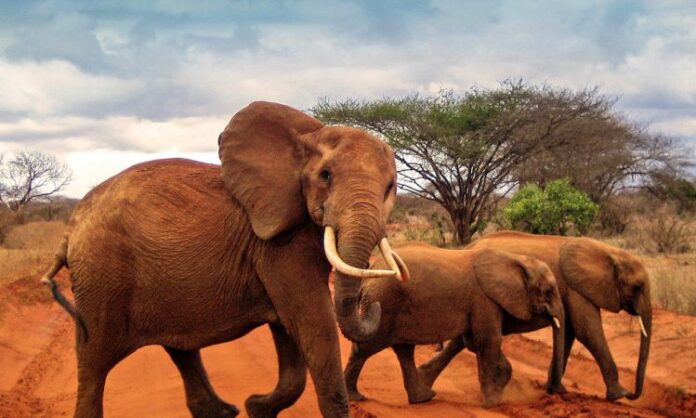
NAIROBI — The Kenya Veterinary Association (KVA) has called on the National Government to immediately audit Kimana tomato harvests, trace restricted cyanide sources, and enforce protected migration corridors, while pressing relevant County Governments to establish non-lethal conflict deterrents and regulate agricultural chemicals following the cyanide poisoning of 15 elephants in the Amboseli ecosystem.

KVA President Dr. Kelvin Osore warned that the deaths, recorded between June 24 and July 24, 2026, represent both an ecological catastrophe and a severe threat to public food safety. According to preliminary Kenya Wildlife Service (KWS) tests, the elephants ingested the lethal chemical alongside tomatoes on farms near the Kimana sanctuary and Kuku Group ranch areas.

Addressing the national administration, through an official statement, the KVA expressed deep concern over official claims that produce potent enough to kill 15 jumbos poses no immediate health hazard to human consumers. The association is demanding that the Ministry of Agriculture and Livestock Development, together with the Ministry of Health, conduct immediate laboratory screening on all commercial produce exiting the Kimana region before it reaches public markets.

Furthermore, national security organs must launch a multi-agency investigation to pinpoint how restricted cyanide entered the region, specifically examining claims linking the compound to clandestine gold mining operations. The central government must also institute macro-level zoning policies to shield vital wildlife routes from agricultural encroachment.

At the county level, devolved leadership surrounding the Amboseli basin is under pressure to defuse the escalating human-wildlife friction driving farmers to defend their fields through lethal means. As cultivation expands near park borders, roaming herds in search of sustenance frequently enter farmland, leading to severe crop loss and retaliatory actions.

Affected county administrations must intervene by partnering with farming communities in Kimana and Kuku to deploy non-lethal pest and wildlife control systems, alongside strict local tracking of toxic farm chemicals. By establishing clear physical boundaries between active agricultural plots and traditional wildlife corridors, county leaders can safeguard agrarian livelihoods while insulating elephants from fatal retaliatory measures.

The tragedy underscores a dangerous trend of weaponizing industrial chemicals against wild animals, echoing historical poaching incidents in Zimbabwe where watering holes were poisoned with cyanide. While the Amboseli deaths appear connected to human-wildlife conflict rather than ivory poaching, veterinary authorities emphasize that introducing highly toxic substances into open agricultural landscapes creates an unsustainable hazard for the entire ecosystem. Because animal welfare, environmental integrity, and human health are inextricably linked, both national and county leaders must demonstrate the political courage necessary to secure the food supply and safeguard the nation’s natural heritage.

Stakeholders Unite to Strengthen Turkana Fisheries Sector

0

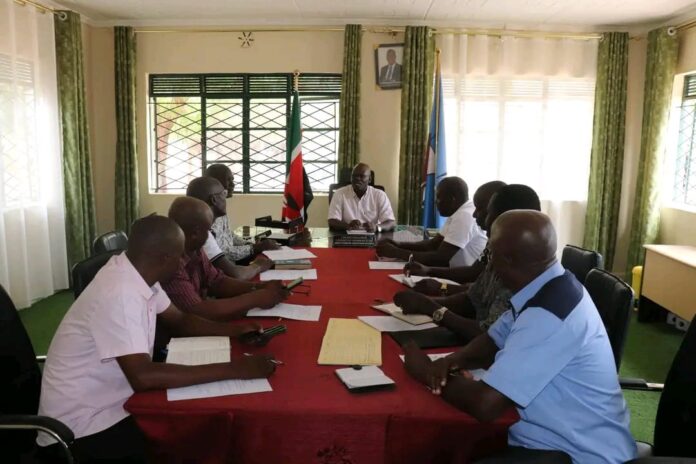
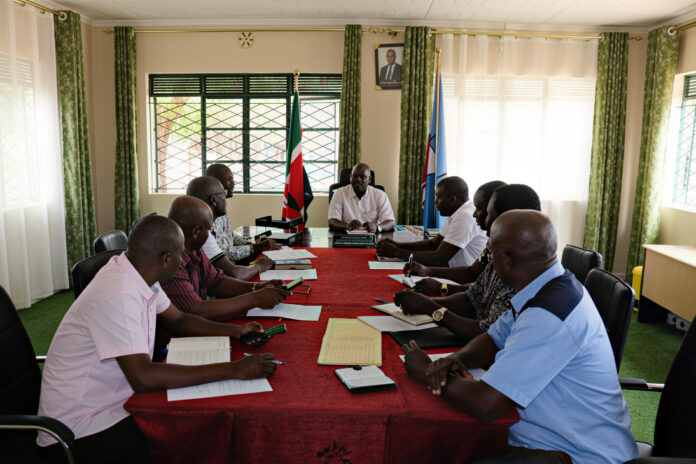
LODWAR — Key stakeholders in Turkana’s fisheries sector met in Lodwar on Thursday to establish a dedicated coordination forum aimed at boosting the county’s blue economy.

The new coalition brings together county officials, national state departments, research institutes, and community representatives, including the Turkana County Department of Fisheries and Aquaculture, the State Department for Blue Economy and Fisheries, the Kenya Fisheries Service, the Kenya Wildlife Service, the Kerio Valley Development Authority, the Kenya Maritime Authority, the Kenya Marine Fisheries Research Institute, and the County Beach Management Unit Network. The group agreed to hold quarterly meetings and immediately created a digital network to streamline operational communication.

County Executive Committee Member for Agriculture, Livestock Development and Fisheries Dr. Michael Eregae welcomed the initiative as a practical step toward empowering local fisherfolk. He directed department representatives to fast-track the forum’s setup, noting that a unified coordination strategy is necessary to identify operational gaps and build an inclusive sector.

Supporting this vision, Chief Officer Peter Ikaru emphasized that strong inter-agency partnerships will improve resource management, build landing infrastructure, and elevate fish processing standards so local catches can meet both domestic and international export market demands.

Significant physical and financial investments are scheduled to upgrade the region’s fisheries supply chain. Assistant Director of Fisheries Kennedy Opiyo revealed plans to construct modern fish landing sites in Kalokol and Loiyangalani to reduce post-harvest losses.

Additionally, Turkana County is set to benefit from amendments to the Public Finance Management Act, which will establish an Artisanal Fish Development Fund to provide credit facilities, strengthen fish processing cooperatives, and finance training programs for local fisherfolk.

To improve water transport and safety across Lake Turkana, Kenya Maritime Authority representative Edwin Were outlined plans to introduce two new ferries and build matching jetty landing sites connecting Kalokol and Loiyangalani.

KMA is also establishing a main emergency response center in Kalokol equipped with speedboats, a water ambulance, and aerial drone surveillance. To ensure these safety measures succeed, KMA will collaborate with telecom providers to expand cellular network coverage across dead zones, while launching a digital Maritime Information System to broadcast real-time weather updates directly to fishermen.

Moving forward, the coordination forum will focus on resolving long-standing operational and environmental threats across Lake Turkana. Upcoming quarterly sessions will specifically tackle illegal fishing practices, the harvesting of undersized fish, joint fisheries surveys, lake insecurity, and accident prevention.

The meeting was attended by key sector leaders, including John Bett, Edward Wanyama, and Paul Kebo from the County Fisheries Department, William Tonui (KWS), Erick Opallo (KeFS), Maurice Obiero and Casiares Olilo (KMFRI), Stephen Ekuwom (BMU Network), and Mark Loupe from Fisheries Administration.

Turkana Central: 34km Nanyangakipi-Kariama road set for October completion

0

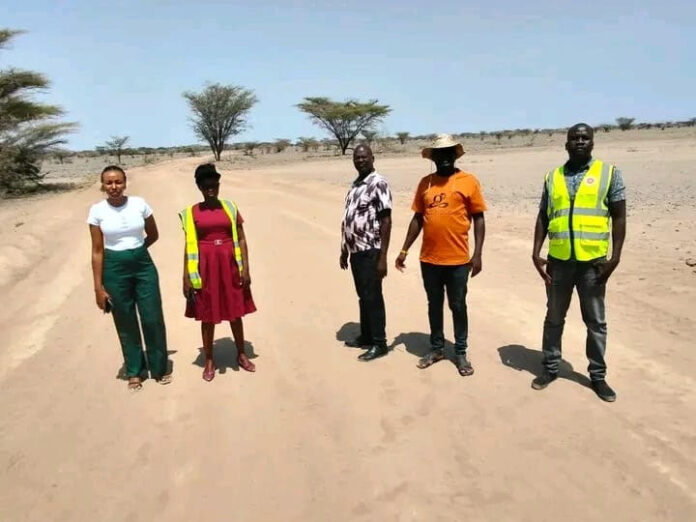
TURKANA – The 34-kilometre Nanyangakipi-Kariama road project in Kerio Delta Ward, Turkana Central, is on course for completion by early October 2026, following a positive inspection by the County Government’s Department of Roads.

The inspection team established that the contractor had successfully completed the major components of the routine road maintenance project, leaving only minor finishing works before the contract period lapses in October.

Roads Inspector Johnmark Eregae, who led the inspection, expressed confidence in the quality and progress of the works.

“Having inspected the works, the team agrees that the contractor has effectively carried out top stripping, grading and erected the signposts contained in the contract. The road is therefore as good as complete, save for minor finishings to be done by the contractor,” said Eregae.

The approximately Ksh 4 million project was awarded to Kia Egole Women Group Company Limited as part of the County Government’s commitment to promoting gender inclusion in the roads and heavy construction sector in line with the law.

Eregae directed the contractor to complete the remaining works within the stipulated contract period and submit all the necessary documentation to facilitate inspection, project closure, and payment.

“The inspection team hereby directs the contractor to finish up the remaining bits within the stipulated contract period and proceed to submit all the necessary records and inspection reports to facilitate payment,” he added.

The inspection team also included Deputy Director of Roads Julia Agis, Senior Procurement Officer Shakespeare Lomoe, Senior Accountant Anisa Aden, and Monitoring and Evaluation Officer Benson Ekidor.

Once completed, the upgraded road is expected to improve transport, ease the movement of people and goods, and enhance access to markets and essential services for communities in Kerio Delta Ward and the surrounding areas.

KSSSA national games 2026: Kakamega high reclaim football crown as St. Joseph’s Girls, Kesogon and Chesamisi Script History, Secure FEASSSA Qualification

0

The curtains came down on the 2026 Kenya Secondary Schools Sports Association (KSSSA) National Games at Mpesa Foundation Academy in Thika on 6th August 2026 with new champions emerging across football, volleyball and rugby, as teams booked their places at the Federation of East Africa Secondary Schools Sports Association (FEASSSA) Games set for August 14–22.

In the boys’ football final, Kakamega School were crowned the 2026 KSSSA national champions after edging St. Mary’s School Yala 3-2 in a thrilling final that kept thousands of fans on the edge of their seats.

The victory saw Kakamega High lift a record-extending 15th KSSSA National Boys’ Football Championship, ending a nine-year wait for the country’s biggest school football prize after last winning it in 2017.

The match burst into life in the opening minute when Eugene Belletty gave Kakamega an early lead before Collins Otieno restored parity for Yala in the 33rd minute. Yala then went ahead in the 72nd minute, but Derrick Wanyonyi equalised for Kakamega in the 81st minute to force extra time.

With the contest seemingly headed for penalties, Belletty struck again in the 98th minute after his effort took a decisive deflection, handing Kakamega a memorable 3-2 victory and their first national football title since 2017.

Both Kakamega School and St. Mary’s Yala secured qualification for the FEASSSA Games, while Menengai High School also earned a regional ticket after defeating Takaba 3-2 to finish third.

In the girls’ football final, St. Joseph’s Girls from Trans Nzoia made history by winning their maiden KSSSA national title after defeating Nyakach Girls in a penalty shootout following a 1-1 draw in regulation time. The victory marked the first-ever national championship for St. Joseph’s Girls and secured their place at the FEASSSA Games alongside Nyakach Girls.

Meanwhile, Kesogon Girls from Trans Nzoia were crowned national volleyball champions after a commanding straight-sets victory over Soweto Academy in the final. Led by outstanding captain Ruth Atabo, Kesogon dominated the match 25-14, 25-10 and 25-18 to lift the national title in style.

The triumph also earned Kesogon the honour of representing Kenya at the FEASSSA Championships but despite finishing runners-up, Soweto Academy also qualified for the regional games, while Mwitoti secured third place.

Speaking after the victory, Kesogon coach John Marani credited the team’s success to discipline, hard work and unwavering support from the school administration and fans, expressing confidence ahead of the East African competition.

In the boys’ volleyball final, Chesamisi High School etched their name into history by winning the KSSSA national title for the first time after defeating Chepsaita High School of Uasin Gishu 3-1 in an entertaining championship match.

The national rugby sevens competition also produced deserving champions. In the boys’ category, Butula Boys were crowned champions after defeating Cardinal Otunga Mosocho in the final, while Kinale Girls claimed the girls’ title ahead of Kimobo Girls.

The week-long championships, held from August 2 to August 6 at Mpesa Foundation Academy in Thika, showcased Kenya’s finest secondary school talent and set the stage for another exciting FEASSSA Games in Morogoro, Tanzania, where the country’s top teams will battle for regional honours.

Turkana fishers set to benefit from new infrastructure and safety initiatives

0

TURKANA – Thousands of fishers in Turkana County are set to benefit from a series of government-led initiatives aimed at improving fisheries infrastructure, enhancing water transport safety, and expanding access to financial support for small-scale fishing communities.

The initiatives were announced during a stakeholders’ meeting held in Lodwar on August 6, 2026, which brought together representatives from the County Department of Fisheries and Aquaculture, the State Department for Blue Economy and Fisheries, Kenya Fisheries Service (KeFS), Kenya Wildlife Service (KWS), Kerio Valley Development Authority (KVDA), Kenya Maritime Authority (KMA), Kenya Marine and Fisheries Research Institute (KMFRI), and Beach Management Unit (BMU) networks.

Among the key projects unveiled is the construction of a modern fish landing site at Kalokol in Turkana County, alongside another facility at Loiyangalani in Marsabit County. According to Assistant Director of Fisheries at the State Department for Blue Economy and Fisheries, Kennedy Opiyo, the facilities are expected to reduce post-harvest fish losses, improve product quality, and strengthen market access for local fishers.

Assistant Director of Fisheries at the State Department for Blue Economy and Fisheries, Kennedy Opiyo, said the investment will significantly improve the fisheries value chain.

“The new fish landing sites will help reduce post-harvest losses, improve fish quality, and create better market opportunities for our fishing communities. We are also working to ensure small-scale fishers have access to affordable financing through the proposed Artisanal Fish Development Fund,” said Opiyo.

Kenya Maritime Authority representative Edwin Were announced that the authority will procure two ferries to improve water transport between Kalokol and Loiyangalani. The project will also include the construction of two ferry landing sites to enhance connectivity and ease the movement of people and goods across Lake Turkana.

To strengthen emergency response, KMA will establish a major rescue centre in Kalokol equipped with two high-speed rescue boats and a marine ambulance. The authority also plans to acquire aircraft and drones to enhance maritime surveillance, search-and-rescue operations, and overall safety on Kenya’s inland waters.

Additionally, KMA will work with telecommunications companies to expand mobile network coverage in remote fishing areas where communication remains a challenge. The authority also plans to introduce a Marine Information System that will provide fishers with real-time weather forecasts and other essential safety information before and during fishing activities.

Turkana County Executive Committee Member for Agriculture, Livestock Development and Fisheries, Dr. Michael Eregae, emphasized that cooperation among institutions will be key to transforming the sector.

“By strengthening coordination among all stakeholders, we will eliminate duplication, address existing gaps, and create a stronger and more sustainable fisheries sector that improves livelihoods across Turkana,” Dr. Eregae said.

To ensure continuous collaboration, stakeholders resolved to establish a permanent coordination forum that will meet quarterly. The forum will focus on addressing illegal fishing, overexploitation of fish stocks, fisheries research, marine safety, and sustainable management of Lake Turkana’s fisheries resources while promoting greater market opportunities for local fishing communities.

The Smile that grew from the dryland: How Esekon keeps Turkana smiling

0
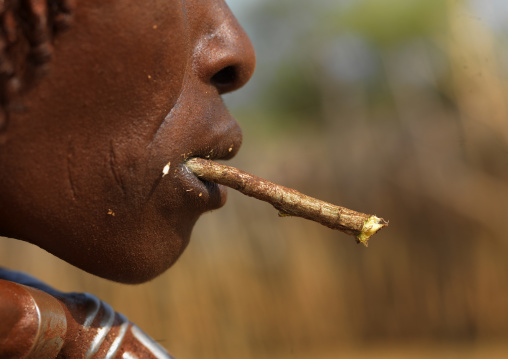
Hamer Tribe Woman Chewing, Omo Valley, Ethiopia

TURKANA – In Turkana, where the sun can be unforgiving and the landscape is often painted in shades of dust and brown, there is one sight that stands out the bright, unmistakable smile of its people. Against deep, sun-kissed melanin, white teeth seem to shine even brighter, producing what many would affectionately call the Turkana “banana smile.” But behind some of those smiles is a simple tree that has quietly served generations of families long before plastic toothbrushes became common in local shops.

It is Esekon, also known as Ethekon, the local name for Salvadora persica, a hardy tree that has survived alongside Turkana communities for generations. Its tender branches are cut, stripped, and softened before being chewed at one end until the fibres separate, turning a small piece of wood into a natural toothbrush. For many Turkana families, the practice is not a novelty. It is knowledge inherited from parents and grandparents and passed from one generation to another.

“My parents have been using the tree branch for many years and I have never heard them complain of toothache,” says David Esinyen, a resident of Kakong in Turkana South.

For 67-year-old Peter Ekaale of Lodwar, Esekon has been part of his life for more than six decades. “For more than 60 years, I have never visited the hospital complaining of tooth decay,” he says.

While Ekaale’s experience cannot by itself prove that Esekon prevents tooth decay, his testimony reflects the confidence generations of Turkana people have placed in the traditional practice.

And the story of Esekon goes beyond keeping teeth clean. In a county where communities regularly contend with drought, water scarcity, and increasingly unpredictable weather, the tree represents something much bigger a culture of making use of what the land provides.

Salvadora persica is naturally suited to dry environments. It can tolerate drought and saline conditions, allowing it to survive where many other plants struggle. For Turkana people, that resilience has made the tree useful in everyday life. A suitable branch can be cut and prepared without electricity, machinery, or expensive equipment. It can be carried to the grazing fields, taken on long journeys, or kept at home. That simplicity is part of what makes Esekon a powerful example of indigenous adaptation.

Long before climate change became a global policy conversation, Turkana communities were learning how to live with a harsh and changing environment by understanding the resources around them. They knew which plants survived the dry season, which ones could be used for medicine, food, or materials, and which could provide practical solutions when resources were limited. Esekon became one of them.

The knowledge is rarely written down. Instead, it is demonstrated. A child watches an elder select a branch. The bark is removed. One end is softened. The fibres spread out and a toothbrush emerges from what moments earlier was simply a twig. Years later, the child may repeat the same process for another generation. That is how indigenous knowledge survives.

Interestingly, the connection between Esekon and the Turkana people goes even deeper. Ethekon is also used as a name for children. The same word associated with a tree can therefore become part of a person’s identity, reflecting a cultural relationship in which nature is not simply something surrounding the community, but something woven into language, memory, and everyday life.

Modern science has also taken an interest in Salvadora persica, commonly known as the miswak or toothbrush tree. Studies have reported antibacterial and antiplaque properties and potential benefits for plaque control and gum health, although researchers caution that more evidence is needed. The traditional toothbrush should therefore not be presented as a miracle cure or a replacement for fluoride toothpaste and professional dental care.

But for Turkana communities, the importance of Esekon is not confined to what happens inside a laboratory. The tree also represents an opportunity to preserve indigenous knowledge while creating small economic opportunities. Prepared Esekon sticks can sell for around KSh20, giving people who harvest and prepare them a modest source of income while keeping the traditional practice alive.

And perhaps that is why the tree continues to matter. It survives in the same environment as the people who depend on it. It tolerates heat. It withstands drought. It asks for little. And yet, it continues to give.

In that sense, Esekon mirrors the resilience of Turkana communities themselves. The story begins with a twig but ends with something much larger a lesson about adaptation, culture, and identity. Because the Turkana smile is not simply about white teeth against dark melanin. Behind some of those smiles is generations of knowledge. An elder who knew which branch to cut. A parent who taught a child how to prepare it. A tree that survived the dryland. And a community that learned how to survive with it.

The plastic toothbrush may be modern, but Esekon is older. It is a toothbrush. It is a tradition. It is a source of income. It is a name. And it is a living reminder that climate resilience did not begin with modern climate programmes. In Turkana, some of it has been growing quietly from the land all along.


West Pokot launches 2026 International youth week to boost civic engagement and empowerment

0

WEST POKOT – Youth in West Pokot have been urged to take a more active role in civic and development affairs as the county officially launched the 2026 International Youth Week celebrations in Makutano this August.

The celebrations are being held under the global theme, “Different Contexts, Common Aspirations,” bringing together young people, development partners, and key stakeholders to address pressings issues and promote youth participation in community and county growth.

The launch was presided over by the County Executive Committee Member for Tourism, Youth, Sports, Gender, and Social Services, Lucky Litole, who represented Governor Simon Kachapin. Litole emphasized the county’s commitment to creating platforms that enable young people to access essential services, engage in decision-making, and contribute meaningfully to their communities.

“Different contexts may shape the experiences of young people, but their aspirations remain common. We must therefore create opportunities that enable our youth to participate and realize their potential,” Litole stated.

To kick off the week, the launch featured awareness sessions focused on sexual and reproductive health, access to youth-friendly services, voter registration, and blood donation. These sessions aim to equip young people with critical information on available resources while encouraging active civic responsibility.

The county government confirmed that celebrations will continue across different parts of West Pokot with a series of grassroots activities. Upcoming events include an X Space Youth Dialogue scheduled for Friday and the Siyoi Youth Dialogue on Saturday.

This initiative comes at a critical time when youth participation in civic affairs, health education, and economic empowerment remain central to improving the overall well-being of young people across the county.

Wetangula defends farmers’ right to elect sugar board representatives

0

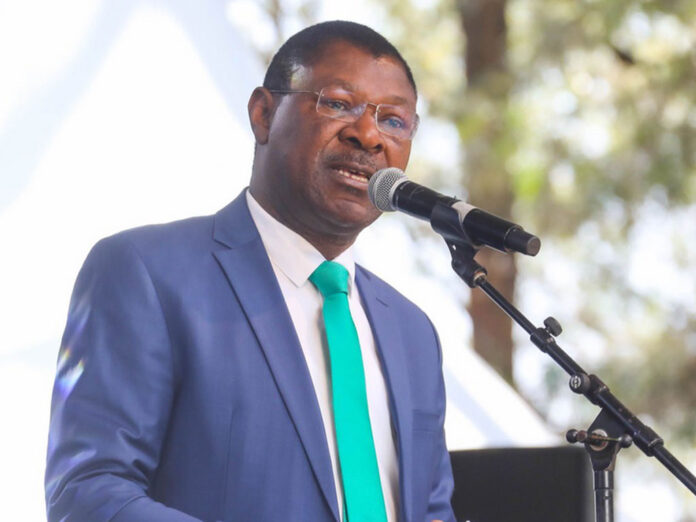
National Assembly Speaker Moses Wetangula has pledged that Parliament will safeguard sugarcane farmers’ right to elect their own representatives, saying any attempt to replace elections with appointments would undermine reforms in the sugar sector.

Speaking after meeting officials of the Kenya National Federation of Sugarcane Farmers (KNFSF) at Parliament Buildings, Wetangula assured farmers that Parliament would oppose any legislation that weakens the gains achieved under the current Sugar Act.

“If the President had any reservations, he would have returned the Bill to Parliament with a memorandum. The law therefore remains exactly as Parliament passed it,” Wetang’ula said.

The farmers’ delegation, led by Chairman Ezra Okoth and Secretary General Kilion Osur, urged Parliament to reject proposed amendments in the Crops Laws (Amendment) Bill, 2026, arguing that the changes would strip farmers of the right to elect directors representing growers on the Kenya Sugar Board.

Osur said the federation had reached an agreement with Agriculture Cabinet Secretary Mutahi Kagwe that elections for growers’ representatives would go ahead instead of appointments.

“The law requires elections, and that is what we are going to do. Once farmers elect their representatives, there will be no justification for changing the law to allow appointments,” Osur said.

According to the federation, the elections are expected to be held on September 5, 2026, once the official gazette notice is issued and statutory requirements are met.

The federation also opposed plans to transfer the Sugar Development Levy (SDL) to the Commodities Fund, insisting that the levy should remain dedicated to financing sugarcane farming because of the crop’s long maturity period.

Wetangula, who is also a sugarcane farmer, said reforms had already begun reviving struggling sugar mills, including Nzoia, Mumias and Chemelil, and warned that illegal sugar imports remain a major threat to the industry’s recovery.

“One important issue I did not hear you mention is reckless sugar importation, which is choking our local sugar industry. As the apex body representing sugarcane farmers, you must become the strongest voice in protecting farmers’ interests,” he said.

The Speaker directed the National Assembly’s Agriculture Committee to engage the Agriculture Ministry to ensure the elections proceed without interference and reaffirmed Parliament’s commitment to protecting farmers and strengthening Kenya’s sugar industry.

“Our priority is to protect the farmer and secure the future of Kenya’s sugar industry,” Wetang’ula said.