Home Blog Page 59

Gachagua urges one-term movement to unite ahead of 2027 polls

0

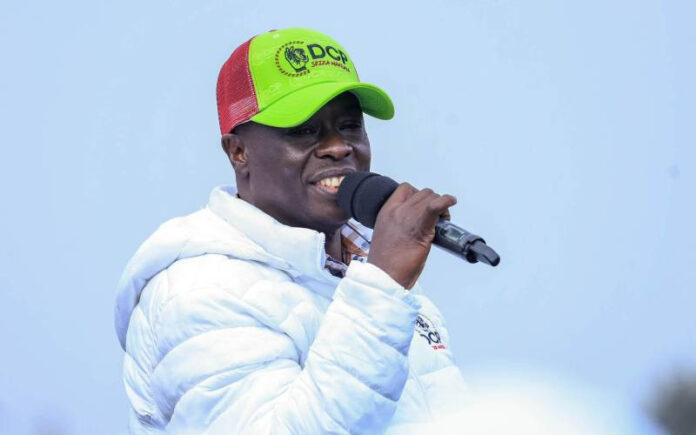
Democracy for the Citizens Party (DCP) leader Rigathi Gachagua has called on political leaders and supporters backing the one-term movement against President William Ruto to unite, saying cohesion will be key to achieving victory in the 2027 General Election.

Speaking at his Mathira home in Nyeri while hosting a delegation from Nakuru County, Gachagua urged members of the movement to avoid internal conflicts and instead focus on their common objective.

“Fighting people within the one-term movement is not good energy. It is not going to help us. Focus on William Ruto and the people around him. Ignore other noises and do not get distracted,” Gachagua said.

He warned that divisions within the movement could weaken its campaign, arguing that supporters should remain united and strategic as they prepare for the next general election.

During his address, Gachagua also proposed that parties supporting the one-term agenda form a coalition to strengthen their political efforts ahead of 2027.

He suggested the alliance could be named the “Hyena Coalition,” saying he was adopting the term following remarks attributed to Health Cabinet Secretary Aden Duale.

“Because Duale insulted us, let us accept that name. We want to call it the Hyena Coalition,” he said.

Gachagua also appealed to former Attorney General Justin Muturi to help bring together Mt Kenya leaders behind the proposed alliance, saying unity would be critical in the campaign against President Ruto.

The DCP leader has maintained a strong anti-Ruto campaign in recent months, insisting he will continue mobilising support for the one-term agenda until the 2027 elections.

Meanwhile, Health Cabinet Secretary Aden Duale has defended remarks he made on July 20 in Mandera County, saying they had been taken out of context.

In a statement posted on his X account, Duale said the Somali phrase he used was a common proverb referring to the difficulty of abandoning long-standing habits or privileges and was never intended as an attack on any community.

“I have been widely misquoted, and my remarks have been taken out of context to advance false and misleading narratives,” Duale said.

The remarks sparked widespread political criticism, with leaders from across the political divide calling on the Cabinet Secretary to apologise.

The National Cohesion and Integration Commission (NCIC) has since launched investigations into the matter.

Battle over ‘LINDA’ name clouds registration of new political parties

0

A dispute over the use of the name “LINDA” has emerged after two political groups laid claim to the identity, setting the stage for a legal and administrative battle before the Office of the Registrar of Political Parties (ORPP).

The latest entrant, the Liberty National Democratic Alliance (LINDA) Party, says it has the legitimate claim to the name, arguing that it began the registration process in 2024 and has already secured approval for its proposed name, party constitution, manifesto, ideology and nomination rules.

Speaking outside the ORPP headquarters in Nairobi after submitting the party’s registration documents, founder and party leader Phenasio Thuku said the party was in the final stages of obtaining full registration.

“Our name has been approved. Our manifesto, ideology, party constitution and nomination rules have all been approved. We are on the right path to being fully registered as Kenya’s newest political party,” Thuku said.

He announced that the party would soon be officially launched under the slogan “Protect Kenya, Protect Kenyan Lives” (Linda Kenya, Linda Maisha Kenya), adding that its agenda would focus on defending Kenya’s sovereignty, constitutionalism, human rights, liberty and the rule of law.

Thuku dismissed claims that the party had been formed to frustrate the registration of the Linda Mwananchi movement.

“This is no one’s project. It is my own project,” he said.

He further insisted that the LINDA Party has no connection with the Linda Mwananchi movement.

“We are the legitimate founders of the LINDA Party,” he added.

The dispute comes as the Linda Mwananchi movement, associated with Nairobi Senator Edwin Sifuna and other opposition leaders, continues its push to transition into a fully registered political party.

A day before the LINDA Party’s announcement, leaders of the Linda Mwananchi movement visited the ORPP offices, accusing unnamed individuals of attempting to register a political party using a similar name and colours. They argued that such a move could confuse supporters and undermine the movement’s political identity.

Under the Political Parties Act, the ORPP is required to assess proposed party names, symbols, constitutions and other registration documents before granting provisional registration. The law also allows objections where similarities between parties are likely to cause public confusion.

The emerging dispute now places the registrar at the centre of determining which political outfit, if any, will ultimately secure the right to use the “LINDA” identity.

New hope in Ebola fight as moderna begins human trials of experimental vaccine

0

A new phase in the global fight against Ebola has begun after biotechnology company Moderna launched the first human trial of an experimental vaccine targeting the deadly Bundibugyo strain, a form of the virus that currently has no approved vaccine.

The vaccine, known as mRNA-1469, was administered to its first volunteers in Canada on Tuesday, August 4, following government approval for an early-stage clinical study.

The trial marks an important step in efforts to develop new tools against Ebola outbreaks, particularly in regions where the disease continues to threaten public health. Researchers will focus on determining whether the vaccine is safe and whether it can stimulate the body’s immune response against the Bundibugyo virus.

The study will be conducted at three locations across Canada and is expected to involve about 80 healthy adults.

Moderna is developing the vaccine in partnership with the Coalition for Epidemic Preparedness Innovations (CEPI), which has committed up to $50 million to support early research, testing and manufacturing efforts.

Under the partnership agreement, Moderna has pledged that if the vaccine receives approval, at least 500,000 doses will be made available to low- and middle-income countries at affordable prices.

The vaccine development comes as the Democratic Republic of Congo (DR Congo) continues to battle an outbreak of Ebola caused by the Bundibugyo strain. The outbreak was declared a Public Health Emergency of International Concern on May 17.

According to the World Health Organization (WHO), the outbreak in DR Congo had recorded 3,605 confirmed cases and 1,587 deaths by July 30.

Meanwhile, Uganda has declared an end to its Ebola outbreak after recording 20 infections and two deaths. The country was declared Ebola-free after going 42 days without a new case following the discharge of the last patient on June 16.

Beyond vaccine development, scientists are also exploring possible treatments for the disease. In July, WHO launched a clinical trial in DR Congo to test two experimental treatments for Bundibugyo virus disease.

The trial, known as the Platform Adaptive Randomised Trial for New and Repurposed Filovirus Treatments (PARTNERS), is enrolling patients with confirmed infections as researchers seek better ways to manage and treat the virus.

The latest vaccine trial offers renewed hope in preventing future Ebola outbreaks, especially in areas where emerging strains continue to pose a serious health threat.

Nairobi’s Underground Metro Dream: A bid to re-think the future of city transport

0

Nairobi could be on the verge of a major transformation in its public transport system if plans for a Sh1 trillion underground metro railway move from paper to reality, with Governor Johnson Sakaja arguing that the ambitious project could provide a long-term solution to the capital’s worsening traffic crisis.

Speaking before the Senate Committee on National Security, Defence and Foreign Relations, Sakaja unveiled plans for the Nairobi Metropolitan Mass Rapid Transit System (NMRTS), a 30-kilometre underground metro network expected to connect the Central Business District (CBD) with Eastlands, Westlands and Upper Hill.

The governor said the project is designed to shift thousands of commuters from overcrowded roads into a modern transport network that would reduce travel times and improve movement across the city.

“Moving commuters underground is the ultimate solution to Nairobi’s traffic challenges and will help create a 20-minute city,” Sakaja said.

According to the county government, the underground CBD section will serve as the backbone of the project, linking rail services with pedestrian pathways, non-motorised transport and modern transit terminals.

The Eastlands corridor, one of Nairobi’s busiest commuter routes, is expected to benefit significantly by providing faster and more reliable transport options for thousands of daily passengers.

If implemented, the project would become the first underground metro system in East, West and Southern Africa, placing Nairobi among a small group of African cities with advanced urban rail networks. Currently, metro systems on the continent are found mainly in Egypt and Algeria.

However, the proposal has sparked a national debate over Nairobi’s development priorities. While supporters see the metro as a necessary investment for a growing city, critics argue that basic services should be addressed before pursuing a multi-billion-dollar infrastructure project.

Some residents have questioned whether the county government can successfully construct and maintain underground tunnels when challenges such as flooding, poor drainage, garbage collection and damaged roads remain unresolved.

Urban experts have also raised concerns about implementation, pointing to previous transport projects such as the Bus Rapid Transit (BRT) system, which faced delays despite significant investment.

Despite the criticism, Sakaja maintains that feasibility studies conducted with international development partners show that underground infrastructure is achievable in Nairobi.

The governor says the project represents a long-term vision to modernise the capital’s transport system and prepare the city for future population growth.

For many Nairobi residents, however, the debate remains centred on balancing ambitious future projects with immediate challenges affecting their daily lives, including road conditions, drainage failures and unreliable public services.

From play to prosperity? how three boys sparked Kenya’s newest gold rush in West Pokot

0

For three boys from Cheporor village in Kanyarkwat, West Pokot County, Saturday, August 1, began like any other day.

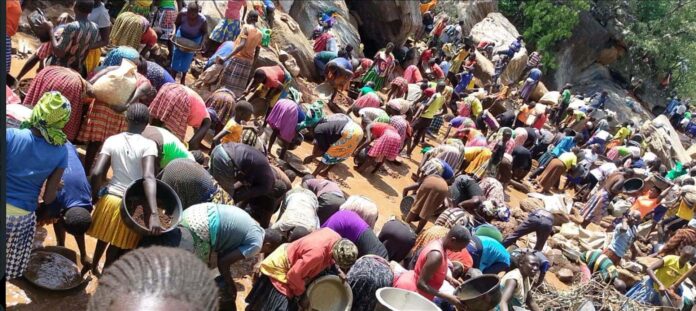
The boys had reportedly taken their family’s livestock out to graze across the rocky hills that surround their village. As children often do while watching over animals, they are said to have begun digging into the ground out of curiosity. What started as a playful moment soon turned into a discovery that has changed the fortunes of an entire community.

Among the loose soil were shiny particles believed to be gold.

News of the discovery spread with astonishing speed. By evening, neighbours had gathered to see the site for themselves. By the following morning, word had travelled beyond West Pokot County, drawing hopeful miners from neighbouring villages, distant parts of Kenya and across the border from Uganda.

Within just three days, an estimated 10,000 people had descended on the once-quiet village, transforming it into Kenya’s newest gold rush.

Today, the peaceful grazing fields of Cheporor are filled with the sounds of pickaxes striking rock, shovels cutting through the earth and excited voices calling out whenever someone believes they have found something valuable. Makeshift camps have sprung up almost overnight as people sleep near the mining site, determined not to miss what many believe could be a once-in-a-lifetime opportunity.

The excitement is easy to understand.

A single gram of gold may be no larger than a fingernail, but it carries extraordinary value. At current market prices, one gram of pure gold is worth between Sh13,800 and Sh15,000. Even after deductions by local buyers and brokers, an artisanal miner can earn between Sh10,000 and Sh13,500 for a gram, depending on its purity.

For many families in rural Kenya, that amount exceeds what they would normally earn over several weeks. A miner fortunate enough to recover five grams could earn up to Sh75,000, while ten grams could fetch nearly Sh150,000. Such earnings can pay children’s school fees, build a modest home, purchase livestock, settle debts or provide the capital needed to start a small business.

It is this promise of a better life that has drawn thousands to Cheporor.

Every miner knows there are no guarantees. Many will spend days or even weeks digging without finding enough gold to sell. Yet hope remains stronger than uncertainty. Every scoop of soil carries the possibility that the next tiny golden speck could rewrite a family’s future.

The discovery has also breathed life into the local economy. Not everyone who has arrived intends to dig.

Food vendors now prepare meals from dawn until late into the night for the growing crowds. Water sellers are making brisk business as demand for clean drinking water rises. Boda boda riders ferry passengers between nearby trading centres and the mining site, while local shops are selling out of shovels, pickaxes, ropes, gumboots and sacks.

For many residents, the gold rush has already created opportunities without them ever entering a mining pit. Every miner needs food, transport, water, tools and somewhere to sleep, creating income for dozens of small businesses almost overnight.

Across Kenya, this story is far from unique. Artisanal gold mining has become a critical source of livelihood in counties such as Migori, Kakamega, Siaya, Narok and parts of West Pokot. For thousands of young people unable to secure formal employment, mining offers one of the few opportunities to earn cash and support their families.

If the deposits in Cheporor prove commercially viable, they could attract investors, improve infrastructure and generate revenue through licensing and taxation. Better roads, expanded markets and new businesses often follow successful mining ventures, bringing development to areas that have long remained economically marginalized.

Yet history also teaches that every gold rush has another side.

Cheporor’s population has increased almost overnight, placing enormous pressure on water sources, sanitation facilities and healthcare services. Security concerns are growing as more people arrive carrying cash and valuable minerals. Without proper regulation, disputes over mining claims, theft and violence can quickly emerge.

Mining itself is also dangerous. Across Kenya, several artisanal miners have lost their lives after poorly supported tunnels collapsed. Many work without helmets, protective clothing or engineering supervision, exposing themselves to serious risks in the hope of making a living.

The environment often pays a heavy price as well. Unregulated excavation destroys vegetation, leaves behind deep open pits that threaten people and livestock and accelerates soil erosion. Rivers and streams may become polluted by sediments and chemicals used during gold processing, affecting both farming and access to clean water.

Communities can also experience profound social changes. Previous mining settlements have seen increases in alcohol and drug abuse, school dropouts, child labour and commercial sex work as populations grow faster than essential services can keep pace.

For local leaders and the national government, the challenge will be ensuring that the excitement surrounding Cheporor translates into lasting prosperity rather than long-term problems. Should geological surveys confirm commercially viable deposits, the Ministry of Mining is expected to guide formal mining activities, while the West Pokot County Government may need to invest in water, sanitation, healthcare, roads and security to support the rapidly growing settlement.

As the sun rises over Cheporor each morning, more hopeful faces continue to arrive carrying picks, shovels and dreams. Some will leave empty-handed. Others may uncover enough gold to transform their lives forever.

What is certain is that the story of three boys who reportedly set out to graze livestock has become a powerful reminder that extraordinary discoveries can emerge from the most ordinary moments.

Whether Cheporor becomes Kenya’s next great mining town or simply another chapter in the country’s long history of gold rushes, one thing is already beyond doubt: beneath the red soils of West Pokot lies not only the promise of gold, but the hopes of thousands searching for a better tomorrow.

Ateker Cup of Nations 2026: Kenya Targets regional glory as 42 teams from four countries prepare for championship in Soroti,Uganda

0

Preparations have been finalized for the second edition of the Ateker Cup of Nations 2026, with the
Organizing Committee confirming its readiness to host the regional football championship in Soroti City,Uganda, from August 16 to 22, 2026.
Organized by the Ateker Sports and Arts Foundation (ASAF) under the theme “Building Bridges, Building
Champions,” the week-long tournament will bring together 42 teams from Kenya, Uganda, South Sudan,and Ethiopia. The championship aims to promote peace, unity, and cultural integration among Ateker-
speaking communities through sport.

Speaking during the official preparations, Kenya Country Coordinator Brizan Were announced that 18 teams from Kenya’s host and refugee communities will participate in the tournament. He appealed to the United Nations High Commissioner for Refugees (UNHCR), the County Government of Turkana, the County Assembly of Turkana, and the Ateker Leaders Council to support the initiative, describing it as an important platform for youth empowerment, regional integration, and cross-border cooperation.

They were also accompanied by Ateker Cup of Nations Chairperson Moses Esibitar and Football Kenya
Federation (FKF) Turkana Branch CEO David Loreng Kaaleng, who reaffirmed Kenya’s commitment to a
successful championship.

The tournament will receive technical support from the Federation of Uganda Football Associations
(FUFA) and the Football Kenya Federation (FKF), while organizers are also awaiting confirmation from
the football federations of South Sudan and Ethiopia.

Organizers have also confirmed that all matches will be free for fans, allowing thousands of football
enthusiasts to attend and celebrate the shared heritage of the Ateker communities.

Kenya heads into the tournament determined to win its first Ateker Cup title after an impressive
performance in the inaugural edition. Ngora FC of Uganda, the defending champions, will be among the
host nation’s representatives alongside Kumi FC, Bukedea FC, Soroti City FC, Soroti District FC,
Kaberamaido FC, Kalaki FC, and Serere FC.

Kenya will be represented by 18 teams, including Riverside FC Loima, Kibish North, Borderlands FC
North, Suguta FC, Kakuma Town FC, Virunga Kakuma Refugee FC, Kerio Superstars, Homeboyz
Napetet, Supa United, Kalokol Rangers, Napetet Titans, Kataboi FC, Hillside FC, Lokichogio FC,from
Turkana county and a team representing the Teso community, with the remaining teams completing
Kenya’s contingent.

With defending champions Uganda seeking to retain the trophy and Kenya aiming to bring the title home,
the 2026 Ateker Cup of Nations promises a thrilling week of football while continuing to strengthen
friendship, peace, and cultural ties across the region.

The tournament brings together communities that belong to the Ateker people—a broad ethno-linguistic
family believed to share a common ancestry and closely related languages across East Africa.
These include the Turkana and Iteso of Kenya, the Karamojong,Teso , Kumam, Jie, and Dodoth of
Uganda, the Toposa of South Sudan, and the Nyangatom of Ethiopia, among other related communities.

Beyond football, the Ateker Cup of Nations serves as a platform to celebrate this shared heritage while
promoting peace, unity, cultural exchange, and regional cooperation among communities whose borders
are divided by modern states but whose history and traditions remain closely connected.

Frankline Kibet raises Kenya’s flag with first gold at world athletics U20 championships in oregon

0

Frankline Kibet proudly raised Kenya’s flag after winning the country’s first gold medal on the opening
day of the 2026 World Athletics U20 Championships, currently taking place at the iconic Hayward Field in
Eugene, Oregon, USA.

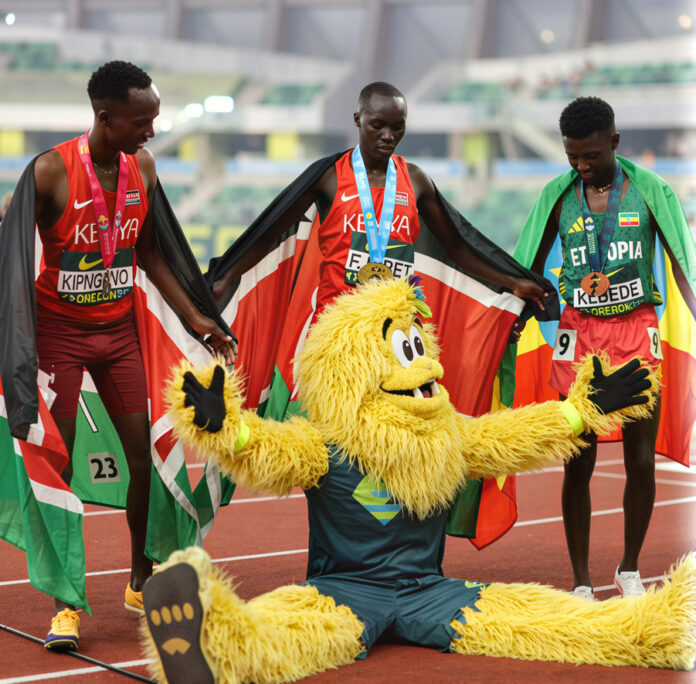
The 19-year-old distance runner produced a commanding performance in the men’s 5,000 metres final
on Wednesday 5 August 2026, crossing the finish line in 13:28.27 to secure the world title and hand
Kenya its first gold medal of the championships. His teammate Nehemiah Kipngeno completed a
memorable Kenyan one-two finish by claiming the silver medal in 13:30.09, underlining Kenya’s
dominance in the event. Ethiopia’s Damitew Kebede settled for bronze after clocking 13:35.38.

Kibet’s victory is the latest highlight in what has been an outstanding breakthrough season. Earlier this
year, he captured the World Cross Country U20 title in Tallahassee, Florida, before announcing himself
on the global track stage with a superb 13:08.32 in his Diamond League debut in Paris in June. That
performance made him the fastest athlete in the U20 field this season and established him as the
overwhelming favourite heading into the championships in Oregon.

Kenya’s successful opening day continued later on Wednesday when Joyline Chepkemoi added a third
medal to the team’s tally by winning bronze in the women’s 5,000 metres. Chepkemoi delivered a
personal best performance of 15:09.08 to secure her place on the podium after a closely contested race.
Uganda’s Charity Cherop claimed the women’s world title in 15:03.88, improving on the silver medal she
won at the 2024 World U20 Championships in Lima. Ethiopia’s Shito Gumi finished second in 15:07.91 to
earn the silver medal.

There was further encouragement for Team Kenya in the 800 metres heats. Collins Tajewou and Nashon
Pkiach both progressed comfortably to the men’s semi-finals, while Marion Jepchumba booked her place
in the women’s semi-finals after a confident performance.

However, the day also brought disappointment for Kenya after Nancy Jepngetich was disqualified for a
lane infringement despite recording the fastest time across all the women’s 800 metres heats. The
disqualification denied Kenya another strong medal prospect as the competition moves into the next
rounds.

The World Athletics U20 Championships, running from August 5 to 9, have attracted the world’s best
young athletes competing for global honours across track and field events. Kenya is aiming to build on its
proud tradition in middle and long-distance running while also seeking strong performances in other
disciplines.

At the end of the opening day of competition in Eugene, Team Kenya had collected three medals one
gold, one silver and one bronze making a confident start to its campaign and raising hopes of adding
more medals before the championships conclude on Sunday.

West Pokot distributes 6,000 fruit seedlings to boost food security and farmers’ incomes

0

The County Government of West Pokot has intensified efforts to tackle food insecurity and improve
household incomes by distributing 6,000 fruit seedlings to farmers in Kanyarkwat Location as part of its
agricultural empowerment programme.

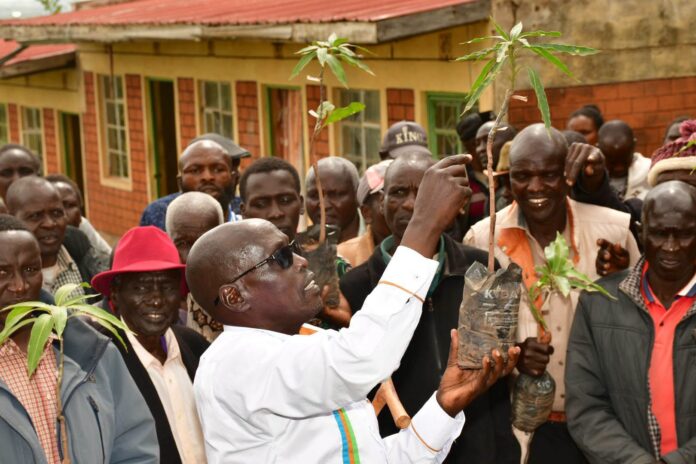
County Executive Committee Member (CECM) for Agriculture, Livestock and Fisheries Wilfred
Longronyang on Thursday presided over the exercise, where farmers received 4,000 mango seedlings
and 2,000 Hass avocado seedlings to promote commercial fruit farming and enhance nutrition across the
county.

Speaking during the distribution, Longronyang urged beneficiaries to properly plant and nurture the
seedlings, saying fruit farming offers farmers a long-term source of income while contributing to
environmental conservation through increased tree cover.

“These fruit trees are an investment in the future. Once they mature, they will improve household
nutrition, generate income for families, and strengthen resilience against the effects of climate change,”
he said.

The initiative comes at a time when West Pokot continues to grapple with recurring food insecurity driven
by erratic rainfall, prolonged droughts and low agricultural productivity. Large parts of the county’s arid
and semi-arid zones experience chronic food shortages, with many households relying heavily on
livestock production that remains vulnerable to drought and fluctuating market prices.

While the county’s highland areas record relatively better crop production, seasonal droughts continue to
disrupt food availability, leaving many families vulnerable. Children and pregnant women remain among
the most affected by malnutrition.

County officials say promoting drought-resilient and high-value crops such as mangoes and Hass
avocados is part of a broader strategy to diversify livelihoods, reduce dependence on rain-fed staple
crops and strengthen food security.

The seedling distribution is one of several interventions being implemented by the county government to
increase agricultural productivity, build climate resilience and improve the economic well-being of farming
households across West Pokot.

Muruny-Siyoi dam nears completion as Sh9.7 billion West Pokot water project set to transform lives

0

Thousands of residents in West Pokot County are set to benefit from improved access
to clean and reliable water as the multi-billion Muruny-Siyoi Dam and Kapenguria Water
Supply Project moves closer to completion.

The Sh9.7 billion project, which commenced in 2015, is expected to strengthen water
supply in the county, support irrigation, improve livestock production and stimulate
economic activities once it is completed and officially commissioned.

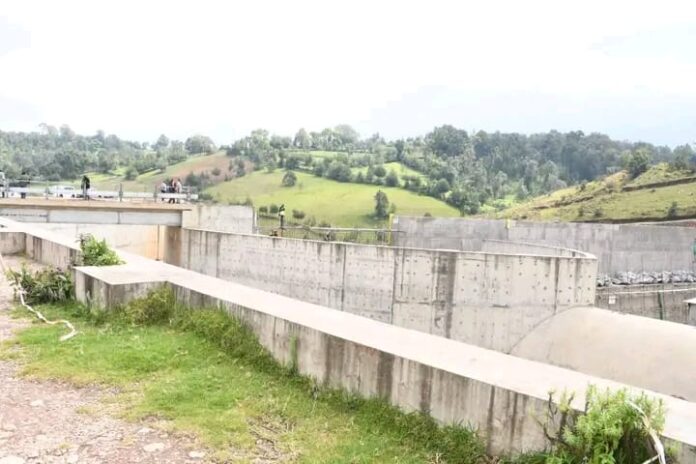
The flagship water infrastructure project, located along Muruny River in West Pokot
County, comprises the construction of the Muruny-Siyoi Dam, water treatment facilities,
pipelines and storage infrastructure. The dam is designed to hold approximately 12
million cubic metres of water and is expected to serve about 350,000 residents in
Kapenguria and surrounding areas.

West Pokot Deputy Governor H.E. Robert Komolle on Tuesday, 4 th August
2026,received Cabinet Secretary for Water, Sanitation and Irrigation Eng. Eric Murithi
Mugaa, who led a delegation from the ministry and the National Water Harvesting and
Storage Authority (NWHSA) for an inspection tour of the ongoing works.

The delegation included NWHSA Chairperson Dr Jane Mwikali and Chief Executive
Officer Eng. Julius K. Mugun, who assessed the progress of the project and reviewed
the remaining works ahead of commissioning.

During the inspection, engineers briefed the officials on the final construction activities,
including preparations required to ensure the facility becomes fully operational.

CS Eng. Eric Murithi Mugaa emphasized the need for quality workmanship, timely
completion and accountability in the implementation of the project. He said Kenyans
must receive value for money from public investments, cautioning against excessive
project variations and claims that surpass the actual value of works undertaken.

“Kenyans must get value for money. Project variations and claims should never exceed
the value of the actual works. We must ensure that every project is delivered with
accountability, quality and within the required timelines,” said CS Mugaa.

Speaking during the visit, Deputy Governor Robert Komolle said the completion of the
project will mark a major milestone in addressing persistent water challenges affecting
residents of West Pokot.

“This project will transform the lives of our people by providing reliable water for
domestic use, agriculture and livestock. Water remains a key driver of development, and

we appreciate the government’s commitment towards completing this important
infrastructure,” said Komolle.

The Deputy Governor was accompanied by West Pokot County Executive Committee
Member for Water and Sanitation William Petot, officials from the Ministry of Water,
Sanitation and Irrigation, NWHSA representatives, project engineers and KAWASES
Chief Executive Officer Eng. Haron Ruto.

Once operational, the Muruny-Siyoi Dam is expected to reduce water shortages in the
county by increasing access to safe water while supporting irrigation farming and
livestock production, which are key economic activities for many households.
The project is part of government efforts to expand water harvesting and storage
infrastructure across the country as counties seek long-term solutions to water scarcity
and the effects of climate change.

Residents are now awaiting the official commissioning of the facility, which is expected
to open a new chapter in water security and economic growth for West Pokot County.
This placement strengthens the story because the CS’s remarks provide the
government accountability angle, while the Deputy Governor’s quote provides the
community impact angle.

County, SNV partner to support 10,000 youth through fisheries and aquaculture

0

LODWAR — The Turkana County Government yesterday announced a partnership with SNV
Netherlands Development Organisation to support 10,000 young people from both host and
refugee communities through fisheries and aquaculture programs aimed at improving food
security and livelihoods.

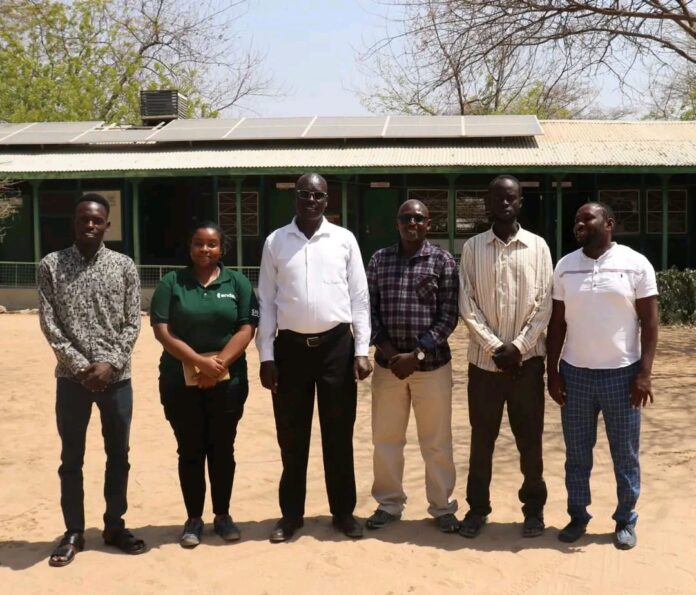
The collaboration was announced during a courtesy meeting held in Lodwar between officials
from the County Department of Fisheries and Aquaculture and representatives of SNV. Under
the programme, 7,000 beneficiaries will come from host communities, while 3,000 will be drawn
from refugee populations.

Discussions during the meeting focused on areas where the county and SNV can work together
to strengthen food security, with emphasis on improving fisheries and aquaculture across
Turkana.

Acting Deputy Director for Fisheries and Aquaculture John Bett identified quality assurance,
capture fisheries and aquaculture as the main areas of collaboration under SNV’s CASHA
Project.

“Aquaculture is an emerging and potentially viable sub-sector in Turkana, and the government is
happy to join hands with SNV and other sector players to meaningfully exploit this for the
benefit of the Turkana community,” Bett noted.

The CASHA Project (Creating Shared Value in the Livestock Sector with Young People in
Kenya’s ASALs) is a five-year programme implemented by SNV Development Organization. It
seeks to create climate-resilient employment opportunities and improve livelihoods for 200,000
young people and women living in Kenya’s arid and semi-arid lands.

SNV Monitoring and Evaluation Advisor Ivy Mwihaki said the programme operates in 15
counties, supporting red meat, apiculture, aquaculture and related agricultural value chains. She
explained that SNV leads the aquaculture and capture fisheries component to help young people
access employment and earn sustainable incomes.

“Operating across 15 counties, the programme supports red meat, apiculture, aquaculture and
related agricultural value chains. SNV leads on aquaculture and capture fisheries, to create
pathways for young people to access jobs and earn a decent income,” Mwihaki said.

Mwihaki said CASHA will target 10,000 young people in Turkana, prioritising young women,
youth with disabilities and refugees in Turkana West, Turkana South, Turkana Central and
Loima sub-counties.

She added that SNV is proud to be part of the CASHA initiative, which is expanding
opportunities for young people across Kenya’s Arid and Semi-Arid Lands. Funded by the
Mastercard Foundation and led by FAO, the programme brings together SNV, ILRI, BOMA,
E4Impact and KLMC to support poultry, beef, fodder production and alternative agri-food
enterprises.

Following the meeting, the delegation visited Jackdaughters Integrated Farm in Loborot,
Nabulon Village, where they inspected facilities including five fish ponds, an elevated CCTV-
monitored water tank fitted with an alarm system, a 25-cubic-metre storage tank, a solar-
powered borehole, goat and rabbit units, Napier grass and intercropped food crops.

Officials reviewed the farm’s achievements and challenges before identifying priority areas for
intervention to strengthen the agri-food enterprise.

John Lomilo, an advisor to Jackdaughters Farm and a teacher at a nearby primary school, said
the enterprise has continued to benefit its members despite production and market challenges.

“Through the circular economy model on two acres, proceeds from the farm are helping 100
members meet their daily needs and secure food for their households,” Lomilo said.

The team later visited Narukoo Fresh Fish Market in Kanamkemer, where discussions with
market officials highlighted the need for additional support from the County Department of
Fisheries and SNV.

Among the proposals was the fast-tracking of an integrated curriculum covering capture
fisheries, aquaculture and market access to train fishermen, fishmongers and transporters. The
officials also agreed to recruit more young people aged between 18 and 35 years into aquaculture
enterprises.

They further recommended transforming existing groups into cooperatives and SACCOs to
enable members to pool savings, access affordable loans and earn dividends.

Those who participated in the field visit included John Mcmei of SNV, Collins Louga and John
Ekeno from the Fisheries Department, fish market officials, Advisor Emmanuel Ekorot, Michael
Ekaran, Rebecca Aroo, Hellen Arukudi, Clementina Ekwanga, Lydia Nangor, Elizabeth Lotieng,
Daisy Nawoton and James Emorut.