Home Blog Page 58

Questions raised over death of man in police custody at Kilungu police station

0

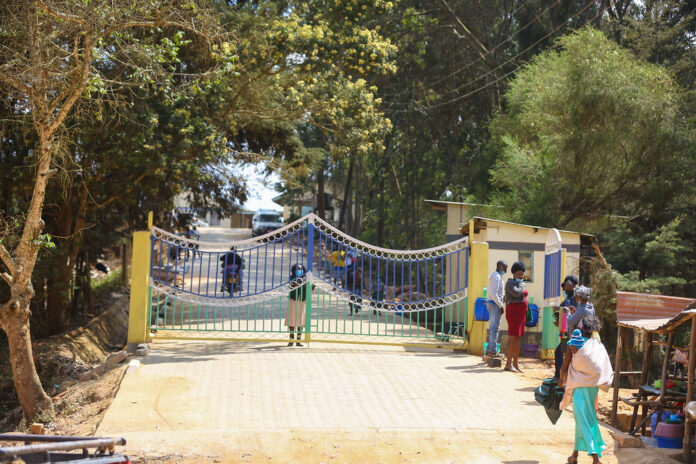
Questions have emerged following the death of a middle-aged man who died while in custody at Kilungu Police Station, just hours after his arrest at Nunguni Market in Makueni County.

Gedion Makau was arrested on Tuesday evening at his business premises in Nunguni Shopping Centre over allegations that he was in possession of a panga. He was later detained at Kilungu Police Station.

His family said they only learned of his death the following day after a friend informed them that police had taken his body to the Kilungu Sub-County Hospital Mortuary.

According to the family, they were later summoned to the police station, where officers told them that Makau had allegedly died by suicide after using his trousers while inside the police cells.

However, his relatives have questioned why his body was taken to the mortuary before they were officially informed of his death.

Makau’s mother, Teresia Mbandi, and his wife, Pauline Gedion, have expressed doubts about the police account and are demanding an independent investigation into the circumstances surrounding his death.

“We want an independent investigation so that the truth about his death can be established,” the family said.

Kilungu Ward MCA Joseph Mbindyo said the incident adds to growing concerns over the increasing number of deaths occurring in police custody.

“Anyone found responsible for negligence or any wrongdoing must be held accountable,” Mbindyo said.

The body of Gedion Makau is being preserved at the Kilungu Sub-County Hospital Mortuary awaiting a post-mortem examination to determine the exact cause of death, as investigations into the incident continue.
Kenya Court: Constitution does not guarantee a five-year presidential term

0

MALINDI, Kenya — The High Court in Malindi has ruled that Kenya’s Constitution does not guarantee the President a fixed five-year term, in a landmark judgment that could reshape the country’s electoral calendar.

In a decision delivered by Justice Mugure Thande, the court held that, under Article 136(2)(a) of the Constitution, a presidential election must be held on the second Tuesday of August in the fifth year following the previous election—not after the fifth year.

“It is quite evident that the date set by the second respondent (IEBC) for the next General Election is the second Tuesday in August after the fifth year and not in the fifth year as stipulated in the Constitution,” Justice Thande stated in the judgment.

The judge further declared that Article 142, or any other provision of the Constitution, does not confer a five-year term of office on the President.

“By operation of Article 136(2)(a) of the Constitution, the term of office of the President is not five years.”

Justice Thande also ruled that holding a presidential election on any date other than the second Tuesday of August 2026 would violate several constitutional provisions, including Articles 2, 3, 10, 136, 142, 249 and 259, and would therefore be null and void.

However, the court suspended the implementation of its declaration until after the 2027 General Election, giving the Independent Electoral and Boundaries Commission (IEBC) time to correct the constitutional defect identified in the ruling.

The court dismissed all other prayers in the petition and ordered that each party bears its own legal costs.

The judgment stems from a constitutional dispute over how Kenya’s presidential election cycle should be calculated and the legally correct date for the country’s next General Election.

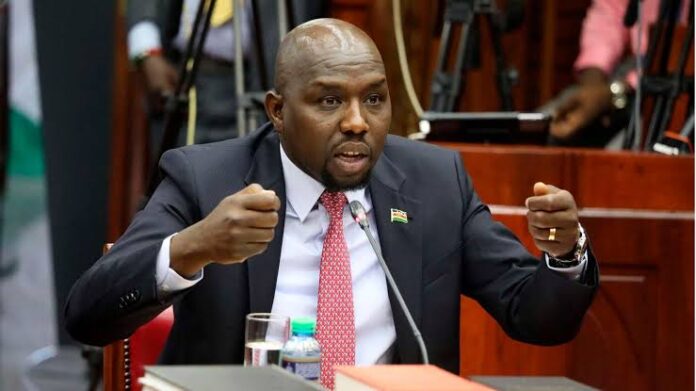
CS Murkomen blasts Gachagua in scathing response

0
Interior Cabinet Secretary Kipchumba Murkomen|File Photo

Interior Cabinet Secretary Kipchumba Murkomen, posting on his X page, has launched a direct counter-attack against former Deputy President Rigathi Gachagua, breaking his silence on days of sustained political hostility.

Addressing what he termed a campaign of “vitriol, misogyny, lies, and ethnic jingoism,” CS Murkomen accused Gachagua of orchestrating a calculated strategy designed to sow public division and bully politicians into joining his political movement.

At the center of the critique is Gachagua’s ongoing push to cement himself as a regional political supremo. CS Murkomen dismissed the title of “kingpin” as a vacuous concept, emphasizing that no such role exists in Kenya’s Constitution or traditional socio-cultural setups.

Describing kingpin politics as “the sole preoccupation of idle minds,” the Interior CS underscored that leadership must be anchored in constitutional authority rather than self-proclaimed regional dominance.

Addressing Gachagua’s regular political gatherings at his rural home following his removal from office, CS Murkomen accused the former Deputy President of using security failure allegations as a smoke screen. The statement alleged that Gachagua’s frequent public attacks are a deliberate attempt to divert public attention away from clandestine criminal activities executed through his political lieutenants.

Highlighting a shift in political strategy, CS Murkomen warned that Gachagua has activated a network of political accomplices including allies from the Rift Valley to amplify coordinated attacks.

The Interior CS pointed out that Gachagua’s latest public remarks directly echoed false accusations leveled against government leadership in Parliament earlier in the week, signaling a wider, synchronized political campaign.

Rejecting calls to be drawn into protracted political feuds, CS Murkomen reassured the public that these attacks would not shake his resolve or distract from his official state duties.

Emphasizing his commitment to remaining steadfast in office, the Interior CS declared plans to continue meeting ordinary citizens across the country in worship and social activities, urging Kenyans to see through Gachagua’s “malignant political plots.”

Only Six counties meet development budget target

0
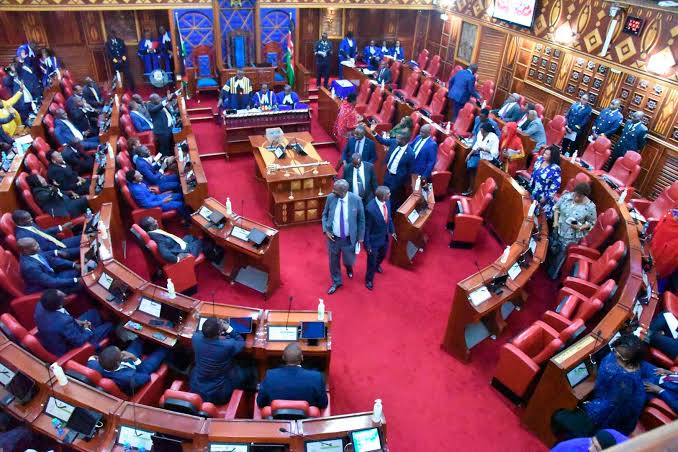
Senate of Kenya building| File Photo

The Senate has released its inaugural County Financial Performance Measurement Index (CFPMI), exposing widespread fiscal imbalance across the country’s decentralized governance units. The landmark report, developed by the Parliamentary Budget Office, reveals that only six out of Kenya’s 47 counties complied with the Public Finance Management (PFM) Act’s legal requirement to dedicate at least 30% of their annual budgets to capital development during FY 2024/25.

The findings highlight a stark divide between a small group of financially disciplined devolved units and a broader landscape where rising administrative costs and payroll expenses continue to crowd out critical public investments.

Leading the nation in financial compliance was Kwale County, which achieved a top performance score of 1.000. It was followed by Embu (0.916), Kericho (0.849), Mandera (0.815), Siaya (0.814), and Uasin Gishu (0.813). These top-performing “Grade A” counties were commended for maintaining strict fiscal management and prioritizing long-term infrastructure and essential public services over operational overhead.

Conversely, the report outlines severe budget mismanagement across much of the country. While seven counties narrowly missed the mandatory 30% development spending mark, 27 counties received a “Grade D” rating due to insufficient capital allocations.

More concerningly, seven counties allocated less than 15% of their total budgets less than half the legally required minimum to development projects. These bottom performers include Nandi, Vihiga, Kisumu, Elgeyo Marakwet, Nairobi City, Nyamira, and Taita Taveta, which recorded the lowest score nationwide at just 7.82%.

 Nairobi ranked among the worst performers for the second consecutive year, driven primarily by persistent high recurrent expenditure.

Unveiling the annual report, top Parliamentary leaders emphasized that the CFPMI introduces a data-driven accountability framework designed to move public finance oversight beyond political debate.

Senate Majority Leader Aaron Cheruiyot, Senate Speaker Amason Kingi, and Senate Clerk Jeremiah Nyegenye called on county leadership to ensure that increased national revenue allocations which rose from KSh 370 billion in FY 2022/23 to KSh 428 billion translate directly into visible public infrastructure and improved service delivery for local communities.

Tanzania, Uganda sign deal to develop Tanga into regional energy hub

0

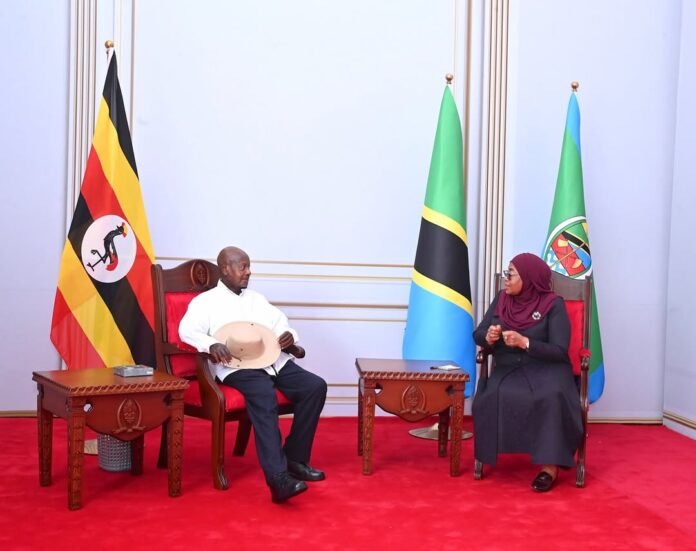
Tanzania and Uganda have signed a memorandum of understanding (MoU) to transform the northeastern Tanzanian port city of Tanga into a regional energy hub, marking a significant step toward strengthening energy cooperation and regional economic integration.

The agreement was witnessed by Tanzanian President Samia Suluhu Hassan and Ugandan President Yoweri Museveni at the State House in Dar es Salaam during Museveni’s working visit to Tanzania.

Tanzania’s Minister of Energy, Deogratius Ndejembi, said the agreement is designed to capitalize on Tanga’s strategic location and existing energy transport infrastructure.

“The agreement aims to leverage Tanga’s strategic geographic position and existing energy transport infrastructure to transform it into a key regional energy hub,”Ndejembi said.

He added that the initiative is expected to boost regional and economic cooperation, attract investment in the energy sector, and strengthen East Africa’s position in the global energy market.

Tanga is also the terminus of the East African Crude Oil Pipeline (EACOP), currently under construction from Hoima in western Uganda to Chongoleani in Tanzania’s Tanga region.

Uganda’s Minister of Energy and Mineral Development, Monica Masanza, described the agreement as a major milestone in deepening long-term cooperation between the two countries.

“The energy, oil, and mining sectors are central to Africa’s development,” Masanza said, adding that the project will create jobs for young people, expand trade, and further strengthen economic ties between Tanzania and Uganda.

Ole Kina urges parliament to close corruption loopholes

0

Narok Senator Ledama Ole Kina has called on Parliament to tighten conflict-of-interest laws, arguing that legal loopholes have enabled Cabinet Secretaries (CSs) and County Governors to amass wealth through abuse of public office.

The senator claimed that some senior government officials exploit their control over regulations, procurement systems, and public budgets to benefit themselves, their relatives, proxies, and close associates.

“A Cabinet Secretary or a Governor does not simply implement policy. They control the regulations and budgets that decide who eats and who starves in entire sectors and counties,” Ole Kina said.

He argued that the rapid accumulation of wealth by some public officials shortly after assuming office is driven by power rather than merit.

“Look at how extreme wealth is manufactured the moment someone is appointed Cabinet Secretary or elected County Governor. It is not talent. It is not hard work. It is pure, raw power,” he stated.

Ole Kina also criticized the enforcement of Kenya’s Conflict of Interest Act, saying it has failed to curb high-level corruption. According to him, large-scale graft is concentrated within the national and county executives, where key decisions on regulations, contracts, and public spending are made.

The senator further questioned the sudden rise in wealth among some politicians and individuals close to power, pointing to the increasing number of privately owned helicopters as an issue that deserves greater public scrutiny.

He urged Parliament to enact and strictly enforce stronger safeguards against abuse of office, warning that failure to seal existing loopholes would allow a politically connected few to continue enriching themselves at the expense of ordinary Kenyans.

SHA launches nationwide stakeholder engagement to overhaul healthcare delivery and contracting

0

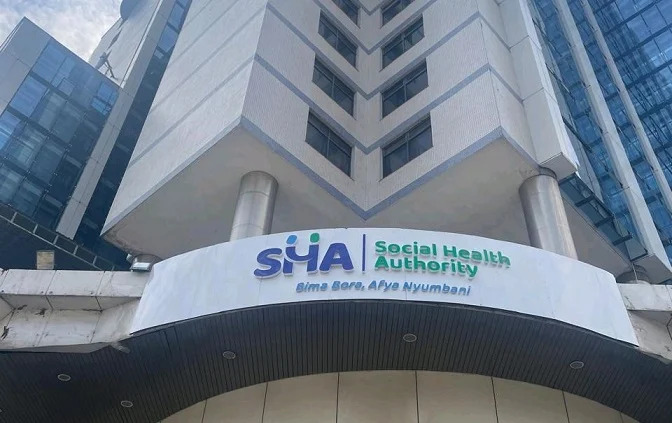
In a major push to refine Kenya’s healthcare financing ecosystem, the Social Health Authority (SHA) has officially rolled out its National Healthcare Provider Stakeholder Engagement and Contract Cycle Review Exercise across the remaining 10 regions, unifying service providers and key industry players from all 47 counties.

This nationwide exercise serves as a critical strategic platform to evaluate the outcomes of the current provider contracting cycle. By engaging directly with healthcare facilities, administrators, and medical practitioners on the ground, SHA aims to address operational bottlenecks, resolve provider concerns, and co-create solutions that elevate service delivery across public, private, and faith-based healthcare facilities.

A central focus of the consultative meetings is the transition toward fully digitized administrative processes. Key areas on the agenda include expanding e-Contracting to modernize facility onboarding, automating claims management to ensure timely reimbursements, and enhancing digital health systems for better data sharing and accountability.

Recognizing that healthcare facilities are the primary point of contact for patients, SHA is prioritizing direct provider support. The consultations are designed to gather actionable feedback to refine daily operations, clarify administrative guidelines, and ensure facilities receive the backing needed to offer uninterrupted patient care.

Through these comprehensive consultations, SHA is reinforcing its collaborative relationship with healthcare providers across the country.

The initiative aims to construct a highly efficient, transparent, and responsive healthcare financing architecture a vital foundation for advancing Universal Health Coverage (UHC) and guaranteeing access to quality, affordable healthcare for all Kenyans.

Hon. Sen. Dr. Mungatana urges continental action to end violence against women

0
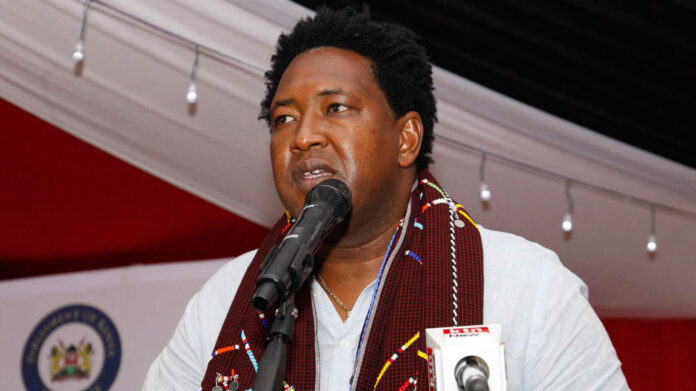
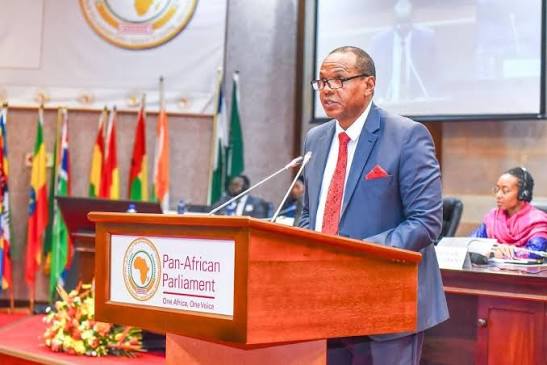
Tana river Senator Dr.Mungatana addressing the Pan-African parliament Johannesburg, South Africa

In a powerful, impassioned address at the Pan-African Parliament (PAP) in Johannesburg, South Africa, Kenyan lawmaker Hon. Sen. Dr. Danson Mungatana, MP, MGH, PhD, took the plenary floor to issue a ringing call to action against the pervasive scourge of gender-based violence across the African continent.

Speaking during a high-level parliamentary debate on the outcome report of the 70th Session of the United Nations Commission on the Status of Women (CSW70) held in New York in March 2026, where the PAP Women Caucus actively participated, the Senator underscored the vital need for African member states to move beyond statutory declarations and enact holistic, enforceable measures to protect women and girls.

Senator Mungatana argued that legal frameworks, while essential, remain insufficient when implemented in isolation. He urged African nations to forge a two-pronged strategy that couples strict, deterrent punitive legislation with comprehensive civic education campaigns designed to dismantle entrenched social norms.

To illustrate the limits of legislative deterrence alone, he highlighted the sobering situation in Kenya, where despite robust criminal statutes and dedicated legal institutions, femicide rates surged alarmingly in 2025.

Citing the landmark 2025 femicide report, “She Did Not Die by Accident,” which documented 220 tragic cases of femicide that ignited nationwide protests and civil society action, Dr. Mungatana stressed that laws must be backed by relentless community outreach, public sensitisation, and systemic judicial accountability.

Broadening the scope of the debate, the Senator confronted harmful traditional practices that continue to be shielded under the guise of cultural preservation.

He firmly asserted that harmful practices such as child and forced early marriages, female genital mutilation (FGM), and domestic abuse must be explicitly condemned and systematically eradicated.

“Culture can never be an excuse for the violation of human dignity,” he emphasized, calling on parliamentary leaders across the continent to lead from the front in dismantling structural inequalities.

As the current session of the Pan-African Parliament drew to a close in Johannesburg, Senator Mungatana reaffirmed his unwavering commitment to advancing human rights, gender equity, and legislative oversight across Africa, concluding his address with a resonant prayer for unity, protection, and justice across the continent.

How Maraga, Omtatah, and Sifuna are rewriting Kenya’s 2027 playbook

0
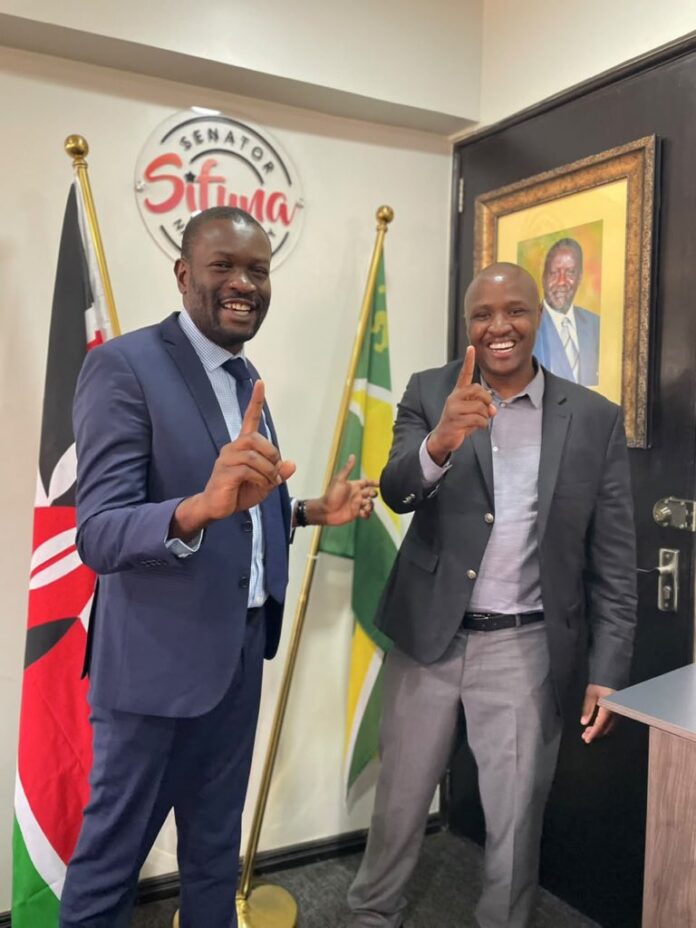
Nairobi Senator Edwin Sifuna and Alfred Keter after a meeting

In a political landscape long dominated by entrenched party baronies and predictable ethnic arithmetic, a fresh political wind is sweeping across Kenya. Nairobi Senator Edwin Sifuna ignited widespread public debate after sharing photos from an August 6 meeting with former Nandi Hills MP Alfred Keter.

The engagement signaled Keter’s official alignment with the ‘Linda Mwananchi’ movement, rallying under a motto that resonates across the country: “Team ni Moja, Term ni Moja.”

The entry of Alfred Keter brings critical Kalenjin regional reach to a growing reformist axis, strategically broadening the movement beyond traditional opposition hubs ahead of the 2027 general election.

Alongside heavyweight anti-corruption activist Senator Okiya Omtatah and former Chief Justice David Maraga, this emerging alliance presents a stark departure from conventional political vehicles, offering a platform centered on accountability, constitutional integrity, and popular power.

To many Kenyans seeking relief from persistent corruption and economic pressures, figures like David Maraga, Okiya Omtatah, and Edwin Sifuna are increasingly seen as steady advocates for meaningful institutional reform.

Maraga’s unyielding judicial courage, Omtatah’s tireless public interest litigation, and Sifuna’s sharp parliamentary advocacy form a potent combination one built not on state patronage, but on relentless defense of the ordinary citizen.

As momentum builds around Linda Mwananchi, parallel political maneuvers continue behind closed doors. Talks hinting at potential broad-based arrangements including whispers of alliances involving former Deputy President Rigathi Gachagua have sparked intense debate.

Critics warn that folding reformist movements into traditional elite coalitions risks diluting their foundational purpose, transforming a grassroots revolution into another tool for political survival.

Media personality Lynn Ngugi captured the public mood in a poignant commentary, cutting straight to the heart of Kenya’s political dilemma. She pointed out that the established political class actively avoids championing a genuine grassroots movement, knowing a Maraga-Omtatah-Sifuna partnership holds the authentic potential to dismantle patronage networks and right decades of governance failures.

Ngugi warned citizens against falling into the political trap where political conversations instantly pivot away from integrity toward regional vote totals and “electability.” This machinery, she noted, prioritizes politicians who can be easily controlled to safeguard system interests.

The notion that voters must compromise their principles for political “heavyweights” simply because they allegedly “bring numbers” is a cycle that must finally break.

The true path to democratic transformation does not begin in closed-door boardroom negotiations it begins at the grassroots. Real democratic victories are forged when citizens actively campaign for candidates they believe in, engaging family members, organizing community dialogues, and persuading their peers.

As the 2027 election cycle takes shape, the Linda Mwananchi movement and its supporters are issuing a clear challenge: it is time for Kenyans to build a government that serves the people, not the system.

President Ruto unveils landmark reforms and welfare directives for private security officers

0

In a landmark step toward modernizing national security and upholding the dignity of labor, President William Ruto hosted representatives of private security officers at State House, Nairobi, announcing a comprehensive suite of executive reforms designed to overhaul the sector’s welfare, professional standards, and legal recognition.

Underlining their pivotal role in safeguarding lives, businesses, and public assets, the President emphasized that private security personnel are indispensable partners to the nation’s broader defense and law enforcement architecture.

To reflect this crucial contribution, the administration is initiating systemic changes aimed at transforming the industry from top to bottom.

A central directive from the address is the immediate expungement of outdated and derogatory terms such as “watchman” and “guard” from all official government documents and communications. Denouncing these titles as colonial relics that undermine the dignity of service, President Ruto declared that personnel across the sector will formally and legally be recognized as Private Security Officers.

Addressing long-standing issues surrounding remuneration, the Head of State mandated the immediate enforcement of statutory minimum wage requirements across all private security firms.

Moving forward, compliance with labour laws will be strictly monitored, ensuring that officers receive fair, decent, and predictable compensation aligned with the demanding nature of their work.

To bolster professionalism and operational efficiency, the government is introducing harmonized training curricula across the industry. This standardized framework will establish clear, structured pathways for career advancement, allowing officers to build long-term, specialized professions within the security ecosystem.

Recognizing the necessity of coordinated operational strategies, the administration is building a formal framework to enable smooth collaboration between the National Police Service and private security officers. This joint alignment will enhance intelligence sharing, tactical coordination, and overall public safety coverage across urban and rural regions alike.

To ensure swift execution, President Ruto announced the formation of a dedicated multi-agency taskforce. Comprising representatives from the Ministry of Interior and National Administration, the Ministry of Labour and Social Protection, the Private Security Regulatory Authority (PSRA), the National Police Service, and private security industry stakeholders, the panel has been given a strict 60-day mandate to deliver a comprehensive policy framework outlining actionable measures to improve officer welfare, working conditions, and social protections nationwide.