Home Blog Page 50

Kenya launches KES 8.4 billion push to end maternal and newborn deaths

0

Kenya is taking aggressive action to accelerate the reduction of preventable maternal and newborn deaths across the country.

Following a direct policy mandate from President William Ruto, the Ministry of Health and leadership from county governments are moving swiftly to establish 10 comprehensive maternal and newborn health facilities in regions bearing the highest burden.

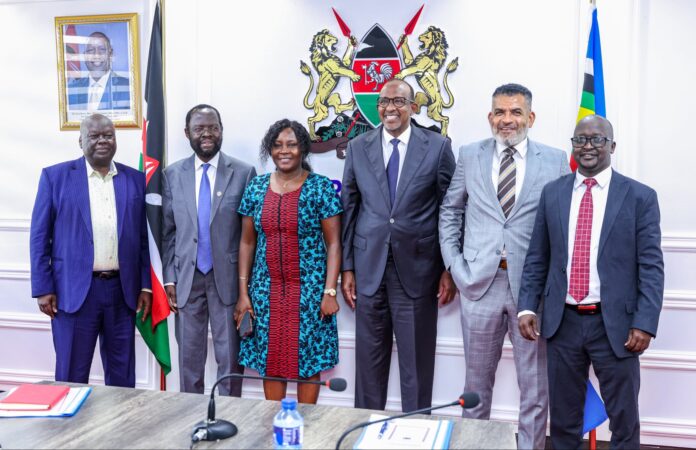
Health Cabinet Secretary Hon. Aden Duale recently hosted key county leadership led by Council of Governors Health Committee Chairperson and Mombasa Governor H.E. Abdullswamad Nassir for high-level bilateral deliberations aimed at translating national health directives into immediate action.

The meeting brought together prominent leaders including Governors H.E. Anyang’ Nyong’o of Kisumu and H.E. Cecily Mbarire of Embu, alongside key ministry officials and medical advisors, to establish seamless national-county coordination ahead of groundbreaking scheduled for September.

Supported by a KES 4.4 billion grant from the Amsons Group through the “Mama na Mtoto Kwanza initiative, this ambitious infrastructure project complements the national Every Woman Every Newborn Everywhere (EWENE)” programme.

The 250-bed specialised facilities will be strategically built across Nairobi, Bomet, Kwale, Mombasa, Garissa, Kisumu, Embu, Nakuru, West Pokot, and Uasin Gishu. These locations were carefully selected following a comprehensive mapping of 26 counties that currently account for nearly 60 percent of all maternal deaths in Kenya, ensuring that resources directly target areas of greatest need in line with World Health Organization benchmarks.

Designed to deliver an integrated continuum of care, each center will consolidate critical services under one roof. Mothers will have access to unified antenatal and postnatal care, dedicated labor and recovery suites, emergency obstetric care, and specialized post-Caesarean recovery wards.

For critical cases, each facility will feature fully equipped operating theatres, Maternal Intensive Care Units, and state-of-the-art Neonatal Intensive Care Units (NICUs) to guarantee immediate life-saving interventions for newborns.

To ensure these state-of-the-art medical hubs are fully supported by skilled personnel, the workforce is being rapidly expanded under the EWENE initiative.

Training has already been completed for 900 healthcare workers in advanced obstetric care and another 900 in comprehensive newborn care. To further strengthen frontline capacity, the ongoing recruitment of 5,000 nurses and midwives will deploy crucial medical staff to communities where they are needed most.

Financial barriers to quality maternal healthcare are being simultaneously addressed alongside physical infrastructure. An additional KES 4 billion is being channelled through the Social Health Authority to subsidize maternal deliveries at Level 2 and Level 3 primary care facilities nationwide.

By combining infrastructure development, widespread workforce training, and targeted healthcare financing, Kenya is setting a transformative benchmark for universal health coverage and paving the way to eliminate preventable maternal and newborn deaths.


EACC issues demand notices to high-profile officials to recover KSh 1.5 billion in Ruaraka land saga

0

The Ethics and Anti-Corruption Commission (EACC) has issued formal demand notices to 22 individuals and three companies, demanding the recovery of KSh 1.5 billion paid in the controversial Ruaraka land acquisition, alongside a 12% annual interest accrued from the 2018 disbursement date.

Prominent figures targeted in the notices include Principal Secretary for Immigration Belio Kipsang, former Cabinet Secretary Fred Matiang’i, former National Land Commission (NLC) Chairman Muhammad Swazuri, along with several former NLC commissioners, officers, and entities linked to the family of the late businessman Francis Mburu.

This decisive action follows a Court of Appeal decision declaring the NLC’s payment for the 13-acre Ruaraka land parcel illegal. According to the anti-graft commission, the funds were originally disbursed to compensate Afrison Export Import Limited and Huelands Limited, but ongoing investigations point to abuse of office, fraud, and money laundering disguised as land compensation. Consequently, the EACC has handed all named parties a strict seven-day ultimatum to repay the funds jointly and severally.

The commission warned that failure to comply within the given timeframe will result in immediate legal recovery proceedings at the recipients’ own risk and expense.

Meanwhile, Huelands Limited has moved to the Supreme Court seeking to overturn the appellate court’s decision that authorized the EACC to pursue the recovery.

In its appeal, the company contends that the appellate bench failed to distinguish between lawful urban planning controls and the compulsory acquisition of private property, while also overlooking constitutional protections regarding private property rights and title security.

Maintaining that no public funds were lost, Huelands is petitioning the apex court to compel the NLC to release an outstanding balance of KSh 1.7 billion from the originally approved KSh 3.2 billion compensation package. However, the EACC has strongly opposed the appeal, characterizing it as an abuse of the court process.

EPRA mourns the passing of assistant director Silas Cheboi

0

The Energy and Petroleum Regulatory Authority (EPRA) has announced the death of Silas Cheboi, its Assistant Director in charge of Surveillance and Enforcement.

In an official public announcement issued on Thursday, August 13, 2026, the energy sector regulator expressed deep sorrow over his demise, describing his passing as a profound loss to the authority, his colleagues, and the energy sector at large.

“His passing is a profound loss to the Authority, his colleagues, and all those who had the privilege of working with him. He will be remembered for his dedicated service, professionalism, integrity, and commitment to the mandate of EPRA,” the statement read.

Silas Cheboi joined EPRA in 2016 and held several critical leadership positions:

Spearheaded regional oversight, surveillance, and consumer protection operations.

Coordinated nationwide operations ensuring compliance within the energy and petroleum markets.

Led major enforcement operations against non-compliant energy players, illegal fuel handling, and unlicensed LPG setups across Kenya.

Cheboi earned a Master of Arts in Economics from the University of Nairobi. Prior to his senior roles at EPRA, he accumulated nearly a decade of experience in energy regulation.

The cause of death has not been publicly disclosed.

He is survived by his wife, Molly Cheruto, and their two children, Bill and Antony. Cheboi will be laid to rest at his family home in Solian, Eldama Ravine, Baringo County, on Saturday, August 15, 2026.

Nairobi freezes public recruitment to tame soaring wage bill

0

In a bid to restore financial sustainability and align with broader fiscal consolidation measures, public sector entities in Nairobi—including state corporations and national government bodies—are enforcing strict hiring freezes aimed at reining in a bloated public wage bill.

The austerity push follows ongoing directives from the National Treasury to curb non-essential expenditure and bring personnel costs down to sustainable levels.

Government departments and state corporations are barred from creating new positions or filling existing vacancies—even those resulting from natural attrition like retirement—without explicit approval from the National Treasury and parent ministries.

The move aims to stem the growth of public personnel expenditure, which continues to consume a disproportionate share of total revenue at the expense of development projects and service delivery.

Beyond recruitment freezes, guidelines strictly prohibit unilateral salary reviews, allowances, or new staff benefit structures without concurrence from the Salaries and Remuneration Commission (SRC).

The hiring controls coincide with cash flow challenges across municipal and state organs, underscored by recent delays in county budget approvals and disbursement cycles that have impacted public operations.

The hiring halt forms part of a broader government strategy to channel revenues away from administrative overheads and toward core infrastructure, healthcare, and essential municipal services.

Ruto: Education investment key to Kenya’s future

0

President William Ruto has said the government is investing heavily in education and training as part of efforts to prepare Kenya’s young people for a better future.

Speaking during the 46th Kenya Defence Forces (KDF) pass-out parade in Eldoret, Uasin Gishu County, the President said the country’s greatest strength is its people and that developing human capital remains critical to Kenya’s long-term progress.

Ruto said the government is therefore prioritising education by recruiting more teachers, expanding learning spaces, improving university education, and increasing accommodation facilities such as hostels and dormitories.

“The single most critical asset we have as a nation is our human capital,” the President said, stressing that investing in the education and training of young Kenyans is an investment in the country’s future.

He said the government’s focus is not only on addressing current challenges but also on preparing the next generation to take up greater responsibilities in the years ahead.

Ruto urged young people to work hard, take advantage of available opportunities and play their part in building the country. He also assured parents that the government would continue doing its part by strengthening education and training institutions.

He noted that continued investment in teachers, learning infrastructure, university funding and student accommodation would help create better opportunities for young Kenyans and equip them with the skills needed to contribute to national development.

Photo suggestion: This image shows President Ruto inspecting KDF recruits during a pass-out parade in Eldoret. It is an archive photo from May 2024, so it should be captioned accordingly rather than presented as a photo from today’s 46th parade.

No to FGM, no to early marriage, yes to education: Gaddis Gamme hits 3,400 girls as 14th camp graduates in Sololo-Marsabit

0

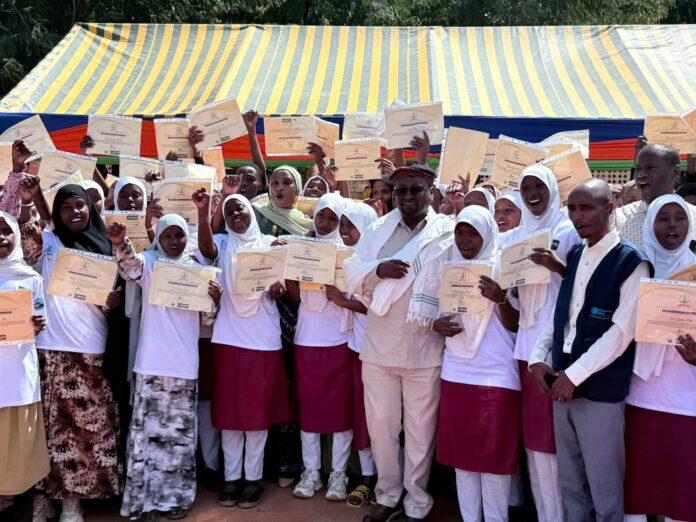
First Lady of Marsabit County, Alamitu Guyo Jattani on Wednesday presided over the graduation of 200 girls at the 14th Edition of the Gaddis Gamme Girls’ Camp at Haweecha Primary and Junior School.

The five-day camp, held during the August school holiday, brought together girls from Sololo, Obbu and Uran wards for intensive mentorship on life skills, child rights, academic excellence, menstrual health, sexual and reproductive health, drug and substance abuse prevention, and advocacy.

Sessions also addressed challenges that continue to disrupt girls’ education in pastoralist communities, including FGM, child marriage, teenage pregnancy, abuse and school dropout.

Since its establishment in 2019, the Gaddis Gamme programme has reached more than 3,400 girls across Marsabit County. Over 900 beneficiaries are from Sololo alone, where the initiative was first launched.

The programme has since expanded to Laisamis, North Horr, Saku and Moyale sub-counties, bringing together girls from different ethnic backgrounds under one message: No to FGM, no to early marriage, yes to education.

Addressing the graduates, the First Lady urged them to guard their aspirations and use the lessons learned to mentor peers.

“Girls, be courageous always. Be strong, put more effort into your education and prepare for a better future,” she said.

“No to FGM, no to early marriage, and yes to education. We started Gaddis Gamme here in Sololo, and we are proud of what it has become. This programme will continue because protecting girls is not politics. It is a responsibility.”

She said the decision to hold the camps during school holidays was deliberate, noting that girls in pastoralist areas are most vulnerable to early marriage and FGM when schools are closed.

“We established Gaddis Gamme to create awareness and educate our children on the harmful effects of FGM. We can advocate, we can end the practice and we can save future generations,” she added.

Dahabo Abagaro, who represented facilitators, said the 14th edition deepened its impact by reaching girls at a critical time.

“They have learned about life skills, advocacy, hygiene, sexual and reproductive health, and drug abuse. More than 3,000 girls have now benefited across the county,” she said.

County leaders described Gaddis Gamme as a model of girl-child empowerment gaining attention beyond Marsabit.

County Secretary Dr. Arero Halkano said the county government’s investment in education complements the First Lady’s advocacy. He cited the construction and equipping of 377 ECDE centres, employment of 605 ECD teachers on permanent and pensionable terms, and a scholarship programme that has benefited 9,000 students.

County CECM for Education Mrs. Ambaro Abdullahi urged the graduates to remain focused.

“You have been trained and empowered. Use these skills well. Say no to drug abuse, no to FGM, no to early marriage, and yes to education,” she said.

Community elder Galm Dabaso said the fight against FGM must be owned locally.

“FGM is harmful and must stop. These trained girls should now become ambassadors and create awareness in their communities,” he said.

Halima Guyo of the Sololo Women Caucus called on the community to support the initiative.

“This is not Mama Guyo’s function alone. It is an educational initiative that we must all support,” she said.

During the ceremony, the First Lady also launched ECDE furniture and learning materials procured by the County Department of Education in partnership with LAPFUND. The support included 1,000 learner chairs and tables, 42 teacher desks and chairs, and 377 curriculum designs.

Co-op Bank Kenya was acknowledged for supporting this year’s camp.

County officials said several counties and development partners have expressed interest in replicating the Gaddis Gamme model to reach girls often left behind by mainstream programmes.

Wetang’ula moves to strengthen parliamentary ties between Kenya and India

0

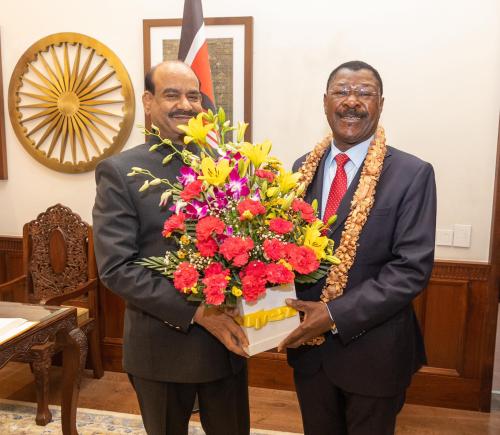
NAIROBI, Kenya — Kenya and India are seeking to deepen their longstanding relationship through parliamentary diplomacy, with National Assembly Speaker Moses Wetang’ula expected to strengthen cooperation between the legislatures of the two countries.

Wetangula’s visit to India is focused on strengthening links between Kenya’s National Assembly and the Lok Sabha, while creating opportunities for lawmakers to exchange experiences on legislation, governance and democratic institutions.

The two countries have maintained close relations for decades, with cooperation extending to trade, investment, education, healthcare, technology and agriculture.

However, their relationship goes back much further. Historical records show that commercial links between India and the East African coast existed centuries before European colonial expansion, with traders exchanging goods, people and ideas across the Indian Ocean.

India established its representative office in Nairobi in 1948. Following Kenya’s independence in 1963, India established a High Commission in Nairobi, marking a new phase in formal diplomatic relations.

Parliamentary diplomacy has increasingly become an important part of the relationship, allowing lawmakers to engage directly on issues that complement official government-to-government relations.

The engagement is also expected to provide an opportunity for both sides to share experiences on lawmaking, democratic institutions and governance.

The broader partnership has already expanded into areas such as trade, investment, education, healthcare and technology.

Wetang’ula’s visit therefore comes as Kenya seeks to use parliamentary engagement to strengthen its long-standing ties with India and identify new areas of cooperation.

“Parliamentary diplomacy provides an important avenue for lawmakers to build relationships that complement formal government engagements.”

The visit is expected to further strengthen ties between the two legislatures while opening new opportunities for cooperation between Kenya and India.

New ballot colour system set to simplify voting in 2027

0

NAIROBI, Kenya — Kenyan voters will have a new visual guide to help them navigate the six elective positions on the ballot in the 2027 General Election, following the announcement of a colour-coded system by the Independent Electoral and Boundaries Commission (IEBC).

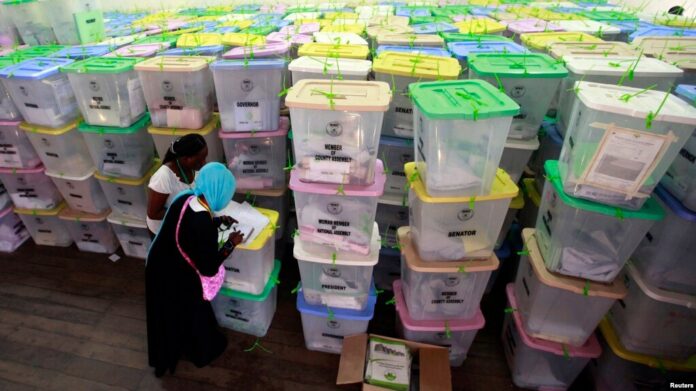
The commission says each ballot paper will carry a specific colour matching the lid of the ballot box where it should be deposited. The system is expected to make it easier for voters to identify the correct ballot box and reduce errors at polling stations.

The presidential ballot will be white, while Members of the National Assembly will use green. The Senatorial ballot will be yellow, gubernatorial light blue, Women Representatives purple, and Members of County Assembly beige.

The move comes as the IEBC continues preparations for the 2027 polls, where voters will elect six different categories of leaders.

The commission is also urging eligible Kenyans who have not registered as voters to do so at IEBC constituency offices and Huduma Centres across the country.

With millions of voters expected to participate, the IEBC says clear identification of ballots and polling procedures will be important in ensuring a smooth voting process.

The colour system will therefore be one of the key features voters will need to understand before heading to the polling stations in 2027.

Oil revenue crisis leaves Iraq struggling to pay workers

0

BAGHDAD, IRAQ — The ongoing crisis in the Strait of Hormuz is increasingly affecting ordinary Iraqis, as the government faces falling revenues due to declining oil exports.

For several months, government employees have been receiving their salaries late. Mahmoud Waleed, a teacher from Mosul, said the delays have increased anxiety and forced many families to cut spending.

“The delay affects you a lot. We have financial obligations as well as basic living expenses. It makes you really anxious and fearful.”

About 85 to 90 percent of Iraq’s budget revenues come from oil, with a large share of its exports passing through the Strait of Hormuz.

Disruptions to shipping have sharply reduced Iraq’s oil exports and government revenues. The government needs between $6.5 billion and $8.2 billion every month to pay salaries, pensions and social benefits.

The situation has already triggered small protests by university workers and employees at the Ministry of Electricity.

Experts warn the crisis could worsen if salary delays continue alongside rising prices, electricity shortages and deteriorating public services.

“The entirety of the Iraqi economy is now hostage to oil revenues,” economist Ali Al-Rawi said.

The Iraqi government is seeking alternative routes to export oil through Turkey and Syria while also considering reforms to reduce the country’s heavy dependence on oil revenues.

For now, the government’s biggest challenge is to keep paying public-sector workers while finding a longer-term solution to Iraq’s dependence on oil.

Rare solar eclipse wows sky watchers across the UK and Europe

0

A spectacular solar eclipse wowed millions across the UK and Europe on August 12, 2026. Sky watchers gathered at beaches, parks, and landmarks to witness the Moon obscure the Sun in one of the most significant astronomical events visible from the region in decades.

Across southern England and the South East including counties like Kent, Surrey, and Sussex sky watchers were able to see up to 90% of the Sun obscured, creating a dramatic crescent effect in the sky.

Further west in Cornwall, coverage reached peak levels for the UK at over 95% obscuration, while London experienced over 90% coverage, making it the deepest eclipse seen over the capital since 1999.

While the UK experienced a deep partial eclipse, observers along the path of totality in parts of Spain and Iceland were treated to a full total solar eclipse.

The partial eclipse began around 18:15 BST across the UK, reaching its peak obscuration between 19:10 and 19:15 BST before concluding as the Sun set.

In Cornwall and the South West, peak coverage occurred around 19:10 BST (95%+), followed closely by London and the South East at approximately 19:12 BST (90%–92%), and Northern England and Scotland around 19:15 BST (75%–85%).  Totality in Spain and Iceland peaked at approximately 17:45 UTC (19:30 CEST).

To mark the event, communities held viewing parties, picnics, workshops, and educational talks. Thousands of people headed to high vantage points such as Beachy Head in East Sussex and Tunbridge Wells Common, as well as coastal beaches across Devon and Cornwall.

Groups like the Gylly Girls sea-swimming society watched the event directly from the water in Cornwall, while eclipse chasers across the region scrambled for solar-safe eyewear to safely experience the moment.

For sky watchers in the UK looking ahead to future events, the next partial solar eclipse visible from the region will occur on August 2, 2027, offering roughly 45% coverage. Meanwhile, those hoping to witness a total solar eclipse directly from the UK mainland will have to wait until September 23, 2090.