Home Blog Page 44

Mungatana backs Ruto’s push to expand clean cooking gas market

0

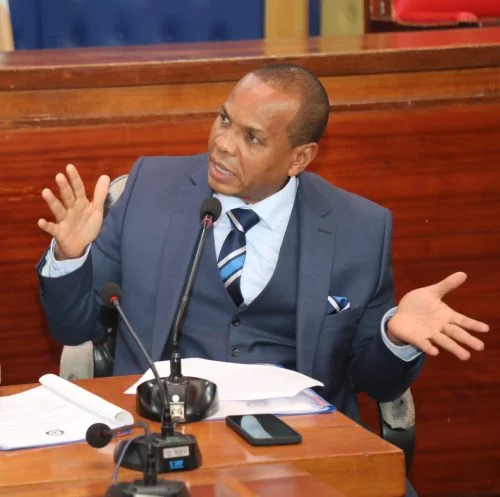
Tana River Senator Danson Mungatana has backed President William Ruto’s efforts to expand access to clean cooking gas in Kenya, saying the government’s policies are opening up the Liquefied Petroleum Gas (LPG) market to competition and could ultimately lead to lower prices for consumers.

Mungatana said he supported the Senate Energy Committee’s report that gave the green light for the establishment of a new LPG storage facility with a capacity of 30,000 tonnes in Mombasa.

The proposed facility will be operated by Asharami Energy, a Nigerian energy company, and is expected to introduce an additional major player into Kenya’s LPG storage and supply market.

According to Mungatana, increasing storage capacity and introducing more players into the sector is critical to breaking the existing concentration in the LPG market.

He said Kenya has for years relied heavily on one major storage facility, the African Gas and Oil Company (AGOL), which has a storage capacity of about 25,000 tonnes.

Mungatana described the situation as unhealthy for the market, arguing that excessive concentration in storage capacity can limit competition and affect consumers.

“I support Kenya’s intentional shift towards clean cooking gas under the policies of President Ruto,” Mungatana said, adding that the country was moving in the right direction by expanding LPG infrastructure and encouraging investment in the sector.

The Senator said President Ruto’s response to the challenge of limited LPG storage capacity included the establishment of the Special Economic Zone (SEZ) at Dongo Kundu in Mombasa, which has been positioned as an important investment and logistics hub.

He also pointed to the government’s efforts to attract Taifa Gas to invest in the country, saying the company is developing a major LPG facility with an investment estimated at about US$124 million.

The Taifa Gas facility is designed to initially hold approximately 30,000 tonnes of LPG, with provision to expand its capacity to about 45,000 tonnes.

Mungatana said the project, which is under construction and nearing completion, is expected to significantly transform Kenya’s cooking gas market by increasing the country’s storage capacity and introducing greater competition.

He argued that competition would be one of the most important benefits of the new investments because consumers would have more than one major supplier serving the market.

“Taifa Gas is under construction and about to be completed. It will be a game changer in the provision of clean cooking gas in Kenya because, for the first time, competition is being introduced into the market,” he said.

The Senator said the entry of Asharami Energy would further strengthen competition, creating a market in which three major players would have substantial LPG storage capacity.

These are AGOL, Taifa Gas and Asharami Energy.

Mungatana said the combined storage capacity of the three facilities would significantly increase the amount of LPG available in the country, reducing reliance on a single major storage facility.

He further argued that increased competition would have a direct impact on consumers through potentially lower prices, improved service delivery and better customer care as companies compete for market share.

The push to expand LPG infrastructure comes as Kenya seeks to increase the use of cleaner cooking fuels and reduce reliance on traditional cooking methods, particularly among households that continue to depend on charcoal, firewood and kerosene.

Access to clean cooking remains a major development and public health priority in Kenya, with the government seeking to expand the availability and affordability of cleaner fuels as part of its broader energy transition agenda.

For Mungatana, expanding LPG storage capacity is therefore not only an investment issue but also an important step towards achieving wider access to clean cooking energy.

He said the government’s approach of attracting private investment while increasing competition could help address some of the structural challenges that have affected the LPG market.

The Senator praised President Ruto and the Energy sector leadership for what he described as deliberate efforts to transform the country’s clean cooking energy landscape.

He said the completion of the Taifa Gas facility and the proposed entry of Asharami Energy would mark an important shift in the market, with increased storage capacity providing greater resilience and competition.

Mungatana maintained that Kenya was moving in the right direction in its efforts to promote clean cooking gas, saying the benefits of the investments should ultimately be felt by ordinary households through improved access, competitive pricing and better services.

“Kenya is heading in the right direction in this regard on clean cooking gas, thanks to President Ruto and the team in Energy,” he said.

The development is expected to place Mombasa at the centre of Kenya’s LPG infrastructure, strengthening the coastal city’s role as a key entry, storage and distribution point for energy products serving the domestic market and potentially the wider region.
Amid climate change, Gatab turns to culture to save Mount Kulal

0

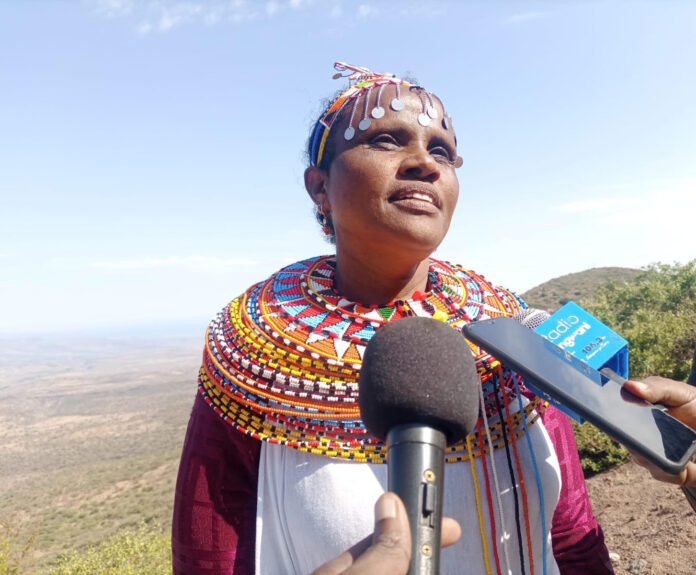
MARSABIT – The sound of birds moving through the canopy, leaves whispering in the wind, and a slow stream bubbling over rock. The air is fresh, calm, and cool.

This is Mount Kulal Forest, often called the “Gem in the Desert” in Laisamis Constituency, Marsabit County.  Even as climate change bites across Kenya and the region, residents of Gatab continue to enjoy clean air and a thriving forest. Their secret is culture: traditions passed down by elders that have made conservation a community pillar.

Rising to 2,300 meters above sea level, Mount Kulal is an eroded, extinct Pleistocene volcano East of Lake Turkana. Its mist-covered peak forms the core of the Mount Kulal Biosphere Reserve. Managed jointly by the local community and Marsabit County Government, the mountain covers about 750 square kilometers, split by a deep crater ravine into northern and southern sections.

The North is wetter, receiving 900 to 1,000mm of rain annually, compared to 200 to 300mm in the South. The surrounding desert gets no more than 150mm. The habitat includes forest patches, grassland, evergreen shrubland and bushland, and forms a critical water catchment for the region.

Culture as conservation law

For Gatab community, Mount Kulal is sacred, essential for both present and future generations.

Protection goes beyond leaving the forest untouched. Communities actively plant more trees, both indigenous species and fruit trees, guided by customs set by elders.

“If anyone breaks the elders’ rules on conservation, they face a curse,” warns Andrew Leyamiyam, Chair of the Loshikreshi Forest Conservation Group. “Communities dependent on the forest practice traditional rules where fines can be imposed, and in some cases culprits may be cursed. Management groups have been formed to safeguard the forest and ensure sustainable use of its resources.”

Esther Lesiantam adds: “Apart from the strict rules, the whole community works together to conserve the environment.”

Shadrack Lengoyap, founder of the Olchore Conservation Group and Secretary of the Mount Kulal Community Forest Association, says the forest covers about 45,000 hectares.

UNESCO designated Mount Kulal a Man and Biosphere Reserve in 1979 for its water catchment and biodiversity. The core zone of 51,436 hectares covers the forest on the mountain, with a buffer zone extending to the shores of Lake Turkana. Since then, residents and elders have been its main custodians.

But recent climate change impacts have pushed them to do more. “That is why we have intensified tree planting, both indigenous and fruit trees,” Lengoyap says.

The value of mount Kulal

Lengoyap says the forest is sacred ground used for cultural rituals. Access is restricted to protect water sources and trees of cultural importance.

Elders have also banned the cutting or transportation of Mutarakwa trees, the African pencil cedar, Juniperus procera , a decree that has helped preserve the species.

Mt Kulal is also considered a vital cradle of the sweet-smelling frankincense and myrrh family. In August 2021, Food and Agriculture organization -FAO declared its interest in addressing the environmental degradation challenges faced by the region with the focus of restoring Kenya’s arid and semi-arid lands through bio-enterprise development.

Residents also draw on sensitization through radio programs, experts, religious leaders, and conservation groups to guide conservation work.

 “It is in this forest that you can only find Kulal White-eye birds —Zosterops kulalensis: A rare bird species endemic exclusively to the mist forests of Mount Kulal.Critically endangered, white-headed vultures and hooded vultures.Other forest migratory species like Mountain buzzards, Hartlaub’s turacos, star-spotted robins, and dozens of regional biome-restricted species.

The forest is also habitant to Mammals, endemic-prone Wildlife and threatened Vultures.

“Animals like elephants, leopards, striped and spotted hyenas, silver-backed jackals, bat-eared foxes, bushbucks, waterbucks, and impalas, Grevy’s zebras and long-necked gerenuks in the surrounding lower zones and venomous reptiles species including saw-scaled vipers, night adders, puff adders, cobras, and various chameleons are also found in this forest.” Lengoyap adds.

Marsabit County Forest Conservator Mark Lenguro and his deputy Silas Mutea commend the community’s approach. With over 85% of Marsabit County classified as arid, Lenguro says forests and indigenous trees must be protected to cushion communities against climate change.

KWS Senior Assistant Director Gideon Kebati and KFS Enforcement Commander Kadiro Oche also urged residents to recognize the role of forests in supporting wildlife and improving the environment.

For Gatab, culture is not just heritage. It is the tool keeping Mount Kulal green.

Gender should not be a barrier to artisanship, women urged to join jua kali sector

0

TAITA TAVETA – Women have been urged to take up technical and artisan skills and actively participate in Kenya’s Jua Kali and construction industries, with stakeholders challenging the perception that certain trades are exclusively the preserve of men.

Speaking after a two-day Fundi Mahiri wa Kisasa workshop held at the Taita Taveta National Polytechnic (TTNP) on August 14 and 15, Trans World Radio and Sifa FM Kenya Executive Director Dr. Njoki Chege said gender should no longer be used as a barrier to access or pursuing technical and vocational skills.

Dr. Njoki noted that although the workshop attracted hundreds of artisans with expertise in various trades, including carpentry, masonry and other technical fields, the number of women participating in the training and practicing skilled trades remained comparatively low.

She attributed the imbalance partly to persistent perceptions that some technical and manual occupations are “men’s jobs,” urging women to challenge such stereotypes by acquiring practical skills and pursuing opportunities in the artisan economy.

“There are no jobs today that belong to either the female or male gender. As long as someone has gone to a technical institution and acquired the necessary skills, everyone has an equal opportunity to implement their projects successfully,” Dr. Njoki said.

She said increasing women’s participation in the Jua Kali and artisan sector would not only promote gender equality but also expand economic opportunities for women, particularly as the demand for skilled labour continues to grow.

But while the statistics and discussions around gender participation tell one side of the story, Lydia Mwapoa’s experience as a woman carpenter demonstrates what those barriers look like in real life.

Mwapoa, a teacher at Mwachawaza Technical College and a trained carpenter, knows first-hand the challenges women face when they choose careers traditionally associated with men.

When she decided to study carpentry, she says, she was ridiculed by members of her community and told she had failed to choose what they considered a “proper” career for a woman.

Instead of tailoring or another occupation traditionally associated with women, Mwapoa had chosen to work with wood and tools.

“It was not easy,” she recalls.

The skepticism did not end after she completed her training. Mwapoa says some members of the community were initially reluctant to trust a woman with carpentry work, making it difficult for her to secure opportunities to apply her skills in making household furniture and other products.

As a result, she says, the carpentry skills she had worked hard to acquire were at risk of being underutilized.

But rather than abandon the trade, Mwapoa continued practising and using her skills, gradually challenging the assumptions surrounding women and technical work.

Today, she is using her experience to encourage more girls to consider careers in carpentry, masonry and other technical trades.

She says the perception that educating a girl in a technical field is a waste of her parents’ resources remains one of the barriers discouraging female students from joining technical and vocational institutions.

According to Mwapoa, girls are often encouraged to choose courses considered traditionally feminine, with many ending up in areas such as tailoring, while fewer venture into trades such as carpentry and other construction-related skills.

She is calling on parents to give their daughters the same freedom and support they give boys when choosing technical careers.

“Girls should be allowed to pursue the skills they are passionate about. Technical work should not be divided into male and female professions,” she says.

Mwapoa’s own experience is now becoming a practical example of what women can achieve when they break through such stereotypes.

She says her work as a carpenter has encouraged other girls to reconsider their career choices, and she is now witnessing an increase in the number of young women enrolling in technical training.

For her, the growing interest among girls is evidence that representation matters. When young women see another woman working confidently in a traditionally male-dominated trade, the boundaries of what they believe they can achieve begin to change.

Mwapoa also welcomed the Fundi Mahiri wa Kisasa workshop saying it provided artisans with an opportunity to interact, learn about modern technologies and improve their technical knowledge.

She particularly appreciated the initiative’s focus on encouraging women to participate in technical and artisan work, saying such platforms can help change public perceptions while giving artisans access to knowledge that can improve their businesses.

Her story reflects a wider challenge facing Kenya’s technical and artisan industry. While the country needs more skilled workers, gender stereotypes continue to influence the careers young people choose.

According to Dr. Njoki, the situation requires deliberate efforts to encourage women to enter technical fields and equip them with the skills needed to compete in a rapidly changing industry.

Dr. Njoki said the training was particularly important because the construction industry is rapidly changing, with many manufacturers and suppliers embracing digital platforms while introducing modern tools and materials into the market.

She said artisans, who are among the primary users of construction products and equipment, need continuous training to remain competitive and keep pace with technological developments in the sector.

“This is a rapidly changing industry. The tools and equipment being used today are increasingly modern, and artisans need to understand how to use them effectively. Continuous skills development is therefore critical,” she said.

Beyond technical training, Dr. Chege described the workshop as an important platform for bringing together communities, artisans and private-sector players.

She said the partnership between Trans World Radio, Sifa FM, TTNP and various construction-sector companies demonstrated the important role that media and industry stakeholders can play in supporting skills development and empowering artisans.

The workshop is part of the Fundi Mahiri wa Kisasa 2026 initiative, organised by Trans World Radio and Sifa FM in partnership with TTNP and other stakeholders in the construction industry.

Dr. Njoki said the initiative would continue with another workshop scheduled for Mombasa County in October, urging artisans across the country, including women and young people, to take advantage of such opportunities to sharpen their skills.

The push for greater participation of women in the Jua Kali and artisan sector comes amid wider efforts to promote technical and vocational education as a pathway to employment, entrepreneurship and economic empowerment.

For women who have traditionally remained on the margins of technical trades, stakeholders say the message is clear, skill, rather than gender, should determine who gets an opportunity to build, create and earn a living in Kenya’s growing artisan economy.

Turkana community in Isiolo begins negotiated democracy ahead of 2027 elections

0

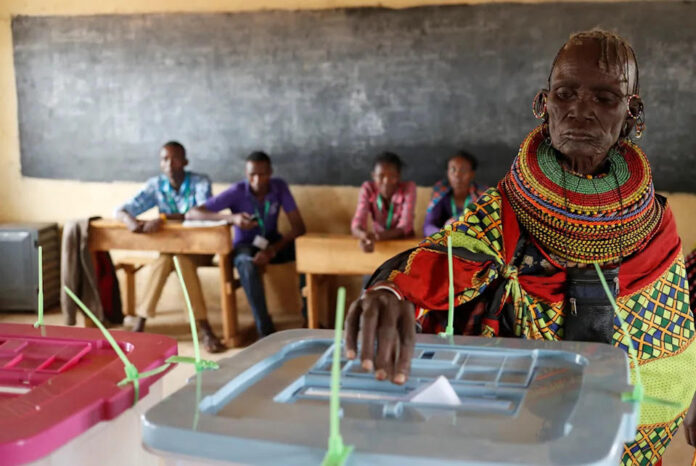
TURKANA – As the 2027 General Election draws closer, the Turkana community in Isiolo County has begun its traditional process of identifying and nominating candidates for various political positions, popularly known as negotiated democracy, in which elders play a crucial role in determining the political direction of their community.

Over the weekend, members of the Turkana community living in Isiolo met at Kiwanja area in Ngaramara Ward, where they resolved to consolidate their support behind the retention of the Isiolo North parliamentary seat and the Deputy Governor’s position, both currently held by members of the Turkana community.

The community also agreed to reserve other elective positions for negotiations with other major communities living in Isiolo County, in a strategy aimed at building strong political alliances and securing enough numbers to enhance their chances of success in next year’s elections.

Speaking during the meeting, community leaders said the unity witnessed among the Turkana during the 2022 General Election remains intact and will be carried forward into the 2027 elections.

Ngaramara Ward MCA, Peter Losu said the community remains firmly behind Isiolo North MP Joseph Samal Lomwa, whom he described as a key political leader and an important representative of the Turkana community.

“The unity and togetherness that we had as the Turkana community in 2022 is still intact, and will remain so as we approach 2027. Our beloved MP, who is the king of the Turkana community, is Hon. Joseph Samal Lomwa,” Losu said.

He said the Turkana community has experienced political leadership and has elders capable of guiding members on the candidates and positions the community should support.

“Our community has leaders who can organise and guide us on the direction we should take. These are the people who will decide where our community is heading. On other matters, people should remain calm and stop the political noise,” he said.

The leaders also dismissed claims of divisions within the Turkana community, saying they would not be distracted by individuals allegedly attempting to create divisions for political purposes.

“There are people making noise here and there. We do not count that noise. These are people who are hungry and have been sent to cause confusion. We are not afraid,” the Member of County Assembly said.

He maintained that the Turkana community remains united and will seek to consolidate its votes behind candidates agreed upon through the community’s traditional consultation process.

“This is a community that we know is together. Our votes will go in one direction as the Turkana community. There will never be a time when the Turkana community will split or become divided,” he said.

Losu further warned outsiders against attempting to interfere with the internal affairs of the Turkana community, insisting that the community is now even more united than it was during the 2022 elections.

“The Turkana community is not divided. I know there are people who are using this opportunity to interfere with our community, but I want to tell them that the Turkana community is strong, even stronger than it was in 2022,” he said.

The MCA also reaffirmed their support for the leaders they said had been endorsed by the community, including Isiolo North MP Joseph Samal Lomwa and Isiolo Governor Abdi Guyo.

“We want to make it clear that the leaders we have chosen, starting with Hon. Samal and His Excellency Governor Guyo, are the leaders whom we respect as a community,” he said.

The meeting comes as political consultations intensify across Isiolo County ahead of the 2027 General Election, with communities seeking to negotiate strategic alliances while maintaining strong representation in elective positions.

For the Turkana community, leaders said unity, negotiated democracy and strategic partnerships with other communities will be central to determining their political influence and electoral success in the 2027 General Election.

Mungatana backs Ruto, says Tana River has benefited from his administration

0
Tana River Senator Dr. Mungatana| File Photo

Tana River Senator Danson Mungatana has praised President William Ruto’s administration for what he described as increased government attention, investment and employment opportunities in Tana River County, urging residents to continue supporting the President ahead of the 2027 General Election.

Mungatana made the remarks in Madogo, Tana River County, where he joined family members and friends for the wedding ceremony of Mumina and Elyas.

The Senator said he first visited the bride’s family before addressing the gathering, where he congratulated the newlyweds and wished them a long and blessed marriage.

He also commended the couple for honoring their parents, urging other young people in the community to emulate the example by embracing marriage, respecting their families and building strong homes.

Turning to politics, Mungatana told the gathering that President Ruto had demonstrated a strong commitment to Tana River County, highlighting what he described as three key areas of his administration’s record.

According to the Senator, Ruto is the President who has visited Tana River more times than any of his predecessors.

He further claimed that the current administration has channeled more resources and investments to the county than previous administrations, while also creating more opportunities for residents of Tana River to secure positions in national government institutions.

“Rais aliyezuru Tana River zaidi ya Marais wote ni Ruto. Rais aliyeweka raslimali nyingi Tana River kuliko Marais wote ni Ruto, na Rais aliyetoa nafasi nyingi za kazi kwa watu wa Tana River katika taasisi za Serikali Kuu kuliko Marais wote ni Ruto,” Mungatana said.

The remarks come as Tana River continues to attract national attention over investment, agriculture, infrastructure and employment.

Government agencies have been implementing and supporting a number of projects in the county.

President Ruto has previously inspected the Galana-Kulalu Food Security Project, which covers parts of Tana River and Kilifi counties. The project includes irrigation infrastructure and is intended to boost food production, create employment and stimulate agro-based industries.

The national government has also been involved in efforts to strengthen agricultural production in the region, including investment in the Tana River Sugar Company, which is expected to create employment opportunities once fully operational.

In addition, the government has continued to promote technical and vocational training in the county.

President Ruto officially inaugurated the Tana River Technical and Vocational College in Hola in February 2025, with the government saying the institution would help equip young people with skills relevant to employment and economic transformation.

Despite the investments, Tana River continues to face significant development challenges, including water access, infrastructure, employment and the completion of stalled projects.

Mungatana himself has previously raised concerns over the prolonged delay in the construction of the Tana River County Headquarters at Dayate, highlighting the need for faster implementation of development projects in the county.

During the Madogo gathering, Mungatana said he and the residents had agreed to continue supporting President Ruto.

He also expressed gratitude to the people of Tana River for pledging to accompany him on his political journey as he seeks another term as Senator in the 2027 General Election.

The Senator used the occasion to appeal for continued unity and political cooperation among residents, while presenting his support for the Kenya Kwanza administration as part of what he described as the county’s broader development interests.

His comments in Madogo are likely to add to the emerging political conversations in Tana River ahead of the 2027 elections, particularly as leaders seek to convince residents that their political alliances can deliver greater investment, employment and development to the county.

Mungatana concluded by thanking the residents for their support and pledged to continue working with them in the coming political period.

Governor Kachapin commissions new Simotwo health dispensary in West Pokot

0

WEST POKOT — Residents of Lelan Ward are set to enjoy improved healthcare access following the official commissioning of the new Simotwo Health Dispensary by Governor Simon Kachapin on Monday, August 17.

The opening of the dispensary marks a key milestone in the county’s plan to decentralize health services and enhance primary healthcare infrastructure across West Pokot.

Speaking during the commissioning ceremony, Governor Kachapin noted that the facility a project initiated during his first term reflects his administration’s dedicated commitment to bringing quality, affordable medical care closer to local communities.

“The opening of Simotwo Health Dispensary is an important milestone in our efforts to bring healthcare services closer to the people,” Kachapin said. “We remain committed to strengthening healthcare infrastructure so that our people can receive quality and affordable services without having to travel long distances.”

The new facility will serve the community of Simotwo as well as surrounding villages, drastically cutting down the travel distance previously required for basic medical consultations and treatment.

Reaffirming his administration’s broader development roadmap, Kachapin emphasized that the County Government will continue to invest in, equip, and operationalize health centers across all wards to ensure universal coverage.

“This facility belongs to the people, and we will continue working to ensure that healthcare services are available and accessible to every resident,” he added.

Nyoro calls for Turkana Oil wealth to help Kenya tackle rising debt

0

NAIROBI – Kiharu MP Ndindi Nyoro has called for Kenya to use its oil and mineral wealth to help reduce the country’s mounting debt. He warned that Turkana’s petroleum resources must not become a source of wealth for a few private interests.

Speaking in Nairobi as he stepped up his national political profile, Nyoro stated that Kenya should reduce its dependence on borrowing by properly exploiting its natural resources particularly oil in Turkana and minerals in Kwale.

“God has blessed our country because we have oil deposits and minerals. And all the more reason, dear Kenyans, we must guard these assets viciously,” Nyoro said.

His remarks come as Kenya moves closer to commercial oil production in Turkana. The South Lokichar Basin, where Kenya’s oil was first discovered at the Ngamia-1 well in 2012, contains an estimated 2.85 billion barrels of oil in place, with about 429 million barrels considered recoverable over the life of the field.

The government’s current development plan targets initial production of about 20,000 barrels per day, rising to 50,000 barrels per day in a later phase. First oil is expected in December 2026, with crude initially transported by road to the Kenya Petroleum Refineries facility in Mombasa for storage before export.

Nyoro has repeatedly raised concerns about who will ultimately benefit from the Turkana resource. In March 2026, he warned that it would be “extremely wrong and unacceptable” for Kenya to begin producing oil while ordinary citizens failed to benefit. He argued that communities in Turkana and Kenyans generally should see tangible returns from a resource in which public funds have already been invested.

A month later, Nyoro went further, alleging that the same interests involved in the Government-to-Government fuel arrangement were also seeking to benefit from Turkana oil. He accused unnamed leaders of using the energy sector for personal gain and criticized the growing concentration of interests across Kenya’s petroleum value chain.

Those concerns followed the transfer of Tullow Oil’s entire Kenyan working interest to Auron Energy E&P, an affiliate of Gulf Energy, in 2025. Tullow confirmed in March 2026 that it had received a further $36 million payment under the deal, following parliamentary ratification of the South Lokichar Field Development Plan.

Nyoro now says the stakes are even higher because Kenya is facing a major debt burden.

“My warning to those involved in the Turkana oil issue is that you must have the interests of Kenyans at heart. The oil in Turkana should benefit Turkana County, Kenya as a whole, and also help us deal with this issue of huge debt,” he said.

He claimed Kenya’s public debt had reached KSh 13 trillion and that the country was borrowing about KSh 9 billion every day, placing an estimated debt burden of KSh 228,000 on every Kenyan. Nyoro argued that oil revenues should therefore be managed as a national economic asset rather than simply becoming another source of private wealth.

“We are not going to allow you to take over the mineral deposits for your own personal benefit because that is the silver bullet we have economically—oil and minerals—to deal with the issue of debt,” he said.

The timing of his remarks is significant. After more than a decade of delays following the 2012 discovery, the South Lokichar project has entered its development phase, with the government saying commercial production is expected before the end of 2026.

For Turkana, however, the question is not only how much oil Kenya can produce, but how the county and its communities will benefit from the resource. The oil development project covers six fields Amosing, Ngamia, Twiga, Ekales, Agete, and Etom across Blocks 10BB and 13T, now designated T6 and T7.

Nyoro is also proposing wider economic and social reforms. He wants the monthly cash transfer for older persons increased from KSh 2,000 to KSh 3,000 starting January 2028, followed by another KSh 1,000 increase after three years.

He has further proposed doubling the Judiciary’s capacity within five years and requiring it by law to receive at least 1.5 percent of national revenue annually. On state-owned digital services, Nyoro wants the government to establish a company bringing together platforms such as eCitizen and the Social Health Authority before eventually listing it on the Nairobi Securities Exchange, with the government retaining a 51 percent stake.

The Kiharu MP, who has previously indicated that he will not seek another term in the constituency, is increasingly using economic policy and resource ownership to position himself for a wider national political role.

His repeated focus on Turkana oil puts him at the center of a growing national debate over whether Kenya’s long-awaited petroleum wealth will translate into public revenue, local development, and debt reduction or primarily benefit private interests.

ICPAC warns greater Horn of Africa: Act now ahead of October–December rains

0

KIGALI — The Intergovernmental Authority on Development (IGAD) Climate Prediction and Applications Centre (ICPAC) has called on countries across the Greater Horn of Africa to translate climate forecasts into immediate early action ahead of the upcoming October–December rainfall season.

Speaking during the 74th Greater Horn of Africa Climate Outlook Forum (GHACOF 74) in Kigali, Rwanda ICPAC Director Dr. Abdi Fidar emphasized that regional governments now possess both the forecast data and the vital lead time needed to prepare for potential climate risks.

“Early warning must lead to early action,” Dr. Fidar stated, emphasizing that timely intervention is critical to mitigating severe climate impacts.

He urged national governments, disaster management agencies, humanitarian organizations, local authorities, communities, and the media to unite in ensuring climate alerts reach vulnerable populations quickly, allowing them to make informed decisions.

Dr. Fidar warned that anticipated El Niño conditions pose a threat across national borders due to the interconnected nature of the region. Because the Greater Horn of Africa shares vital water resources, ecosystems, trade markets, transport corridors, and livelihoods, a climate disaster in one nation can quickly trigger cross-border consequences for neighboring countries.

Highlighting the need for a unified front, Dr. Fidar called for enhanced regional cooperation, seamless information sharing, and joint preparedness strategies, noting that no single country or institution can tackle these complex climate risks in isolation.

He reaffirmed that ICPAC will continue collaborating with national meteorological services and regional partners to refine climate forecasting, bolster early warning systems, and drive anticipatory action.

“We have the forecast. We have the time to prepare. Now, we must act,” Dr. Fidar urged, calling on all nations to utilize available climate data to protect lives, safeguard livelihoods, and build long-term resilience across the Greater Horn of Africa.

Mlolongo Residents await court proceedings in case linked to missing businessman Jimmy Mutava

0

Members of Mlolongo Phase Four are expected to turn up in large numbers at the Machakos Law Courts on Wednesday as proceedings resume in a case linked to the disappearance of local businessman Jimmy Mwanzia Mutava.

Mutava has remained missing for weeks after he was allegedly abducted in Mlolongo by unknown individuals under circumstances that are yet to be fully established.

His disappearance has caused concern among residents, community leaders and his supporters, who have continued to call for answers on his whereabouts and for authorities to ensure his safe return.

The case, filed against the Mlolongo Officer Commanding Station (OCS) and the Office of the Director of Public Prosecutions (ODPP), was initially scheduled for hearing on Tuesday at the Machakos Law Courts.

However, the presiding judge handled the matter virtually through an online link instead of appearing physically in court.

The proceedings attracted a significant turnout from Mlolongo residents, alongside heavy media presence and public interest in the case. Following the developments, the judge directed that the matter be adjourned to Wednesday, August 19, 2026, when it will be heard physically in Court 2 from 8:00 a.m.

Community leaders have since urged residents and supporters to turn up in even greater numbers, with members expected to arrive by 7:00 a.m., to witness the proceedings and maintain public oversight of the matter.

Both the Mlolongo OCS and representatives of the ODPP were present during Tuesday’s virtual session.

For the residents of Mlolongo Phase Four, Wednesday’s physical hearing is being closely watched as they continue to seek clarity over Mutava’s disappearance and hope for developments that could shed light on his whereabouts.

The case comes amid continued concern from the community over Mutava’s prolonged absence and calls for authorities to establish what happened to him.

New governance Policy mandates strict caps and return thresholds for proposed national infrastructure fund

0

The proposed Investment Policy for the National Infrastructure Fund (NIF) marks a strategic shift toward sustainable infrastructure financing by establishing a rigorous framework for financial risk management and capital allocation.

Currently under review by the Parliamentary Departmental Committee on Finance and Planning, the policy sets a minimum expected return on equity of 7% and enforces strict exposure limits, capping sector-wide allocation at 40% of the Fund’s assets and individual project exposure at 20%. To shield public finances, projects must sustain a minimum 60% debt leverage through non-recourse project debt, while direct balance-sheet borrowing by the Fund is strictly prohibited to effectively manage sovereign financial risks.

Established in March as a government investment vehicle, the NIF aims to mobilize large-scale infrastructure development by blending public and private capital, reducing overall reliance on taxpayer funds and external debt. Eligible investment areas span national highways, rail networks, airports, seaports, power systems, ICT infrastructure, water reservoirs, irrigation schemes, and agribusiness facilities.

Financing will be deployed flexibly through direct investments, equity, quasi-equity, debt instruments, project finance structures, special purpose vehicles, infrastructure funds, and pooled investment vehicles.

Under this new framework, commercial viability serves as the primary benchmark, requiring all projects to demonstrate proven market demand before capital deployment. The Fund will actively drive project preparation by setting aside dedicated resources to develop proposals into bankable, investment-ready opportunities.

Governance is further strengthened by mandating independent technical and financial assessments, alongside a political independence clause designed to protect investment decisions from external influence.

Performance will be evaluated across a comprehensive five-dimensional model covering capital preservation, liquidity, income generation, project preparation efficiency, and broader socio-economic impact beyond basic financial returns. Stakeholders and members of the public have until August 24 to submit their feedback on the proposed policy.