
Home Blog Page 56

Senator Mungatana commends Dr. Amani Komora for using sports to promote peace and unity in Tana River

0

Tana River County Senator, Dr. Danson Mungatana, has extended high praise to the Chairman of the National Police Service Commission (NPSC), Dr. Amani Komora, along with his partners, for successfully funding and hosting a regional football league that concluded over the weekend in Tana River South.

Speaking during the closing ceremony, Dr. Mungatana hailed Dr. Komora as a role model and a benchmark for all leaders hailing from Tana River who have been appointed to national positions. He emphasized that Dr. Komora’s decision to leverage his national influence to bring tangible benefits back to local communities through sports exemplifies selfless leadership.

The tournament went beyond scouting talent and providing entertainment; it served as a powerful platform to foster social cohesion, unity, and peace among local communities. Dr. Mungatana noted that such initiatives create a harmonious environment for the youth and residents across the region.

“He has used his national position to bring real impact to the grassroots by organizing a tournament centered around preaching peace,” Senator Mungatana stated.

The event drew a massive crowd and was attended by key leaders from both the national and county governments, alongside representatives from various civil society organizations.

 Among the key dignitaries present were:The County Commissioner of Tana River,Former Governor Hussein Dado,Honorable Ahmed Bute,The Speaker of the Tana River County Assembly,The Member of Parliament for Garsen South,Representatives from several civil society organizations and community leaders.

The strong turnout underscored the region’s shared commitment to supporting local development, peace-building, and youth empowerment.

In his closing remarks, Dr. Mungatana called on other leaders to emulate this community-first approach, wishing Dr. Komora continued blessings and offering prayers for peace and prosperity across Tana River.
Prime cabinet secretary Musalia Mudavadi champions inclusion and economic stability in Busia

0

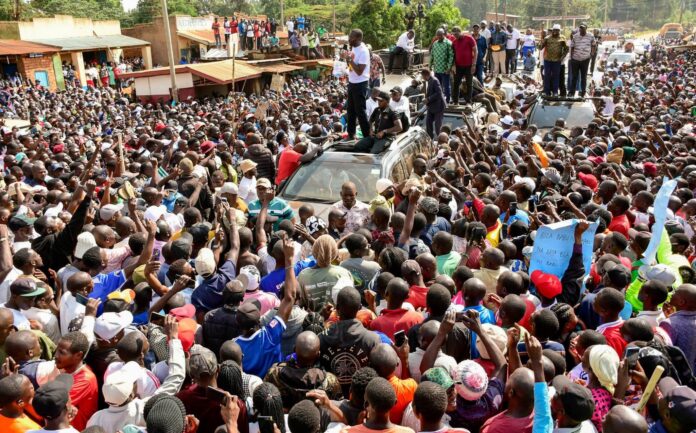
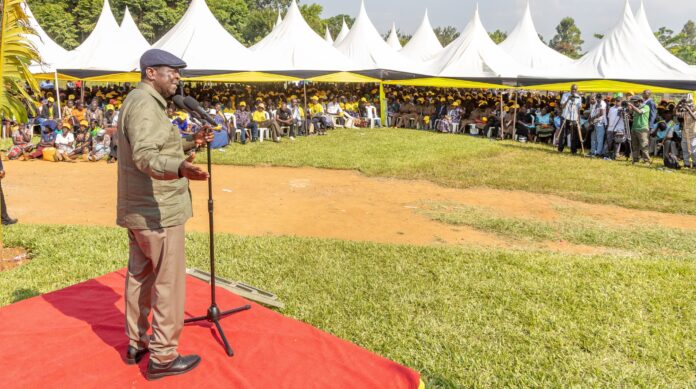
Addressing over 5,000 United Democratic Alliance (UDA) grassroots members in Butula, Busia County, on Sunday 9th, Prime Cabinet Secretary Musalia Mudavadi reaffirmed that true democracy originates at the community level, serving as the foundation for a stronger and more cohesive nation.

During the high-level engagement focused on bolstering party structures, Mudavadi emphasized that party building must align with the broader vision of a united Kenya rooted in constitutional governance, political inclusion, and economic stability.

He stressed that national unity is not merely an abstract political ideal, but a vital prerequisite for sustainable development and long-term prosperity across the country.

Underscoring the rationale behind the Kenya Kwanza Administration’s collaboration with the Orange Democratic Movement (ODM) under the Broad-Based Government framework, the Prime Cabinet Secretary noted that patriotic leadership requires placing national stability above partisan interests.

As the country prepares for future election cycles, Mudavadi urged citizens and leaders alike to reject divisive rhetoric and foster an inclusive environment where every community possesses a meaningful voice and a stake in shared economic progress.

The forum concluded with community representatives presenting memoranda detailing local priorities including enhanced administrative recognition, equitable representation, and targeted affirmative action which Mudavadi assured would be translated into actionable development policies and tangible opportunities for the public.

Driving Universal Health Coverage: Kenya champions sustainable financing, innovation, and workforce excellence

0

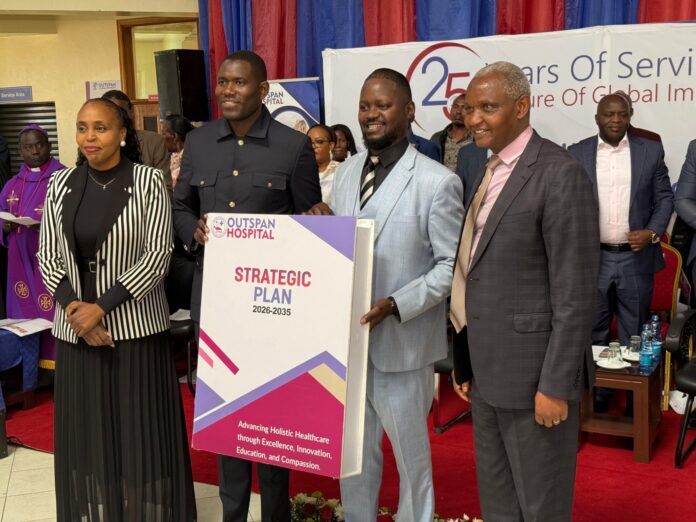
Presiding over the Silver Jubilee celebrations of Outspan Teaching and Referral Hospital (OTRH) in Nyeri, Principal Secretary for Medical Services Dr. Ouma Oluga emphasized that sustainable health financing, robust local research, and a highly skilled, compassionate workforce are pivotal to advancing Kenya’s Universal Health Coverage (UHC) agenda.

Dr. Oluga stressed the importance of transparency and accountability in healthcare funding, highlighting the key role played by the Social Health Authority (SHA) in enhancing provider reimbursements and strengthening financial stability across the sector.

Commending the integrated model of the Outspan Academic and Healthcare Ecosystem encompassing both OTRH and Outspan Global University Dr. Oluga underscored how uniting clinical practice, medical education, and innovation decentralizes specialized services, ensuring quality care is accessible to communities without requiring long-distance travel.

He called on medical training institutions to instill technical competence, integrity, and patient-centered empathy in future professionals, while advocating for increased investment in locally driven health technologies to bolster national health security against global supply chain disruptions.

Reaffirming the Government’s commitment to protecting households from catastrophic medical expenses and preventing avoidable deaths, the Principal Secretary backed Outspan’s ambition to achieve Level 6 status as a fully-fledged university teaching and referral hospital.

The event culminated in the launch of the landmark OTRH and Outspan Global University Strategic Plan 2026–2035 a 10-year roadmap focusing on expanding specialized services, research, and digital health initiatives.

Attended by key dignitaries including EAC Principal Secretary Dr. Caroline Karugu, Outspan Global University Vice Chancellor Prof. Paul Mbugua, OTRH Executive Director Dr. Geoffrey Kiruhi, and Medical Superintendent Dr. Peter Murimi, alongside public and private sector leaders the Silver Jubilee marked Outspan’s transformation from a small outpatient clinic in 2001 into a leading regional healthcare and academic center.

Linda mwananchi takes Western Kenya by storm as Sifuna signals 2027 ambitions

0

The Linda Mwananchi movement led by Nairobi Senator Edwin Sifuna alongside key opposition leaders intensified its political and civic mobilization across Western Kenya, concluding an extensive tour through Busia, Bungoma, Trans Nzoia, and Kakamega counties.  

Central to the tour’s narrative was the role of ordinary citizens (wananchi) in directly sustaining and driving the movement. Following the recent deactivation of the movement’s public M-Pesa fundraising paybill which had gathered over KSh 2.2 million in direct citizen micro-donations within just two days leaders highlighted these contributions as proof of a genuine bottom-up initiative.

During the rallies, speakers emphasized that the campaign relies entirely on small-dollar financial support and voluntary logistical assistance from local residents, market vendors, and youth, framing public funding as a protection against political interference.  

The delegation engaged local residents through a series of open-air rallies, market walk-throughs, and town hall meetings across Mumias, Navakholo, Malava, and Lugari. Beyond financial accountability, leaders addressed pressing civic concerns, including critiques of the national affordable housing levy, advocating instead for policy measures tailored directly to rural economic priorities and small-business support.

Emphasizing the need for Western Kenya to present a unified political front ahead of the 2027 general elections, Sifuna and allied leaders called for regional solidarity and broader consultations, including outreach to senior figures such as former Kakamega Governor Wycliffe Oparanya.

The movement announced plans to maintain its grassroots momentum by extending its community-funded campaign series to Homa Bay and the broader Nyanza region.  

“Don’t call me brother”: Rigathi Gachagua slams successor Kithure Kindiki amid growing political rift

0

Former Deputy President Rigathi Gachagua has strongly criticized his successor, Deputy President Kithure Kindiki, telling him to stop referring to him as his “brother.” Gachagua stated that their relationship deteriorated after his exit from office, accusing the current Deputy President of failing to show him respect and openly questioning Kindiki’s claims of having respected him during his tenure.

“I respected you when you were in office. We differed when I left, and you told me to leave. When I left, weren’t you the one who removed me? So let me ask you, Deputy President Kithure Kindiki, how did you respect me?” Gachagua posed, advising Kindiki to stay focused on his current role regardless of any challenges he might face: “Even if you are facing issues there, stay there. Do not call me your brother.”

Beyond political friction, the Democratic Cultural Party (DCP) leader expressed grave concern over rising alcohol abuse among the youth, revealing that the issue keeps him awake at night. He explained that during his time in office, he spearheaded efforts to combat substance abuse in the region but faced significant political resistance.

“I am receiving troubling reports regarding alcohol abuse among our young people. These reports keep me awake at night; it is destroying our youth. I was helping our community fight substance abuse, but I was opposed,” Gachagua stated.

Gachagua’s remarks follow recent comments by Deputy President Kindiki, who urged his predecessor to show respect and approach political discussions with restraint.

“Approach with moderation. We will not tolerate disrespect, and we have no issue with anyone. Come, explain your agenda, and leave because we are not rowdy people but do not continue with that disrespect,” Kindiki said while addressing the former Deputy President.

Speaking on Sunday, Deputy President Kindiki also urged the Mount Kenya region to maintain unity despite emerging political differences, warning that electoral competition should not fracture the community or undermine national peace. He emphasized that political contests are temporary, whereas the unity of the region and the nation endures long after elections, calling on leaders and citizens to focus on development and evaluate political figures based on their track records.

“I humbly ask that we remain tolerant of one another. Even if we have minor political differences at home, we must not use those differences to disrupt the peace of our community or the nation,” Kindiki stated, cautioning against political insults, violence, and the destruction of property while reminding leaders that those who lose in elections will always have future opportunities to seek office.

Countdown to 2027: IEBC unveils strict campaign spending caps ahead of Kenya’s general election

0

With exactly one year remaining before Kenyans head to the polls on August 10, 2027, political activities across the country are rapidly gaining momentum. To maintain equity and financial integrity during this period, the Independent Electoral and Boundaries Commission (IEBC) officially gazetted the Election Campaign Financing Regulations 2026 on August 7, 2026. This statutory framework establishes strict spending limits for all political parties and candidates vying for public office.

Under these regulations, financial tracking is scheduled to commence six months prior to polling day and will run through 14 days post-election results announcement. The overall financial ceilings set by the electoral body vary by tier and jurisdiction:

Political Parties: Capped at an overarching expenditure ceiling of KES 24,450,172,531.

Presidential Candidates: Allowed a maximum spend of KES 6,112,543,133. Approved expenditure areas include campaign venues, media publicity, staff salaries, logistical travel, security, legal fees, and administrative setup.

Beyond the national presidential race, county-level spending limits which cover candidates running for Governor, Senator, and Woman Representative have been calibrated based on population size and geographical expanse.

Leading the county tiers, Nairobi County holds the highest spending cap at KES 181,312,885, followed closely by extensive geographical regions including Turkana (KES 142.07M), Marsabit (KES 127.02M), Wajir (KES 120.75M), and populous Kiambu (KES 110.96M). Conversely, smaller regions feature substantially lower thresholds, with Lamu County set at the lowest ceiling of KES 28,693,735, alongside Tharaka Nithi (KES 32.30M), Elgeyo-Marakwet (KES 35.65M), Vihiga (KES 36.68M), and Nyamira (KES 38.11M).

A similar dynamic applies to parliamentary races, where vast logistical terrain in the North Eastern and Rift Valley regions translates to higher ceilings for National Assembly candidates.

Topping the parliamentary limit is North Horr constituency at KES 100,424,301, followed by Wajir South (KES 73.01M), Turkana North (KES 59.74M), Laisamis (KES 59.44M), and Turkana West (KES 56.37M). At the other end of the spectrum, compact constituencies require significantly lower budgets, led by Wundanyi at KES 15,430,114, followed by Tetu (KES 15.77M), Kangema (KES 15.81M), Mukurweini (KES 16.16M), and Othaya (KES 16.32M).

Finally, at the Ward level for Member of County Assembly (MCA) races, expenditure caps mirror these geographic realities.

Sprawling rural wards top the allocations, led by Turbi Ward in Marsabit County at KES 22,095,682, alongside Maikona (KES 20.92M), Lokori/Kochodin (KES 20.36M), Cherab (KES 19.78M), and Garsen West (KES 19.23M). In contrast, dense urban wards feature the lowest spending allowances, led by Ziwani/Kariokor in Nairobi at KES 3,630,884, followed by Changamwe (KES 3.63M), Werugha (KES 3.69M), Mahoo (KES 3.75M), and Nairobi Central (KES 3.77M).

Jorge Messi, Father and longtime agent of Lionel Messi, dies aged 68

0
Untitled design - 1

ROSARIO, Argentina — Jorge Messi, the father, agent, and lifelong mentor of Argentine football legend Lionel Messi, has died at the age of 68.

He passed away on Friday, August 7, 2026, at approximately 10:00 p.m. local time at a clinic in his hometown of Rosario, Argentina, following a prolonged illness, according to reports from Argentinian news outlets Infobae and Diario Olé.

Died Friday night in Rosario, Argentina, at age 68 after battling a chronic illness.

Served as Lionel Messi’s primary business manager, representative, and advisor throughout his career.

Secured Lionel’s life-changing growth hormone treatment as a child and accompanied him to Spain to join FC Barcelona’s La Masia academy.

Jorge Messi played an irreplaceable role in shaping one of the greatest careers in football history. In the late 1990s and early 2000s, when a young Lionel suffered from a growth hormone deficiency, Jorge fought tirelessly to secure medical coverage and opportunities for his son.

When FC Barcelona offered to cover the medical costs, Jorge made the life-altering decision to move to Spain with Lionel to help him adapt to European football, leaving the rest of the family behind in Argentina initially.

As Lionel rose to global stardom, winning eight Ballons d’Or and the 2022 FIFA World Cup, Jorge seamlessly managed his son’s complex contractual, commercial, and financial affairs behind the scenes.

Concerns regarding Jorge’s health had surfaced earlier in 2026 when the Messi family requested privacy while he was undergoing medical treatment in Argentina. Statements of condolence have begun pouring in from around the sports world for Lionel Messi and his family during this period of mourning.

Linda mwananchi storms Kakamega as opposition and government mass mobilization campaigns heat up ahead of 2027

0

The ‘Linda Mwananchi’ movement is taking its grassroots political offensive to Kakamega County on Saturday, August 8, aiming to consolidate support and grow its follower base ahead of the 2027 General Election.

The tour is scheduled to kick off at Sabatia Market at 10:00 AM, followed by stopovers at Isulu Market at 12:00 PM and Shinyalu Market at 2:00 PM, before culminating in a major rally in Kakamega Town center at 4:00 PM.

This campaign blitz in Kakamega comes just a day after leaders of the movement held high-profile rallies at Nambale Town and Butula Center in Busia County, where they used the platform to popularize their movement and launch scathing attacks against President William Ruto, demanding his exit from power in 2027.

Speaking during the Busia tour on Friday, August 7, Nairobi Senator Edwin Sifuna declared that the movement had already gained massive countrywide traction.

“This alliance called Linda Mwananchi started right here in Busia, and you sent us across the entire country. We have been to the Coast, there is no vote for Kasongo. We have been to the Rift Valley you saw us in Narok, Kajiado, Masaku, Mlolongo, Nakuru, and Kisumu there is no vote for Kasongo anywhere in Kenya. There are only two or three goons here in Busia deceiving Ruto. Kasongo is a one-term president,” Sifuna stated.

Sifuna’s remarks come amid growing pressure from his supporters, who have increasingly fronted him as a potential presidential candidate under the hashtag #SisiNiSifuna, though he has yet to formally declare his candidacy.

Concurrently, former Deputy President Rigathi Gachagua is actively pushing to expand the footprint of his Democracy for Citizens Party (DCP) through strategic meetings at his Wamunyoro residence and nationwide tours. This included a Friday visit to Kiambu County before heading to Kajiado County on Saturday.

“Our Party, the Democracy for Citizens Party (DCP), is founded on a commitment to engage with and listen to the people, and to act upon their wishes,” Gachagua shared on X following his Kiambu tour. “We are not merely expanding across the country; we are establishing deep roots at the grassroots level, driven by a clear mission to address the grievances of Wananchi and transform their needs into tangible action.”

These competing mobilization drives underscore the crucial role of grassroots numbers in shaping Kenyan politics, particularly as opposition factions jockey for leverage and positioning ahead of anticipated coalition negotiations for the 2027 election.

Meanwhile, the Broad-based Government is preparing for a strategic parliamentary group retreat in Naivasha from Sunday through Tuesday. The meeting will focus on organizing its team ahead of 2027 and crafting counter-strategies to neutralize the sustained campaigns and attacks mounted by opposition leaders.

Man injured in suspected Mandera explosive blast as security forces intensify border patrols

0

Security agencies in Mandera East have launched an investigation following an explosion that left a 35-year-old man severely injured in the Bula Buruburu area.

The victim, identified in a police report as Adan Mohamed, suffered catastrophic injuries including the severance of his right wrist when a suspected Improvised Explosive Device (IED) detonated around 6:30 PM.

According to preliminary police reports, Mohamed was suspected to have been handling or carrying the device when it went off unexpectedly.

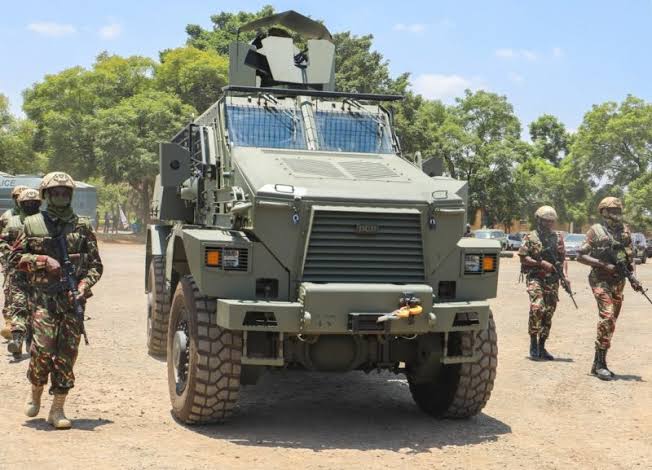
A multi-agency response team comprising officers from the Kenya Police Service, Directorate of Criminal Investigations (DCI), General Service Unit (GSU), and National Police Reservists (NPRs) swiftly secured the scene after the blast was heard across the locality.

Investigating officers recovered a TECNO mobile phone alongside metallic fragment debris, which are currently undergoing forensic analysis to determine the device’s origin and trigger mechanism.

Mohamed was rushed to Mandera Teaching and Referral Hospital, where he remains admitted in critical condition under tight police guard.

This explosion highlights the persistent security challenges along Kenya’s North Eastern frontier near the Somalia border. Counties like Mandera, Garissa, and Lamu have seen repeated tactical deployments of improvised explosives targeting security patrols, critical infrastructure, and supply lines.

This threat was underscored by a deadly attack in the El-Raamo area of Kutulo, Mandera County. In that incident, five security personnel comprising four elite Special Operations Group (SOG) officers and one National Police Reservist (NPR) lost their lives after their patrol vehicle struck a buried IED along the Alungu Main Supply Route before coming under heavy gunfire ambush. A reinforcement unit sent to assist was also delayed after another armored vehicle struck a secondary device.

Security operations across Mandera County remain heightened as multi-agency forces scale up mine-clearing sweeps, intelligence-led operations, and border surveillance to flush out militant networks operating along the border corridors.

Turkana Ranks 16th Nationally in Fiscal Performance Index Despite Budget Execution Concerns

0

Turkana County has been ranked 16th nationally and emerged among Kenya’s top 20 most improved counties in the latest Fiscal Performance Index, earning a score of 0.509 (Grade C) in an assessment of public financial management across all 47 counties.

The index, which evaluated counties using seven key public finance indicators, found that no county attained the highest Grade A. Only Embu, Narok and Wajir achieved Grade B, underscoring the financial management challenges that continue to face county governments more than a decade after the introduction of devolution.

While Turkana’s ranking reflects progress in overall fiscal performance, the report raised concerns over the county’s budget implementation. Despite operating an approved budget of approximately KSh16.8 billion, Turkana was cited among counties where the size of the budget did not translate into effective budget execution.

The report grouped Turkana with counties such as Nakuru and Kisumu, noting that stronger financial performance depends less on the amount of money allocated and more on sound planning, timely implementation of projects and prudent management of public resources.

The findings come as Turkana implements its 2026 County Fiscal Strategy Paper (CFSP), which projects revenues of KSh16.5 billion against a financing requirement of KSh30.4 billion for the 2026/27 financial year, leaving a funding gap of KSh13.8 billion.

The county has identified food security, healthcare and education as its key development priorities. With available resources falling significantly below expenditure needs, the report’s findings place renewed focus on the importance of improving budget absorption and ensuring public funds are translated into tangible services and development projects.

The latest ranking presents a mixed picture for Turkana. On one hand, the county has improved its standing nationally and joined the country’s better-performing counties in fiscal management. On the other, the assessment signals that strengthening budget execution and project implementation will be critical if the county is to maximize the impact of its limited resources and meet the growing demand for essential public services.