Home Blog Page 54

470 goats, sheep recovered as police hunt Marsabit bandits

0

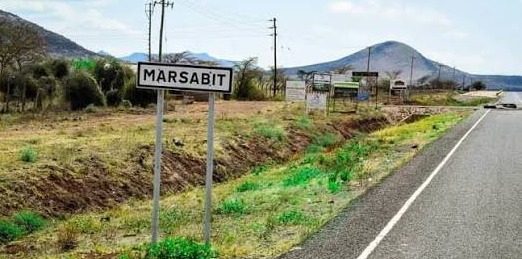
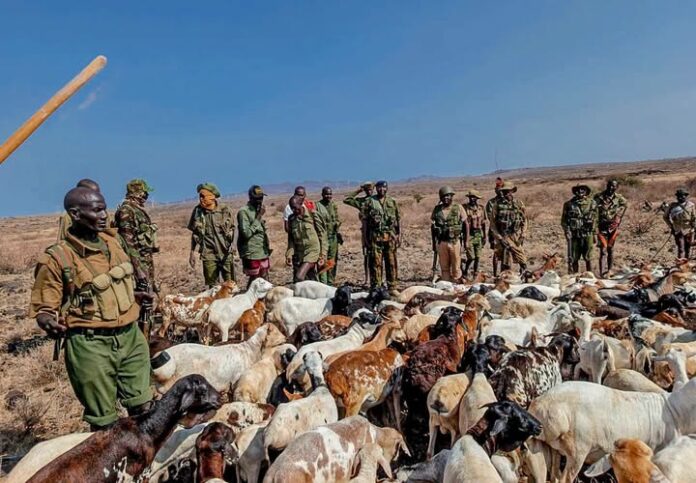
MARSABIT— Police have recovered 470 goats and sheep stolen in a raid in Galgumbe, Loiyangalani Sub-County, and are pursuing bandits who fled into the Ruai Hills.

A multi-agency security team engaged the attackers on 9 August 2026, forcing them to abandon the animals and escape. Security operations remain ongoing to track the suspects and recover any remaining livestock.

In a separate incident the same day, officers from Bubisa Police Station and Shurr Police Post recovered 5 donkeys and 4 cattle stolen in the Logologo area.

The animals were found in Lalesa following coordination between security officers, National Government Administration Officers and community members.

The recovered livestock has been taken to Shurr Police Post awaiting identification and handover to owners.

The National Police Service commended the quick response and synergy between security teams, NGAO and residents in combating stock theft.

“Security operations remain highly active to restore calm and ensure perpetrators are brought to justice,” NPS said.

The Service urged members of the public to report suspicious activities to the nearest police station or through toll-free emergency numbers.

Rendille leaders differ over community land registration criteria in Laisamis

0

A section of Rendille leaders have opposed plans to register community land by wards in Marsabit County, demanding that Laisamis Constituency be registered as one community land unit instead.

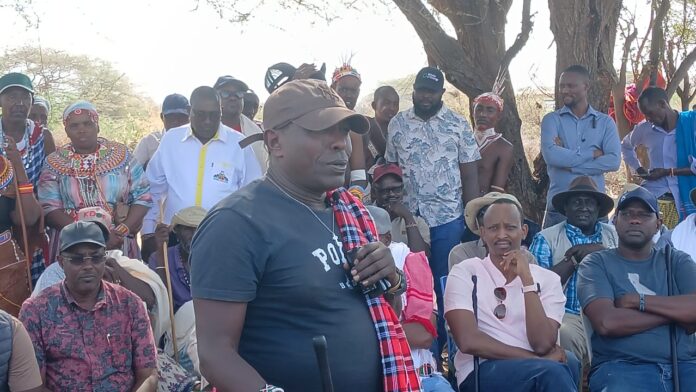
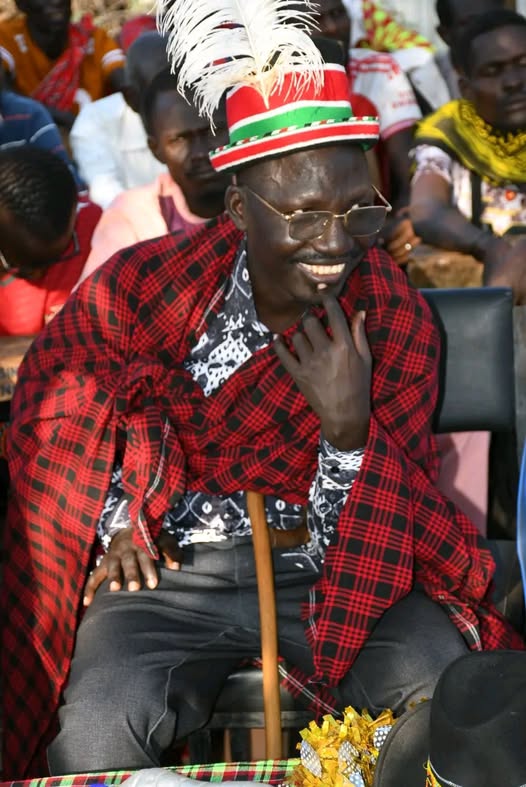
The position was issued during cultural celebrations in Logologo attended by political and community leaders from across Laisamis.

Five leaders presented a memorandum to the National Land Commission rejecting the proposed ward-based system. Among them were former Laisamis MP Musa Arbele and former Marsabit County Assembly Speaker Mathwe Loltome.

In the petition, the leaders want the Ministry of Lands to revoke the notice of intention to survey, demarcate and register community land by wards.

They argue that ward-based adjudication will trigger boundary disputes over shared grazing lands and water points, create room for land grabbing and privatization of communal resources, and lead to exclusion and landlessness for minority clans that move across wards.

The petitioners are instead pushing for an all-inclusive, culturally sensitive process involving councils of elders, professionals, women and youth with ancestral ownership of the land.

Laisamis MP Joseph Lekuton condemned the move to halt the process, saying land registration should not be politicized.

“Suspending the process at this stage would undermine the financial resources and efforts already invested in the exercise,” he said.

Lekuton accused some of the opposing leaders of failing to prioritize land registration when they held public office, and faulted them for submitting the memo without public consultation.

He said formal registration will foster harmonious coexistence and minimize disputes over pasture and boundaries, and assured that no land in the constituency would be taken away.

Marsabit County Land Registrar Samuel Gursha said land matters should not be politicized and urged leaders and residents to seek solutions through peace and dialogue.

Chairperson of the Community Land Management Committee in Logologo Lufle Gambare also condemned the petitions, saying stopping the process would delay rightful titling and undermine legal protection of indigenous and pastoralist land.

He urged political leaders to support the ongoing exercise instead of interfering with efforts aimed at a lasting solution.

Other leaders present included Rendille Professionals Chairman Abubakar Ketomon, County Assembly Majority Leader and Logologo MCA Bernard Leakono, Laisamis MCA Daniel Burcha, Karare MCA Joseph Leruk, Kargi MCA Christopher Ogom, and former Kargi MCA Asunta Galgidhele.

The leaders called for unity and consultation, stressing that land issues require community involvement to reach acceptable solutions.

The dispute highlights a key challenge in ASAL counties where pastoralist communities must balance administrative boundaries with traditional land use and mobility.

Marsabit residents urge opposition leaders to unite ahead of 2027 elections

0

Some residents of Marsabit County have called on Kenya’s opposition leaders to set aside their differences and speak with one voice ahead of the 2027 General Election.

The residents say opposition parties need to come together under one coalition with a shared agenda and position to effectively challenge the ruling party in the polls.

They also urged the leaders to begin consultations early and agree on who will fly the coalition’s flag in the 2027 presidential race.

According to Frankline Mathenge, failure to agree on a single candidate could split the opposition vote and weaken their chances of winning.

He added that the choice of a presidential candidate should be based on ability, integrity, experience, and the capacity to unite Kenyans regardless of ethnicity, religion or political affiliation.

Ms. Mary Ndanu, a resident, urged opposition leaders to prioritize the interests of Kenyans and present clear policies and strategies to address national challenges, including the high cost of living, unemployment and lack of economic opportunities.

At the same time, they called on voters to carefully assess political promises and make decisions based on policies and track records as the country heads to the 2027 General Election.

Earlier today, former Interior Cabinet Secretary Fred Matiang’i described efforts to unite Kenya’s opposition ahead of the 2027 general election as a difficult and lengthy process.

He however dismissed emerging differences among opposition leaders as normal political disagreements.

Speaking in an interview in Nairobi,  Matiang’i said forming a political alliance or coalition government is never an easy undertaking, arguing that bringing together leaders with different political interests, views and ambitions requires patience and sustained negotiations.

 “I am one of the leaders who have said before that the public, leaders and especially the media need to contribute to balancing the conversation among opposition leaders rather than putting too much focus on the person who will fly the flag,” Matiang’i said.

Volunteer teacher turns school holiday into a classroom for discipline and good values in Turkana.

0

A volunteer teacher in Lomeguro, Nakalale Ward, Turkana County, has turned the ongoing school holiday into an opportunity to keep children engaged in learning while teaching them discipline, good behaviour and the importance of education.

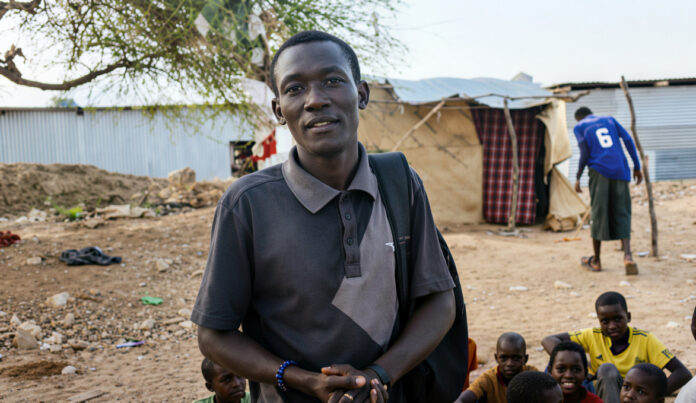
Patrick Loitalem has been gathering children in the Lomeguro area for learning activities during the holiday, encouraging them to use their free time in a meaningful and productive way.

Loitalem says education should go beyond classroom lessons, arguing that children also need guidance on discipline, respect, good character and peaceful coexistence within their communities.

Speaking in a video circulating on social media August 6, 2026, Loitalem said the school holiday provides an important opportunity for teachers, parents and the wider community to work together in shaping the character and future of children.

“It is a good time to teach students how they are expected to conduct themselves in society. Students should be disciplined and respect everyone.”Loitalem said

He has also urged parents to take advantage of the holiday period, when children are at home, by providing them with proper guidance, advice and positive mentorship.

According to Loitalem, parents have a major responsibility to ensure that children use their holiday time constructively and develop positive values that will benefit them in the future.

He has further encouraged young people to remain disciplined during the holiday and avoid being influenced into behaviours that could negatively affect their lives and future opportunities. The initiative comes at a time when the education sector in Turkana County continues to face various challenges, including inadequate school infrastructure in some areas.

These challenges have affected learning environments for some children, making community-driven efforts to keep learners engaged in educational activities particularly important.

A video showing Loitalem teaching children in Lomeguro has also attracted attention on social media, with members of the public praising his efforts to keep children engaged during the school break.

Some residents say initiatives of this kind give children an opportunity to spend their holiday meaningfully rather than remaining idle, while also helping them develop important life skills and positive values.

They have called for children and young people to be involved in educational activities, sports and other community programmes that can help them grow, remain safe and build a positive future.

Loitalem maintains that education cannot be separated from discipline and good values. He is calling on parents, teachers and the wider community to work together to ensure that children receive not only quality education but also the guidance and values needed to become disciplined, respectful and responsible members of society.

FEASSA 2026: Menengai high school pulls out of FEASSA games in Morogoro as Kakamega school leads Kenya’s boys’ football campaign

0

The stage is set for the 2026 Federation of East Africa Schools Sports Associations (FEASSA) Championships, with the regional school games scheduled to take place in Morogoro, Tanzania, from August 14 to 22, 2026, as some of the best young sporting talent from across East Africa prepares to converge for a week of intense competition.

However, Kenya’s participation in the championships has suffered a setback after Menengai High School was forced to withdraw from the 2026 FEASSA Championships due to financial constraints. The school will therefore miss the opportunity to compete at the regional level, despite the importance of the tournament in providing young athletes with international exposure and valuable competitive experience.

Attention in boys’ football will now turn to Kakamega School, the reigning Kenyan national champions, who will carry the country’s hopes in the competition after securing the national title and earning the right to represent Kenya against some of the strongest school teams in East Africa.

Kakamega School has been placed in Group C, where they will face Kyadondo Secondary School and Bukedea Comprehensive from Uganda, as well as Urambo Day from Tanzania, setting up a demanding group-stage campaign for the Kenyan champions.

The Kenyan champions will begin their campaign on Friday, August 14, when they face Urambo Day of Tanzania at 11:00 AM at Morogoro Secondary School. The opening fixture will provide Kakamega with an immediate test against Tanzanian opposition and an opportunity to establish themselves early in the group.

Kakamega will then return to action on Saturday, August 15, at 11:00 AM, when they take on Bukedea Comprehensive of Uganda at Jamhuri Stadium. The match will provide another significant challenge as the Kenyan champions seek to strengthen their position and move closer to qualification for the knockout stage.

Their final group-stage assignment will come on Tuesday, August 18, at 2:00 PM, when Kakamega School faces Kyadondo Secondary School of Uganda at Jamhuri Stadium. The results from the three matches will determine whether the Kenyan champions progress to the quarter-finals.

The boys’ football competition features three groups, with Group A consisting of IPTEM Makamba of Burundi, Nsumba of Tanzania, Amus College School of Uganda and Mbeya Day of Tanzania.

Group B features CGF Kigali of Rwanda, St Mary’s Yala of Kenya, St Mary’s Kitende of Uganda and Morogoro of Tanzania, giving the group a strong regional flavour and setting up a series of potentially competitive encounters.

St Mary’s Yala will also represent Kenya in the boys’ football competition and will begin their campaign on Friday, August 14, against St Mary’s Kitende of Uganda at 11:00 AM at Highland. They will then face Morogoro of Tanzania on Saturday, August 15, at 3:00 PM at Moro SEC, before completing their group-stage campaign against CGF Kigali of Rwanda on Tuesday, August 18, at 11:00 AM at Highland.

After the conclusion of the group-stage matches, the competition will move into the knockout phase, with the quarter-finals scheduled for Wednesday, August 19. The successful teams will then battle for places in the final during the semi-finals on Friday, August 21, before the tournament concludes with the final on Saturday, August 22.

For Kakamega School, the FEASSA Championships will represent an opportunity to prove themselves beyond the Kenyan school football scene after being crowned national champions.

The tournament will also provide the participating players with an important platform to gain international experience, compete against different footballing styles and showcase their abilities against some of the leading school teams from across East Africa.

While Menengai High School’s withdrawal due to financial constraints is a blow to Kenya’s representation, the focus now shifts to the teams that will take to the field in Morogoro, with Kakamega School expected to lead the Kenyan challenge in boys’ football.

Cs Murkomen challenges new SOG officers to confront terrorism, banditry as northern leaders demand results

0

Interior Cabinet Secretary Kipchumba Murkomen has challenged newly graduated Special Operations Group (SOG) officers to take on Kenya’s increasingly complex security threats, including terrorism, organised crime, banditry and violent extremism.

Murkomen said the country needed a highly trained and adaptable security force capable of responding swiftly to emerging threats and protecting communities, critical infrastructure and the economy.

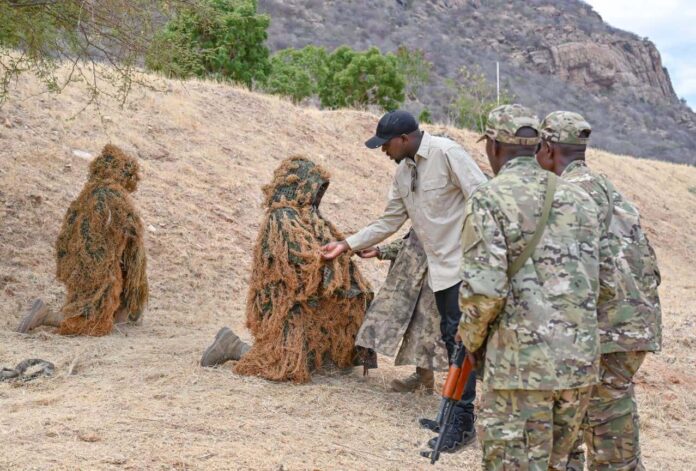
Speaking during the 11th SOG graduation ceremony at Kamanga Training Camp in Samburu County last week, the CS said the officers would be expected to apply intelligence, technology and specialised skills in confronting threats to national security.

“This operational environment calls for proactive counter-strategies and advanced operational readiness such as that of the Special Operations Group,” Murkomen said.

The officers had undergone about six months of rigorous pre-selection and specialised training before graduating into the elite unit.

Murkomen said al-Shabaab and other terrorist organisations continued to pose a serious threat to Kenya, while organised criminal networks, violent extremism, banditry and cross-border crime presented additional challenges.

He urged the officers to combine courage with intelligence-led operations, continuous training and close coordination with other security agencies.

The CS was accompanied by NIS Director General Noordin Haji, Deputy Inspector General of Police Gilbert Masengeli and other senior officers from the National Police Service and National Intelligence Service.

Murkomen said SOG’s mandate extended beyond counterterrorism to include disrupting organised criminal networks, confronting cross-border threats, protecting critical national infrastructure and undertaking specialised missions such as hostage rescue.

“The Special Operations Group represents one of the nation’s most strategic capabilities,” he said.

But as the latest group of officers prepares to join operations across the country, their effectiveness is likely to be closely watched in northern Kenya, where communities have endured years of banditry, cattle raids and insecurity.

In Turkana and West Pokot, leaders have repeatedly called for stronger security interventions while also raising concerns about the manner in which some operations are conducted.

The government deployed SOG to the volatile Turkana-West Pokot border in March following renewed insecurity. The deployment was followed by reports of reduced bandit activity, with some families returning to their homes, traders reopening businesses and herders reclaiming grazing areas.

However, the security situation has remained fragile.

In June, more than 150 livestock were reportedly stolen from the Nasolot area in West Pokot, with the suspected bandits escaping towards Turkana. Local leaders subsequently called on the government to intensify security operations and recover the stolen animals.

The continued attacks have raised questions about whether the deployment of specialised security units can deliver lasting peace without sustained intelligence operations, community cooperation and action against those financing and organising banditry.

Murkomen himself has acknowledged the problem. In July, he warned individuals accused of financing and facilitating bandit attacks in Samburu, West Pokot, Tiaty and Isiolo that security agencies would pursue them through intelligence-led operations.

In Turkana, local leaders have also raised concerns over the ongoing security operation and the treatment of civilians during efforts to recover illegal firearms.

When Interior Principal Secretary Raymond Omollo visited Lodwar in April, Turkana Governor Jeremiah Lomorukai, Senator James Lomenen and area MPs welcomed the government’s efforts to remove illegal firearms but expressed reservations over allegations that innocent residents had been victimised. Turkana East MP Nicholas Ng’ikor also raised concerns that bandits continued attacking his constituents despite the operation.

The concerns present the new SOG officers with a difficult balance: confronting heavily armed criminals while maintaining the trust and cooperation of communities living in some of Kenya’s most insecure areas.

Murkomen said cooperation among security agencies, including the NIS, NPS, Kenya Defence Forces and other government security formations, had been critical in confronting terrorism, banditry and transnational crime.

He linked security directly to economic development, arguing that investment, tourism, agriculture and other economic activities could only flourish where citizens and businesses were protected from violence.

“Development flourishes where citizens are safe, businesses operate without fear, and communities live free from violence and extremism,” he said.

The CS said the security agenda was therefore closely tied to the government’s Bottom-Up Economic Transformation Agenda, arguing that insecurity undermines development by disrupting businesses, displacing communities and discouraging investment.

He praised the graduating officers for their discipline and perseverance and commended their instructors for preparing them for specialised operations.

The latest graduation comes at a time when Kenya is seeking to strengthen its response to both traditional and emerging security threats.

For communities in Turkana and West Pokot, however, the measure of the SOG’s success will ultimately be felt beyond graduation ceremonies and official statements, in safer roads, protected livestock, reopened schools and markets, and the ability of residents to live and work without fear of armed attacks.

The challenge for the newly graduated officers is therefore clear: to translate specialised training and operational capability into lasting security on the ground while earning the confidence of the communities they are deployed to protect.

Nasinyono residents demand action on water, food and education as senator blames aid distribution

0

Residents of Nasinyono in Turkana West Sub County have called on political leaders to urgently address persistent shortages of water, food and access to education, saying the hardships facing the community require immediate intervention.

Speaking during the Nasinyono Ten Groups Economic Empowerment event attended by Turkana Senator James Lomenen Lokomol-Nyarieng, residents urged leaders to visit the area and witness their living conditions firsthand instead of relying on representatives whom they accused of giving misleading reports.

“We want our leaders to come and see for themselves what we are going through, instead of sending agents who give them false information,” the residents said.

The community also thanked Senator Lomenen for visiting Nasinyono and listening directly to their concerns, expressing hope that the engagement would lead to tangible interventions in water access, education, food security and healthcare.

Responding to the concerns, Senator James Lomenen said the major challenge was not the arrival of relief food but how it was distributed across villages.

“The problem is not the arrival of food, but those responsible for distributing it.” Lomenen said.

The Senator said food and financial resources released for Turkana were meant for all residents and should not be distributed based on political affiliation or support for particular individuals.

“Our mission was clear: to empower and uplift the Nasinyeno Ten Groups to build self-reliance, boost small businesses and strengthen household economies. But beyond empowerment, I came to listen directly to your voices,” Lomenen said.

He said it was unacceptable for residents to continue facing shortages of clean water and food, as well as inadequate healthcare services, despite development resources being allocated to the county.

Lomenen also urged residents to demand accountability for public resources, particularly as the country heads towards the 2027 General Election.

“True leadership is measured by tangible projects and respectful service, not by empty rhetoric or cheap handouts that undermine the dignity of our people,” he said.

The Senator further praised Senate aspirants Fredrick Ejore and Sylvia Lapur for working together during the Nasinyono visit despite competing for the same political seat, describing their cooperation as an example of the leadership and unity Turkana needs.

He said his office would continue supporting economic empowerment initiatives while pushing for improved service delivery across Turkana County.

For Nasinyono residents, however, the immediate priority remains access to basic services, with the community calling on both county and national leaders to turn their concerns into concrete action.

Elsewhere,Turkana Central Member of Parliament Joseph Namuar has intensified his criticism against Turkana County Governor Jeremiah Lomorukai, accusing his administration of dividing county leaders and residents while failing to address pressing challenges facing the people of Turkana.

Speaking in Kerio Delta Ward during a fundraising event aimed at supporting and empowering the Ng’ikaskou community, Namuar accused the governor of creating divisions among leaders instead of bringing them together to address the county’s problems.

“Sometimes you are told not to speak to this person, other times you are told another person is bad. It is like a home with three wives where the husband talks to each one separately, leaving them caught in the middle. His only job is to divide people,” Namuar said.

The MP also questioned Lomorukai’s leadership, accusing the county government of failing to deliver effective services to residents.

Namuar singled out delayed salaries for county employees and what he described as worsening hunger in parts of Turkana, saying the situation had forced residents to rely increasingly on fundraising and political support.

“During our time, workers’ salaries used to come in on time. But now there are many fundraising events because the county has collapsed. Hunger is widespread,” he said.

He further claimed that some county employees were struggling to access basic assistance and had been forced to seek help through political leaders.

The remarks add a new dimension to an increasingly public dispute between Namuar and Lomorukai, which has in recent months shifted from personal political differences to competing claims over the performance and leadership of the county government.

In February 2026, Lomorukai claimed that he had helped Namuar secure the Turkana Central parliamentary seat in the 2022 General Election, despite their political differences.

“I helped Namuar become the MP for Turkana Central. Now he is going around insulting me. Let us meet in 2027,” Lomorukai said at the time.

The statement was widely seen as an indication of the growing political rivalry between the two leaders ahead of the 2027 elections.

Earlier this year, during a public baraza in Turkana Central, Namuar also accused Lomorukai’s administration of failing to deliver development and misusing public resources.

He claimed residents had seen little tangible development since 2022 and described the governor’s first term as a failure.

Namuar’s latest remarks, however, place greater emphasis on issues directly affecting residents, including delayed salaries, hunger and the performance of the county government.

The increasingly public exchange between the governor and the Turkana Central MP puts county leadership and service delivery at the centre of their political contest, with both leaders now facing growing public scrutiny over their records and claims ahead of the 2027 elections.

SDT Upholds FKF Promotion and Relegation Rules: Paving the way for three NSL teams to earn KPL promotion and three KPL clubs to be relegated

0

The Sports Disputes Tribunal has ruled that the contested 2025 Football Kenya Federation promotion and relegation regulations were validly ratified by the FKF National Executive Committee and did not require approval from the General Assembly, a decision that could have a major impact on the structure of Kenyan football ahead of the new season.

In its ruling, the Tribunal also determined that the regulations underwent sufficient public participation before they were adopted, effectively dismissing the argument that the process used by FKF to introduce the regulations was procedurally inadequate.

The ruling means that, under the 2025 regulations, three teams from the National Super League are expected to earn promotion to the Kenyan Premier League, while three teams from the top flight will be relegated to the second tier, creating a three-up and three-down system for the new season.

However, despite the SDT ruling, the promotion and relegation process remains uncertain because the same regulations are still being challenged in a separate case before the High Court in Murang’a, meaning that the implementation of the Tribunal’s decision could be affected by the outcome of that case.

The Murang’a High Court case is therefore being closely watched by clubs, players and football officials because any decision issued by the court could directly influence whether the three-team promotion and three-team relegation system will be implemented as provided for in the 2025 regulations.

For the teams competing in the National Super League, the ruling provides renewed hope for those fighting for the three available promotion positions, while clubs in the Kenyan Premier League that are facing relegation will have to wait for further legal clarity before knowing whether the three-team relegation formula will ultimately take effect.

The latest development has once again highlighted the ongoing legal and administrative disputes surrounding the governance of Kenyan football, with the courts now playing a crucial role in determining how promotion and relegation will be handled.

For now, the SDT has upheld the validity of the regulations and confirmed that three teams should be promoted from the NSL and three relegated from the KPL, but the final implementation of the system will depend on the outcome of the separate High Court case in Murang’a.

Baringo FKF Branch League: Kapropita FC closes gap at the top as title race intensifies

0

The race for the Baringo FKF Branch League 2025/2026 title is becoming increasingly competitive after a dramatic round of fixtures that saw Kapropita FC defeat league leaders Delta FC, while Arama FC and Kaptana FC also secured important victories.

The latest results have significantly tightened the standings, with Delta FC and Kapropita FC now level on 33 points, while Mwachon FC remain just one point behind on 32 points with Arama FC are also firmly in contention after moving to 31 points, meaning the top four teams are separated by only two points.

Kapropita FC produced one of the biggest results of the latest round when they defeated Delta FC 3–1, earning three valuable points against the team that had been sitting at the top of the Baringo FKF Branch League table. The victory takes Kapropita FC to 33 points from 17 matches, putting them level with Delta FC and setting up a fascinating battle for the top position as the season progresses.

Delta FC, despite remaining at the summit on goal difference, will be disappointed by the result because they had entered the fixture with an opportunity to strengthen their position at the top. They remain on 33 points after 16 matches, having recorded 11 victories, five defeats and no draws according to the current standings

Mwachon FC also suffered a setback in the latest round after losing 1–0 to Kaptana FC, a result that leaves them on 32 points from 16 matches. Mwachon had been occupying second position before the fixture, but the defeat means they have now lost some ground in what is turning into a closely contested race for the top positions.

Kaptana FC, on the other hand, celebrated an important away from the top-four race victory that has improved their position to 24 points. The result could provide the team with much-needed momentum as they look to climb higher on the table during the remaining matches of the campaign.

Arama FC also continued their impressive campaign by defeating Cheberen FC 3–2 in an entertaining five-goal encounter. The victory moved Arama FC to 31 points, placing them only two points behind the joint leaders and keeping them firmly within the conversation at the top of the Baringo FKF Branch League.

Elsewhere, Ndambul FC secured a valuable 2–1 victory over Ravine S.C, taking their points tally to 23. The result gives Ndambul an opportunity to improve their position further as they continue their campaign in the highly competitive branch league.

The latest results demonstrate the growing competitiveness of grassroots football under the Football Kenya Federation Baringo Branch, where clubs are battling not only for points but also for recognition and an opportunity to progress through the football structure.

With Delta FC, Kapropita FC, Mwachon FC and Arama FC separated by just two points, every remaining fixture could have a major impact on the final standings. A single victory could change the order at the top, while another defeat could see one of the leading sides lose valuable ground to its rivals.

The competition also remains intense in the middle and lower sections of the table, where teams are fighting to improve their final positions and finish the season strongly.

The next round will provide another opportunity for clubs to collect crucial points, with Kirobon FC scheduled to face Magoi FC, Kipkaber FC set to take on Kiptikur FC, and Jua Kali FC preparing to meet Sinonin FC.

As the Baringo FKF Branch League enters an increasingly decisive stage, the performances of these grassroots clubs are highlighting the depth of football talent across the county. With the leading teams separated by only a narrow margin, supporters can expect more pressure, more competitive matches and potentially more changes at the top before the campaign comes to an end.

For now, Delta FC and Kapropita FC share the lead on 33 points, but Mwachon FC and Arama FC remain within touching distance, making the Baringo FKF Branch League title race one to watch closely.

Kadar FC and BNFA FC share spoils as Kakuma Town FC and Naath boys draw 2-2 in thrilling social cohesion tournament encounters

0

The Behaviour Change and Social Cohesion Tournament continued over the weekend in Kakuma, with matches played at Kakuma Mixed Primary School and the D3 grounds as teams representing different communities came together in a competition aimed at promoting peaceful coexistence, unity and stronger relationships between refugees and members of the host community.

The tournament has continued to attract considerable interest from football enthusiasts in Kakuma, with supporters turning up in large numbers to back their respective teams and enjoy the competitive matches.

Beyond the football itself, the tournament is providing an opportunity for young people from different backgrounds to interact, develop friendships and strengthen the bonds between the refugee and host communities.

In Saturday’s encounter, Kadar FC and BNFA FC played out to a 1-1 draw after a fiercely contested match in which both sides showed determination and refused to give their opponents an easy opportunity to take control of the game.

The match attracted a sizable crowd, with fans from Kakuma Refugee Camp turning up in large numbers to support their teams and create an energetic atmosphere around the pitch.

The encounter demonstrated the competitive nature of the tournament, with both teams battling for the three points before eventually settling for a share of the spoils after neither side could find a winning goal.

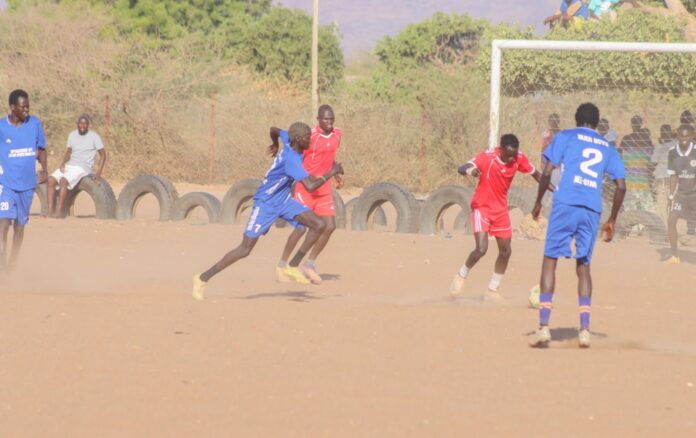
Attention then shifted to Kakuma Mixed Primary School grounds in Kakuma town on Sunday, August 9, where Naath Boys, a team comprising players of South Sudanese origin, secured a 2-2 draw against host-community side Kakuma Town FC in another closely contested match.

The encounter was played under challenging conditions, with the players having to contend with intense sunshine and a rough playing surface characterised by stones and considerable amounts of dust. Despite the difficult conditions, both teams maintained their competitive spirit and produced an entertaining match that kept supporters engaged throughout the encounter.

Naath Boys made a remarkable start to the game by finding the back of the net just 57 seconds after kick-off, putting Kakuma Town FC under early pressure. However, Kakuma Town responded strongly, with Banju becoming the standout player for the host side after scoring twice during the match.

Banju’s first goal came from the penalty spot in the fifth minute, allowing Kakuma Town FC to respond quickly after conceding the early goal. He later completed his brace to keep his team firmly in contention as both sides continued to create opportunities in search of an advantage.

Naath Boys, however, demonstrated their resilience and refused to allow Kakuma Town FC to take complete control of the match, with Algher Yien producing an equally impressive individual performance by scoring twice for his side. Yien found the back of the net once in the first half and added another goal after the interval, ensuring that Naath Boys secured a 2-2 draw.

The result meant that neither side could claim maximum points, but the match provided another important example of how football can bring together people from different communities in a shared environment.

The Behaviour Change and Social Cohesion Tournament is designed not only to provide competitive football but also to use sport as a tool for strengthening relationships between refugees and members of the host community in Kakuma.

Through the tournament, players and supporters from different backgrounds are given an opportunity to interact, compete fairly and develop a better understanding of one another.

The continued participation of teams representing different communities has made the tournament an important platform for encouraging dialogue, teamwork and peaceful coexistence, particularly among young people who form a significant part of the football community in Kakuma.

As more matches are lined up in the coming weeks, the tournament is expected to continue attracting teams and supporters from across Kakuma, with football remaining at the centre of efforts to promote social cohesion, unity and peaceful coexistence between refugee and host communities.