Home Blog Page 53

Tana river senator Dr. Mungatana questions contradictory performance reports

0

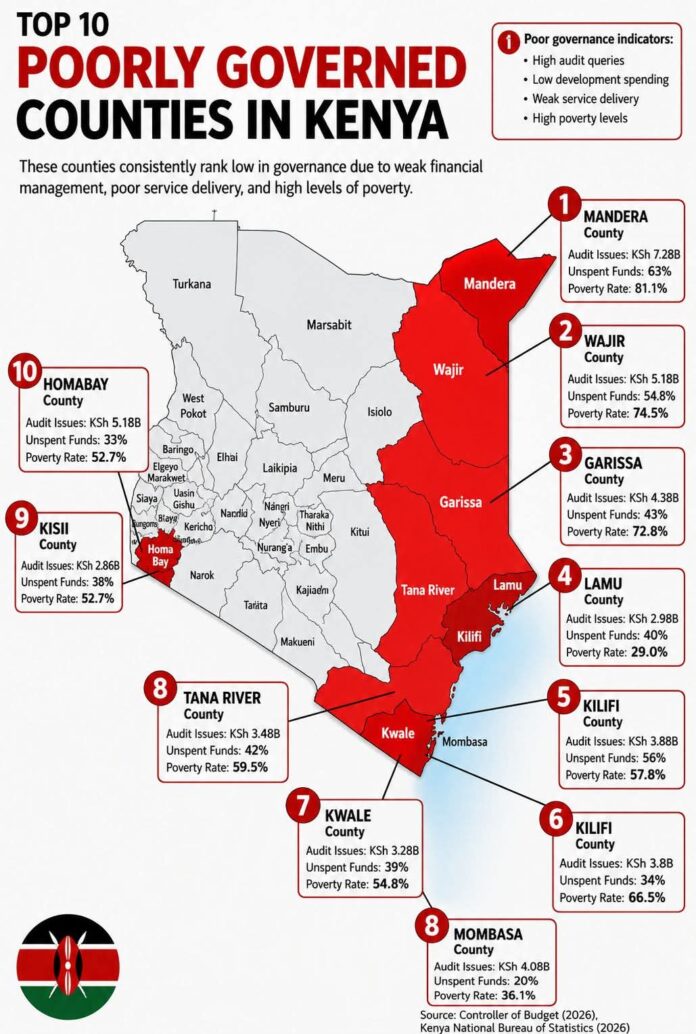
Tana River Senator Hon. Dr. Danson Mungatana, MP, MGH, PhD, has raised serious questions over two government reports that paint starkly different pictures of Tana River County’s fiscal management one placing it in the top ten best performers, and the other ranking it among the bottom ten.

Addressing the discrepancy during the official launch of the County Fiscal Performance Measurement Index (CFPMI), where he joined the Speaker of the Senate and fellow lawmakers, Senator Mungatana explained that the conflicting rankings stem from differing evaluation methodologies and indicator weightings.

The Controller of Budget report, which placed Tana River among the bottom ten counties, evaluated performance based on four equally weighted indicators: high audit queries, low development spending, weak service delivery, and high poverty levels.

In contrast, the County Fiscal Performance Measurement Index (CFPMI), which placed Tana River in the top ten, uses a broader formula evaluating seven differently weighted parameters: budget implementation, development expenditure, own-source revenue generation, pending obligations, County Assembly expenditure ceiling, audit outcomes, and expenditure on wages.

Despite the favorable CFPMI ranking, Senator Mungatana cautioned against relying on weighted indices over ground realities, calling it “ridiculous” to prioritize the CFPMI metrics over the Controller of Budget’s findings.

He pointed to key financial indicators that highlight deep governance challenges in the county, including three consecutive years of Adverse Opinions from the Auditor General, Ksh 3.48 billion in unresolved audit queries, 42% of allocated funds left unspent, and a 59.5% poverty rate across the county.

He emphasized that numbers tell a story, but the story of Tana River County is a sad one, asserting that it is ridiculous to use the County Fiscal Performance Measurement Index as opposed to the raw reality outlined by the Controller of Budget.

Looking ahead to the exit of the incumbent governor next year, Senator Mungatana urged the electorate and leadership stakeholders to refocus the county’s political priorities away from ethnic politics and toward accountable management of public resources.

He stressed that as leadership changes, voters must ask a crucial question: “Which potential governor has a well-articulated plan and is clear on how to execute it?” rather than relying on traditional questions regarding tribal affiliation.
Orengo leads political surge from siaya to Mandera

0

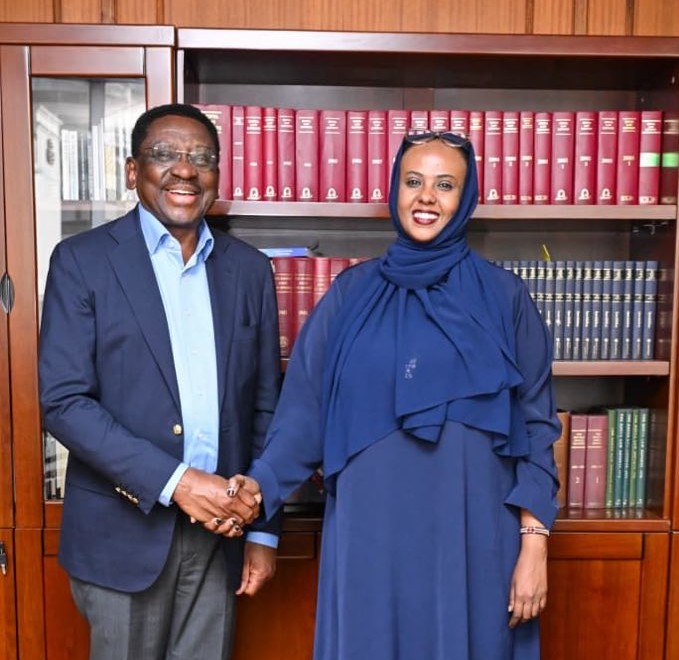
Siaya County Governor James Orengo has announced that the “Linda Mwananchi” wave is sweeping across Kenya, stretching from Alego Usonga all the way to Mandera Kenya’s northeastern frontier county that borders Ethiopia and Somalia.

He shared this while hosting Fatma Mohamed, a key political aspirant vying for the Mandera County Woman Representative seat.

As a prominent regional voice championing women’s leadership and local development in the North Eastern region, Fatma Mohamed’s alignment with the movement marks a significant political reach into Kenya’s borderlands.

Orengo emphasized that Mandera, despite its historical distance from central power, will not be left behind as they march together toward a Linda Mwananchi Presidency.

Meanwhile, anticipation is reaching a fever pitch ahead of the official launch of the Linda Mwananchi Party, with activity buzzing at the movement’s headquarters. The party recently welcomed prominent political figures into the movement, including MP Aspirant for Kisauni Constituency Batuli Mohamed Swale and former Mzombo Ward MCA Patrick Mangale.

Standing alongside the leadership are fierce women leaders Najma and Pollyne Owoko, highlighting the rapid growth and electric energy behind the movement as it continues its political march with the rallying slogan, “na ni WANTAM!”

Babu Owino proposes multi-pronged proposal to tackle Nairobi’s persistent garbage management crisis.

0

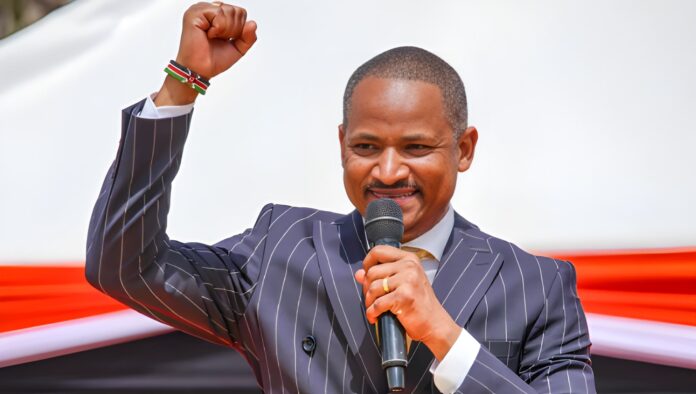
NAIROBI, KENYA — Embakasi East Member of Parliament Babu Owino has laid out a multi-pronged proposal to tackle Nairobi’s persistent garbage management crisis and environmental degradation.

Addressing residents and media outlets, the lawmaker emphasized that solving the capital’s solid waste issue requires a combination of political accountability, economic devolution, and civic maintenance.

Owino asserted that waste management in the county has long been derailed by corruption and entrenched cartels within city administration. He argued that public officials who compromise standard procedures facilitate ineffective garbage collection.

“We cannot finish garbage if you have another garbage in office; we’ll have to clean that garbage in office, and then clean Nairobi.”

To dismantle centralized bottlenecks, Owino proposed decentralizing garbage collection down to all 85 wards across Nairobi. Under this model:

Local youth, women, and community groups would be encouraged to register small enterprises.

Collection contracts would be directly awarded to these localized groups to clear waste within a 30-day operational window while simultaneously creating local employment.

Highlighting that urban solid waste management is not an insurmountable problem, the MP insisted that consistent schedule-based collections are essential to prevent refuse from overflowing into public areas.

Linking solid waste directly to Nairobi’s recurring flash floods, Owino noted that uncollected garbage routinely clogs storm drains and waterways such as the Nairobi, Ngong, and Mathare rivers. He advocated for routine desilting, deepening shallow drainage channels, and keeping waterways clear of plastic and household waste.

The proposals come amid ongoing debates between county leadership and city legislators regarding service delivery, sanitation budgets, and infrastructure maintenance across the capital. Owino maintained that with transparent management and localized action, Nairobi’s waste issue can be permanently resolved.

Nairobi county staff face delay in payment of July 2026 salaries

0

NAIROBI, Kenya — The Nairobi City County Government has formally alerted its staff of a delay in the processing and disbursement of their July 2026 salaries.

According to an official circular issued to all employees, county management attributed the payroll disruption to delays in the approval and uploading of the County Budget into the official disbursement system.

In a statement signed by Acting County Secretary and Head of County Public Service Godfrey Akumali, City Hall acknowledged the disruption and urged employees to exercise patience while the issue is resolved.

“Management sincerely regrets the inconvenience and challenges that this situation may cause and wishes to assure all staff that the matter is receiving the highest priority,” the circular read in part. “We recognize that this delay may occasion financial hardship to employees and their families.”

July 2026 salaries.

Late approval and system uploading of the Nairobi County Budget, which stalled the release of requisite funds.

Workers are requested to remain patient and continue discharging their duties as management expedites the budget process.

County officials state that funds will be disbursed immediately once the budget upload process is complete.

County administration reiterated that resolving the payroll hold-up remains an urgent priority to prevent prolonged financial hardship for staff and disruption to public services across the capital.

Edwin Sifuna’s high-decibel tour takes Eastern Kenya by storm

0

The political temperature in Kitui County surged over the weekend as Nairobi Senator Edwin Sifuna brought his trademark fire, quick wit, and unstoppable energy to Kitui Stadium.

Arriving to a thunderous reception as supporters turned out in large numbers, Sifuna’s rally turned into a spectacle of political passion and lively debate. Known for his direct, unfiltered style, the Nairobi Senator didn’t hold back as he took to the podium, delivering a spirited address that had the crowd cheering at every turn.

Addressing critics who have recently faulted his animated political style, Sifuna delivered a sharp, memorable jab that immediately went viral across social media: “Ati uongozi si ku dance? Meza dawa ya arthritis ulale wewe mzee!” (“They say leadership isn’t about dancing? Take your arthritis medication and go to sleep, old man!”)

The remark drew roaring laughter and applause from the youthful crowd, setting the tone for an electric afternoon.

Beyond the fiery rhetoric and playful banter, Sifuna used the platform to rally unity, press for accountable leadership, and outline a bold vision for the region’s political future.

Between engaging with local leaders, taking time to interact directly with residents on the ground, and making sure his presence was felt in every corner of the stadium, the tour proved to be a decisive demonstration of his growing political clout beyond the capital.

As the dust settled at Kitui Stadium, one thing remained clear: whether through hard-hitting policy debates or high-energy public rallies, Edwin Sifuna knows exactly how to command a stage and keep the nation talking.

Kalonzo Musyoka calls for urgent action as Kenya marks countdown to general election

0

Wiper Party Leader Kalonzo Musyoka has called for decisive political action and honest national dialogue as the country enters the official campaign year ahead of the upcoming elections.

Speaking following a national broadcaster interview on Spice FM hosted by journalists Eric Latiff, Mariam Bishar, and Fellaris Wambui, the former Vice President emphasized that addressing Kenya’s critical economic and governance challenges requires moving past political rhetoric into tangible reforms.

“Grateful for the opportunity to be part of a meaningful and timely conversation on Fixing the Nation,” Kalonzo stated, commending the broadcast team for facilitating a thoughtful exchange on the country’s trajectory. “These are the spaces where real issues are confronted and honest conversations are had.”

With the countdown marking exactly 365 days to the next election cycle, the Wiper leader underscored the high stakes facing political stakeholders and the electorate alike.

He noted that the official campaign year imposes a clear duty on national leaders to deliver practical solutions to pressing public concerns.

“As we mark the start of the official campaign year, with 365 days to the elections, the responsibility before us is clear,” Kalonzo added. “We must move beyond words into action, fix what is broken, and offer Kenyans a real path forward. The work to fix our nation is urgent, and it will take all of us to Komboa Kenya.”

The veteran politician’s remarks reflect growing momentum within opposition ranks as political leaders align their platforms, outline policy alternatives, and mobilize support ahead of the upcoming polls.

CS Kipchumba Murkomen: Broad-based government on course to deliver transformation and security

0

Interior and National Administration Cabinet Secretary Kipchumba Murkomen has affirmed that Kenya’s Broad-Based Government remains firmly on track to execute the Bottom-Up Economic Transformation Agenda (BETA) and elevate the nation’s status among the world’s leading economies.

Speaking following high-level consultative engagements, the Cabinet Secretary outlined key milestones across economic stabilization, infrastructural revival, public security, and national political consensus.

“Under the leadership of H.E. President William Ruto, the administration has stabilized the macro-economy and set it on a consistent path toward sustainable growth,” CS Murkomen noted.

The Cabinet Secretary also said that critical capital projects that had previously stalled have now been revitalized alongside the active rollout of new nationwide infrastructure initiatives. These include the resumption and expansion of delayed road construction projects, as well as the acceleration of Affordable Housing

The CS also said that targeted reforms in healthcare, education, and agriculture are being rolled out to lower costs, widen access, and directly improve the daily lives of citizens.

Addressing national security, the CS also said that the Ministry of Interior continues to confront emerging and persistent threats while driving systemic reform across the security architecture.

He highlighted that coordinated security operations are actively suppressing terrorism, curbing regional banditry, and dismantling organized criminal gangs across affected areas. At the same time, the CS also said that ongoing institutional reforms within the National Police Service (NPS) are focused on embedding ethical standards, building institutional accountability, and completing the transition into a truly professional, citizen-centered service.

Highlighting political cohesion as a fundamental prerequisite for sustained national progress, CS Murkomen joined key national leaders in Naivasha, Nakuru County, for a Broad-Based Coalition working retreat.

Attended by H.E. President William Ruto, Deputy President Prof. Kithure Kindiki, ODM Party Leader Dr. Oburu Odinga, and senior legislative and executive leaders from across the political spectrum, the retreat focused on administrative alignment and strategic development.

The CS also said that he commends the leaders for prioritizing national interest and long-term prosperity over individual and partisan considerations, solidifying a joint commitment toward building a cohesive, secure, and economically resilient Kenya.

Kenya Kwanza and ODM form joint 10-member team to draft 2027 election manifesto

0

In a significant move toward formalizing their political partnership, the ruling Kenya Kwanza coalition and the Orange Democratic Movement (ODM) have established a joint 10-member committee to draft a unified manifesto ahead of the 2027 General Election.

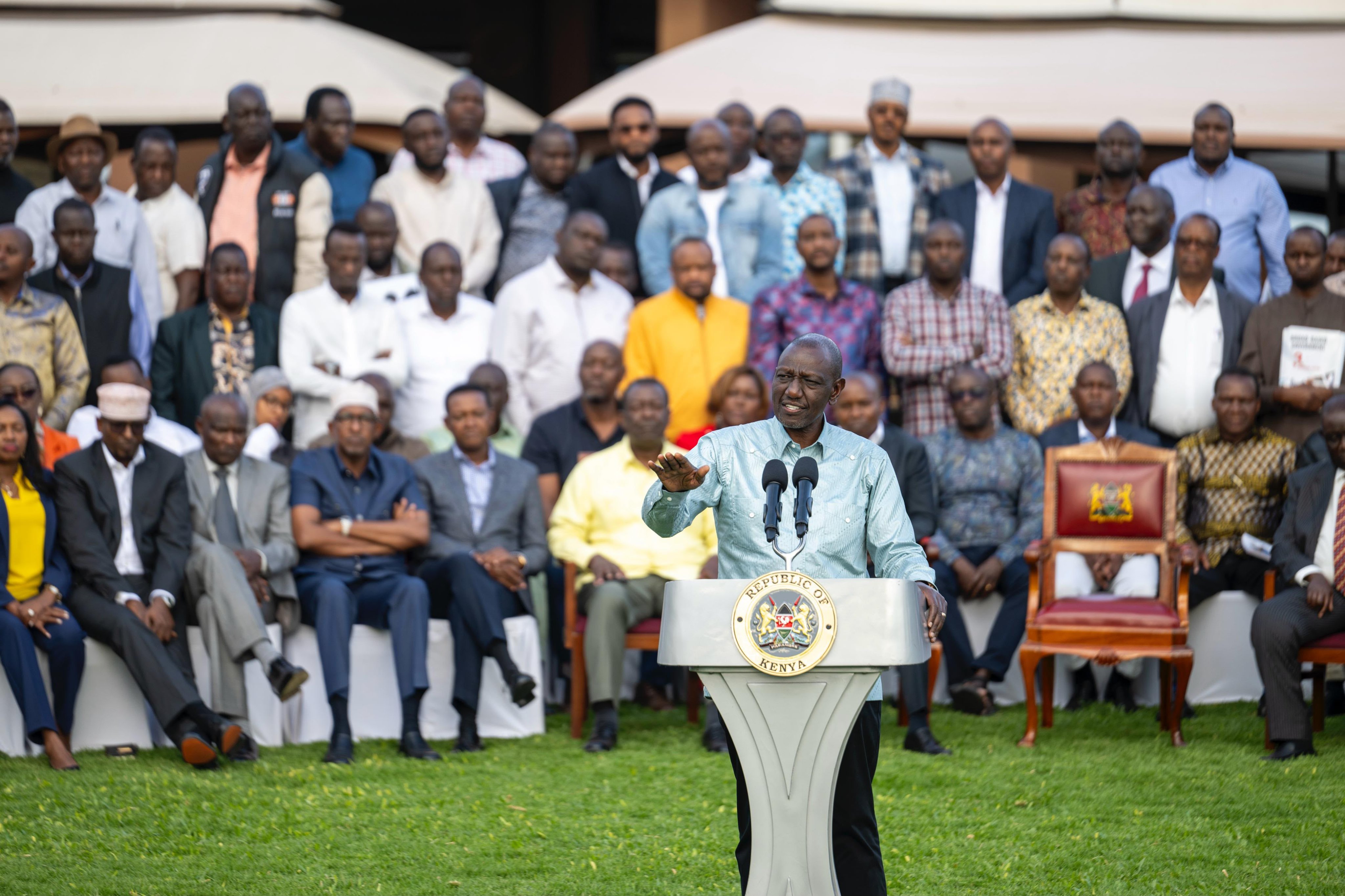
President William Ruto announced the formation of the panel during a retreat in Naivasha that brought together lawmakers and governors from the Broad-Based Alliance.

The newly formed committee comprises five representatives from each political side, alongside ex-officio technical leads. ODM’s representatives include Isaac Wanuge, Mariam Mbaruk, Leonida Kerubo, and Prof. Benard Muok, with the party’s Executive Director serving in an ex-officio capacity.

On the Kenya Kwanza side, the team features Emmanuel Zai, Dr. Daniel Muya, Bramwell Simeu, Mohamed Hassan, and Dr. Siciliane, supported by the UDA Executive Director as an ex-officio member.

Tasked with transforming the political alignment into a concrete policy agenda, the technical team will outline shared priorities for Kenya’s next phase of development.

President Ruto emphasized that the joint manifesto will extend beyond standard campaign literature, incorporating insights gathered from public consultations, the ongoing national dialogue on the “Kenya Post-Vision 2030” framework, and the anticipated National Development Compact.

Addressing the leadership retreat, President Ruto noted that political entities must offer voters a clear vision for the future rather than relying solely on past accomplishments.

The joint policy document aims to solidify current administration achievements, complete ongoing governance reforms, and present a cohesive, transformative platform to the Kenyan electorate as the official campaign period approaches.

IEBC Under scrutiny over election readiness amid Sh33.5B funding gap and operational deadlines.

0

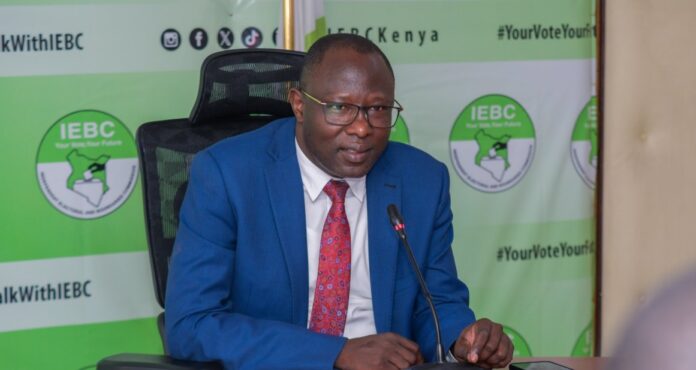
NAIROBI, KENYA — The Independent Electoral and Boundaries Commission (IEBC) is under increasing pressure as questions mount over its operational readiness for upcoming electoral activities, driven by significant funding shortfalls, logistical hurdles, and pending electoral reforms.

At the center of concern is the commission’s budget allocation. While the total projected cost for conducting multi-year election operations and preparations ranges between Sh55 billion and Sh61.7 billion, electoral officials have repeatedly cautioned Parliament and the National Treasury over a widening resource deficit that threatens critical pre-election timelines.

The IEBC outlined a phased expenditure plan across multiple fiscal cycles to cushion against last-minute resource constraints:

Projected requirements stand at approximately Sh61.74 billion spread across three financial years.

Sh15.3 billion (Pre-election preparations and system upgrades).

Sh25.4 billion (Voter registration, equipment procurement, and logistics).

Sh21.0 billion (Election day operations and post-election activities).

With Treasury allocations falling short of initial requests (roughly 55% of total required funds), the commission faces an estimated operational gap of over Sh33.5 billion, alongside pending bills amounting to Sh3.8 billion.

A major chunk of the election budget is designated for replacing aging voter management hardware and scaling infrastructure to accommodate a growing voter base:

The commission plans to spend Sh7 billion to purchase new Kenya Integrated Election Management System (KIEMS) kits. Out of the existing hardware, only 14,000 kits acquired in 2022 remain viable, while over 45,000 legacy kits bought in 2017 are set to be decommissioned due to technical obsolescence.

To reduce overcrowding, polling stations are projected to expand from 46,229 to 55,393 nationwide.

Parallel to infrastructure updates, the commission is moving forward with voter registration drives and campaign regulatory frameworks:

Targets aim to enroll over 5.7 million new voters, primarily targeting young citizens attaining legal age.

The IEBC recently gazetted spending limits for elective posts—capping presidential candidate expenditure at Sh6.1 billion—in an effort to control money politics and level the playing field.

Despite programmatic planning, electoral observers and legal experts point out key risks that could stall progress:

Delayed release of funds for pre-election activities limits early procurement of technology hardware and ballot printing contracts.

Outstanding vacancies in several parliamentary and ward seats require immediate resources before broader general election logistics can be finalized.

Pending legal updates surrounding campaign finance enforcement and boundary delimitations continue to add regulatory uncertainty.

The commission has maintained that maintaining an “irreducible minimum” budget is non-negotiable to protect election integrity. The Secretariat continues to engage the Justice and Legal Affairs Committee (JLAC) and the National Treasury to secure supplementary budget approvals necessary to bridge the funding deficit.

For additional visual coverage on campaign finance rules and election spending caps set by the electoral body, watch IEBC Sets Sh6.1B Presidential Campaign Spending Limit, which outlines recent news reports on candidate spending regulations.

Ruto allies double down on 2027 confidence as re-election strategy takes shape

0

The political drumbeats for the 2027 General Election are already sounding in Kenya, with President William Ruto and his inner circle projecting unshakeable confidence in securing a second term despite recent political headwinds.

While the President has publicly maintained that his current focus is on his administration’s scorecard and delivering on his campaign promises, the rhetoric from his camp has shifted decisively toward 2027. Speaking recently on the election outlook, Tana River Senator Danson Mungatana, a staunch Ruto ally, boldly declared to the public: “You can take this to the bank: President Ruto will secure the 50%+1 threshold and win the 2027 elections”.

President Ruto himself has previously expressed absolute confidence in a 2027 victory, anchoring his optimism on his administration’s development track record. During the recent National Prayer Breakfast, he assured the country that the upcoming polls would be free, fair, and devoid of violence, stating on record that he is prepared to accept the outcome of the democratic process while dismissing any rumors of election interference.

The early declarations of victory come against a backdrop of rapidly shifting political dynamics. Following a fallout with former Deputy President Rigathi Gachagua, political analysts have pointed to a potential weakening of Ruto’s grip on the voter-rich Mt. Kenya region—a bloc that was crucial to his narrow 2022 victory over veteran opposition leader Raila Odinga.

To counter this, the President has embarked on an aggressive strategy to court new voting blocs. Recent months have seen a deliberate push into Northern Kenya, highlighted by Ruto making history earlier this year by hosting a Cabinet meeting and the Madaraka Day celebrations in Wajir County. Furthermore, a newfound political truce with Raila Odinga has seen Orange Democratic Movement (ODM) members brought into the government fold, signaling a strategic effort to peel away support from regions like Nyanza that have historically been hostile to the President.

The high stakes of the impending race have also triggered a wave of political misinformation. Fact-checkers recently had to debunk fabricated newspaper front pages claiming the President was projected to win with 62% of the vote, as well as fake digital news articles alleging he had drafted a secret strategy to replace Mt. Kenya voters with marginalized communities.

As the 2027 chessboard continues to take shape, the message from the ruling party is clear: the campaign for re-election is already underway, and the President’s camp is leaving no stone unturned in their quest to retain power.