Home Blog Page 52

Beyond vision 2030: Charting Kenya’s next frontier

0

President William Ruto has highlighted Kenya’s remarkable strides under Vision 2030, the national development blueprint launched in 2008 under President Mwai Kibaki.

Speaking during the launch of the national conversation on Kenya’s development agenda at Nairobi’s Kenyatta International Convention Centre (KICC), the Head of State noted that landmark infrastructure projects across the country from the Lamu Port and the Isiolo–Moyale highway to the Nairobi Expressway have redefined connectivity, expanded economic opportunity, and laid a solid foundation for the nation’s future.

As Vision 2030 approaches the end of its course, President Ruto emphasized that gathering national leaders and citizens at the KICC marks the beginning of a critical national dialogue to answer one key question: What comes next?

Reflecting on the vision ahead, he said: “This is not simply a question about another plan or another set of targets. It is an invitation to imagine, together, the Kenya we want to become not only in the next decade, but also deep into the future.”

Underscoring the direction of the new initiative, President Ruto stated that the defining character of this next era must be citizen-led and people-centred, drawing its ambition directly from the ideas and aspirations of the Kenyan people.

Clarifying the state’s posture in this process, the President said: Government will not prescribe this vision. Instead, it will only play a facilitative role, creating the space, platforms and institutions through which Kenyans can shape the future they desire.”

He reaffirmed that the path forward will not be decided behind closed doors or imposed from above. Instead, Kenya’s next decade will be designed through the collective imagination, wisdom, and active participation of all its citizens including youth, entrepreneurs, farmers, workers, academia, civil society, and religious groups.

SHA launches verification exercise for high-value pending claims inherited from defunct NHIF

0

The Social Health Authority (SHA) has officially commenced the audit and verification of high-value pending claims inherited from the defunct National Hospital Insurance Fund (NHIF).

This exercise specifically targets outstanding claims worth KSh 10 million and above per healthcare facility, paving the way for planned disbursements in the 2026/27 financial year.

To facilitate a smooth process, SHA has advised all affected healthcare providers to review the published timetable and ensure all necessary documentation is prepared for verification.

SHA confirmed it is actively seeking funding from the National Treasury to settle these verified debts, which cover 451 healthcare facilities across the country.

This current verification phase follows the government’s release of KSh 4 billion in July, which was allocated to clear verified NHIF claims of KSh 10 million and below.

That initial payout benefited 3,527 healthcare facilities nationwide. Before those funds were disbursed, SHA conducted a nationwide sign-off exercise requiring eligible facilities to execute formal agreements confirming the full settlement of their verified claims.

To support providers, SHA deployed dedicated teams to regional county offices to assist with documentation and coordinate the phased sign-off process.

As SHA prepares for the next phase of disbursements, healthcare providers with high-value claims listed on the timetable are urged to comply with the documentation requirements to ensure their claims are cleared efficiently during the ongoing verification exercise.

IG Kanja orders immediate suspension of officers over custodial deaths and cracks down on rogue command

0

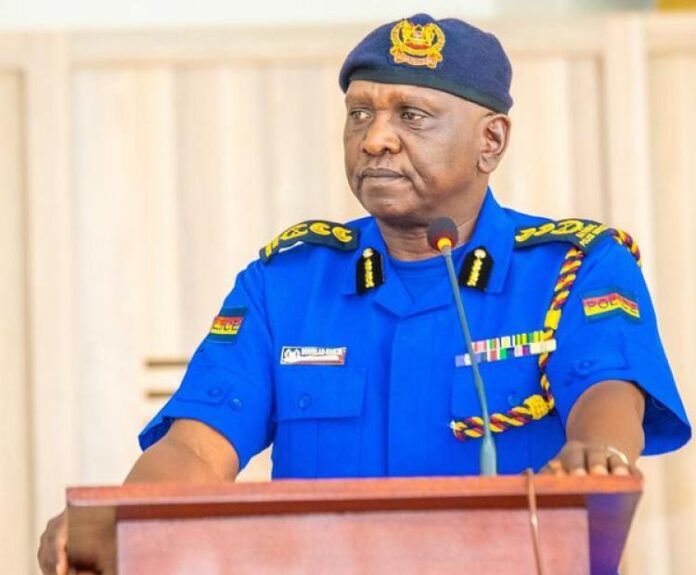
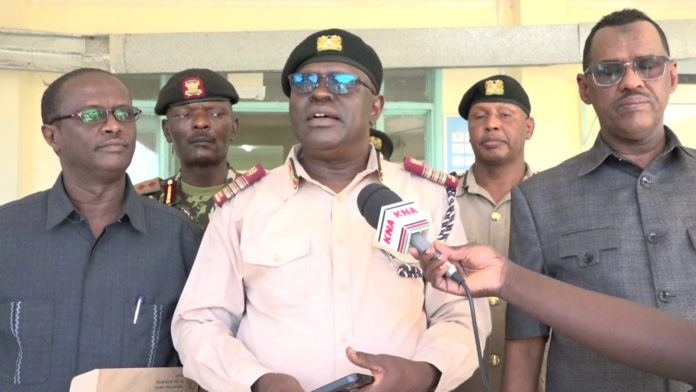
In a decisive move to restore public trust and curb mounting cases of police misconduct, Inspector General of Police (IG) Douglas Kanja has directed the immediate suspension of officers on duty whenever a suspect dies in police custody.

Addressing regional police commanders at the National Police Leadership Academy, IG Kanja expressed deep concern over recent tragic incidents that have severely tarnished the image of the National Police Service (NPS). Under the new directive, the desk officer managing the Occurrence Book (O.B.), the cell guard, and the officer-in-charge during the incident will face automatic suspension pending formal investigations.

“For any death occurring in police cells, the officer recording the O.B., the cell guard, and the duty officer must be suspended immediately, pending an investigation into the circumstances. As commanders, you must ensure this directive is strictly enforced,” Kanja stated.

The firm directive follows a string of troubling custodial fatalities and fatal police actions across the country. Gideon Makau passed away mysteriously at Kilungu Police Station just hours after his arrest and booking, while Eric Otieno died 24 hours after being booked at Muthaiga Police Station following an alleged assault in custody. Meanwhile, three police officers have been linked to the fatal shooting of Dr. Victoria Mutiso on July 29.

Kanja issued a stern warning to supervisory leadership, emphasizing that regional commanders will face disciplinary measures if they fail to reign in rogue officers under their command or take responsibility for equipment assigned to their teams. He emphasized that every commander and direct supervisor must account for their officers at all times and take full responsibility for the equipment held by personnel during their duties.

Echoing these sentiments, Gilbert Masengeli, the Deputy Inspector General of the Administration Police Service, warned commanders that lax oversight will no longer be tolerated. He cautioned that if crime escalates in a commander’s area of responsibility, that officer will be the first to be questioned, framing the directive as a clear warning against negligent leadership.

Addressing growing public concern over organized crime ahead of the 2027 General Election, IG Kanja instructed commanders to dismantle criminal gangs aggressively.

He warned that any commander who fails to curb gang activity in their jurisdiction faces severe disciplinary action, including demotion, adding that he expects regular returns detailing all gang members arrested in their respective areas.

The high-level meeting also served as an orientation for the newly established Nairobi Metropolitan Police Unit. Led by a designated commandant, this specialized unit will deploy over 2,500 officers combined from the National Police Service and the Nairobi County Inspectorate to bolster security operations and restore order across the capital.

Government distributes relief food and blankets to flood victims in Tana River

0

TANA RIVER – The Principal Secretary for the State Department for Cabinet Affairs, Dr. Idris Salim Dokota, through the Special Programmes department, has spearheaded the distribution of food supplies and blankets to residents of Gwano Location in Tana River County. Speaking at Wenje Primary School grounds, Dr. Dokota emphasized that the government took this essential step to support families affected by recent floods, which swept away homes and destroyed crops in the region.

During the event, Dr. Dokota rallied support for President William Ruto’s re-election bid in the upcoming general elections. He urged residents to acquire national identity cards and register as voters to drive meaningful change in the county. Highlighting Tana River’s political potential, Dr. Dokota noted that while the county has the capacity to generate over 500,000 votes, it currently registers only about 130,000 voters a concern for leaders seeking broader political backing. He assured residents that the government has structured plans for the Independent Electoral and Boundaries Commission (IEBC) to conduct village-to-village voter registration drives targeting all eligible ID holders ahead of the 2027 elections.

In addition to civic engagement, the Principal Secretary called on residents to foster peace and champion harmony within their communities. He criticized local politicians who incite violence, noting that their actions significantly contribute to unrest in various parts of the county.

Addressing the security situation, Tana River County Commissioner Mr. Joseph Mwangi assured the public that stability has been restored following recent security breaches. He revealed that security agencies have recovered over 100 illegal firearms from civilians involved in clashes across Bangale and Tana North sub-counties.

Commissioner Mwangi confirmed that the warring Wardei and Degodia communities have reconciled, surrendered their illegal arms, and pledged to live peacefully. He commended security personnel for conducting a peaceful disarming operation, confirming that all recovered weapons are in police custody awaiting handover to the Ministry of Interior. However, Mr. Mwangi issued a stern warning to individuals still harboring illegal firearms, urging them to surrender the weapons immediately before facing the full force of the law.

JRS flags education, livelihoods gaps in Kakuma and Kalobeyei

0

TURKANA – Education challenges, limited economic opportunities and the need to strengthen pathways to self-reliance for young people and families remain among the issues requiring greater attention in Kakuma and Kalobeyei.

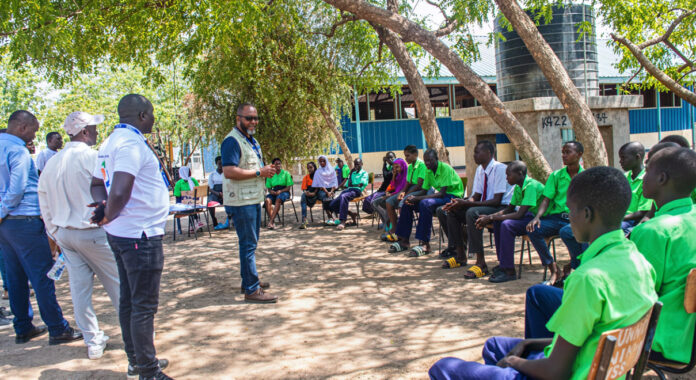
The issues were highlighted on Tuesday, August 11, 2026, during a visit by officials from Jesuit Refugee Service (JRS) Eastern and Southern Africa and JRS Kenya to schools, youth groups and community initiatives in Kakuma. The visit focused on understanding the experiences of communities and the challenges affecting their daily lives.

JRS Eastern and Southern Africa Regional Director Andre Atsu and JRS Kenya Country Director Geoffrey Shikuku visited Vision Secondary School and Blue State Secondary School, where they engaged with students and teachers on learning conditions and some of the challenges that need to be addressed to ensure children continue to access education.

The officials also visited community and youth groups, including GRE Boys’ and Girls’ Clubs, MILES Teen Mothers Group, caregivers involved in vegetable gardening and savings and lending groups.

The activities reflect efforts by community members to find ways of coping with economic and social challenges, with education, skills development and small-scale economic activities providing avenues for young people and families to strengthen their livelihoods.

For some families, activities such as vegetable farming and savings groups have become ways of generating income and meeting everyday needs. However, access to skills, capital and markets remains important for such initiatives to become sustainable.

Speaking during the visit, JRS Eastern and Southern Africa Regional Director Andre Atsu said it was important to assess the changes taking place within communities and use the lessons learned to improve the way services are delivered.

“We need to strengthen impact measurement, documentation and learning from our experiences in order to better understand the changes we are helping to achieve,” Atsu said.

He also encouraged parents and caregivers involved in income-generating activities to explore ways of developing their initiatives and working with other stakeholders to expand economic opportunities.

For communities in Kakuma and Kalobeyei, access to education and livelihood opportunities remains important in building resilience, particularly among young people, parents and families facing income-related challenges.

The visit on August 11 highlighted the need for continued community involvement in identifying challenges and developing solutions, with education, skills development and economic opportunities remaining key areas that can help refugees and host communities respond to the challenges affecting their lives.

Seven months ago, during a visit to Kakuma Refugee Settlement in northern Kenya, United Nations High Commissioner for Refugees Barham Salih praised Kenya as a model for refugee protection.

Speaking with refugees, students and entrepreneurs, Salih called for greater international solidarity to find durable solutions for refugees living in prolonged displacement.

“It is simply not right that we have people stuck in camps for years. Their dignity and human rights require the international community to help them develop self-reliance.”

Salih also highlighted the importance of education, recalling his own experience as a refugee and the opportunity he received to study at a refugee school.

Stephen Yiembe: Kenyan referee making his mark on the world stage

0

Kenyan assistant referee Stephen Eleazar Onyango Yiembe continues to raise the country’s profile on the international football stage after earning another prestigious appointment at the UEFA Super Cup.

Yiembe, who attained his FIFA international status in 2018, has steadily built an impressive officiating résumé, featuring in major competitions across Africa and on the global stage.

His latest assignment sees him join the officiating team for the UEFA Super Cup, a historic appointment that further highlights the growing presence of African officials in top-level international football.

In the 2025 CAF Champions League final, he worked alongside fellow Kenyan official Peter Kamaku during the second leg between AS FAR Rabat and Mamelodi Sundowns, under centre referee Omar Artan.

He was also appointed as an assistant referee for the 2025 CAF Super Cup in Egypt, where Pyramids FC faced RS Berkane at the Air Defence Stadium. Pyramids secured a 1–0 victory in the encounter.

Yiembe’s international profile grew further during the 2025 Africa Cup of Nations, where he was part of the officiating team for the final between Senegal and Morocco, serving as an Assistant VAR.

His credentials also earned him a place at the 2025 FIFA Club World Cup, where he represented the CECAFA region as the sole Kenyan official. Among his assignments were group-stage matches involving European giants Real Madrid and RB Salzburg, as well as Juventus and Urawa Red Diamonds.

Yiembe has also served as a video match official during the 2024 CHAN tournament, staged across Kenya, Tanzania and Uganda in 2025.Yiembe is set to reach another major milestone in his officiating career today 12th August after being appointed as an assistant referee for today’s UEFA Super Cup clash between Aston Villa and Paris Saint-Germain (PSG) in Salzburg, Austria.

Yiembe will be part of the officiating team for the prestigious European curtain-raiser, adding another high-profile assignment to his growing international résumé.

With another major UEFA assignment now added to his growing list of achievements, Stephen Yiembe is increasingly establishing himself as one of Kenya’s leading football officials, carrying the country’s flag on some of the biggest stages in world football.

Turkana July salaries delayed as CoB puts counties on the spot over budget failures

0

TURKANA – Turkana County employees are still waiting for their July 2026 salaries, with the county government blaming delays in processing in Nairobi while the Controller of Budget says counties must take responsibility for submitting complete budgets on time.

In a notice dated August 10, the Turkana County Government informed staff that payment of July salaries had been delayed due to “slow processing by relevant offices in Nairobi.” The administration said it was working to fast-track the process and assured employees that salaries would be paid immediately once the process was completed.

The county urged staff to remain patient and apologised for the inconvenience caused.

The explanation comes as Controller of Budget Margaret Nyakang’o places Turkana among counties whose 2026/27 budgets had not been cleared as of August 10.

Nyakang’o said Turkana was among four counties still awaiting clearance, alongside Nyamira, Isiolo and Tharaka Nithi. She said counties were required to submit their budgets by June 30 but some submitted them late, with others only doing so in August.

According to the Controller, some submissions also had critical omissions, including plans for settling pending bills, a Fiscal Strategy Paper and evidence of public participation.

The CoB’s position means the salary delay cannot be viewed solely as a problem of processing in Nairobi. Counties have to meet budgetary and legal requirements before funds can be accessed and spent through the Integrated Financial Management Information System.

Nyakang’o has previously taken counties to task over failure to requisition funds for salaries even after receiving allocations from the National Treasury.

In a report covering June 2025, Turkana was among 16 counties that had not requested funds for staff salaries despite having received their allocations. The Controller said, “16 did not request their June 2025 salaries,” with records showing Turkana, Narok and Bungoma had last drawn salaries in April.

The latest delay has also revived criticism from Turkana political leaders.

Turkana North MP Paul Nabuin has previously criticised the county government over delayed staff salaries. In a statement on August 8, Nabuin was reported as having slammed the Turkana County Government for delayed staff salaries.

The criticism comes against a backdrop of repeated salary challenges affecting county workers.

In March, Governor Jeremiah Lomorukai acknowledged outstanding salary and allowance arrears affecting health workers and announced the release of Sh58 million towards settling part of the backlog.

“We are going to release 58 million very soon,” Lomorukai said, while acknowledging that another Sh35 million dating back several years remained outstanding and would have to be provided for in a subsequent budget.

The governor said clearing the arrears was necessary to restore staff morale and stabilise service delivery in the health sector.

The current July delay, however, affects the wider county workforce and comes at a time when employees are already facing mounting household financial obligations.

For county workers, the difference between the two explanations is significant.

The county says the immediate obstacle is processing by relevant offices in Nairobi, while the Controller of Budget’s position points to the need for counties to ensure their budgets are properly prepared, submitted and cleared.

The CoB has also noted that most counties have balances in their accounts following the release of July funds by the National Treasury. The challenge, she says, is that the money cannot be spent until the respective budgets are approved and the required requisitions cleared.

This means the presence of money in a county account does not necessarily translate into an immediate ability to pay salaries.

For Turkana employees, however, the immediate concern is straightforward: when will July salaries be paid?

The county has not given a specific payment date, but maintains that it is working to expedite the process and will release the salaries as soon as the outstanding procedures are completed.

The latest episode is likely to intensify scrutiny of Turkana’s financial management, particularly given that salary delays have occurred before.

For thousands of county workers, the hope is that the current impasse will be resolved quickly and that future salary payments will not be caught between county budget processes and national-level approvals.

Turkana students take fight against drug abuse to Lodwar streets

0

University and technical college students in Turkana County have taken to the streets of Lodwar in a campaign against alcohol and drug abuse, warning that substance use is increasingly threatening the health, education and future of young people.

The students, operating under the umbrella of The Comrades Voice, held a peace walk through Lodwar as part of efforts to raise awareness on the dangers of alcohol and substance abuse.

The campaign comes amid growing concern from health authorities over the impact of substance use in Turkana, with alcohol identified as the leading substance of abuse in the county.

During a similar awareness campaign in Lodwar recently, NACADA coordinator for Turkana and West Pokot, Scola Komen said alcohol remained the most abused substance in Turkana.

“Alcohol remains the most abused substance in Turkana County,” Komen said.

She said people affected by substance abuse could seek treatment at Lodwar County Referral Hospital, with referrals made to rehabilitation facilities outside the county where necessary.

Komen also disclosed that, at the time, Turkana did not have a NACADA-accredited rehabilitation facility.

The latest county government performance data points to the scale of the response being mounted, but also highlights gaps in treatment infrastructure.

According to Turkana’s 2024/25 Annual Programme Performance Report, the county conducted six alcohol and substance-abuse counselling sessions, six community-based psychosocial trainings and 10 public barazas. It also formed 32 Alcoholics Anonymous groups and carried out six inspections of alcoholic-drink outlets.

However, the county recorded zero rehabilitation centres constructed during the financial year, against a target of one.

Students warn against peer pressure

Speaking during the Lodwar campaign, The Comrades Voice student leader Alfayo Etabo said young people were increasingly being exposed to drugs and alcohol, with the problem contributing to idleness and other social problems.

Etaabu challenged young people to reject peer pressure and instead use their energy in education, employment, entrepreneurship and community development.

“Young people should come out strongly and engage in development instead of involving themselves in behaviours that can destroy their future,” Etaabu said.

He also warned young people against allowing relationships and peer groups to influence their decisions on alcohol and drugs.

He said young people should not feel pressured to drink or use drugs simply to gain acceptance from friends or partners.

The students used the walk to educate residents on the effects of substances including bhang, warning that drug use can affect mental health, physical wellbeing and a person’s ability to pursue their goals.

Health authorities raise alarm

The student campaign follows growing concern within the county health department.

In October 2025, Turkana health officials held a meeting in Lodwar to discuss the effects of alcohol and drug abuse, describing the problem as one that was affecting several areas of public health, including reproductive, maternal and adolescent health, nutrition, HIV and AIDS, tuberculosis and mental health.

The county’s Mental Health Lead, Ibrahim Echuman, also warned that the problem extended beyond alcohol.

“Other drugs like miraa, muguka, bhang, and glue are taking a serious toll on our young people,” Echuman said.

The county health officials identified peer influence, economic hardship, family and social pressures, trauma, depression, easy access to alcohol and weak enforcement as some of the factors contributing to substance abuse in Turkana.

In February 2026, the county launched its first County Mental Health Council, with health officials saying increasing substance misuse was contributing to psychosocial stress in communities already facing drought, food insecurity and displacement. The council is expected to coordinate mental-health and psychosocial-support interventions across the county.

NACADA’s latest nationwide survey on the status of drugs and substance use was conducted in 2022 and published in 2023. The survey covers people aged 15–65 and provides estimates at national and regional levels. It does not provide a current 2024–2026 prevalence rate for individual counties such as Turkana.

Nationally, NACADA found that 18 per cent of Kenyans aged 15–65 had used at least one drug or substance in the previous month. Alcohol was the most commonly used substance, with a past-month prevalence of 11.8 per cent.

The survey found that men had higher levels of substance use than women, while people aged 25–35 were the most affected age group.

For lifetime use, alcohol stood at 19.4 percent nationally, compared with 3.4 per cent for cannabis. Lifetime use of cocaine and heroin was each below one per cent nationally.

NACADA also found that 4.6 per cent of Kenyans aged 15–65 had used miraa in their lifetime, with the rate substantially higher among men than women.

These national figures provide context for the problem but should not be interpreted as Turkana-specific prevalence figures.

A treatment gap remains

The shortage of rehabilitation infrastructure remains one of the biggest challenges facing Turkana.

While the county has expanded counselling, psychosocial support, community awareness and enforcement activities, its 2024/25 performance report recorded no rehabilitation centre constructed during the financial year.

The gap comes as the county government seeks to strengthen mental-health services and integrate substance-abuse interventions into the wider health system.

For the students behind the Lodwar peace walk, however, prevention remains the first line of defence.

They are calling for greater awareness in schools and communities and for young people to be supported to pursue education, skills development, employment and entrepreneurship.

Their message is that the fight against drugs cannot be won through arrests alone. It will require prevention, counselling, treatment, rehabilitation and, above all, meaningful opportunities for Turkana’s young population.


Tana River Peace Drive: National Police Service Chair Dr. Amani Komora urges unity amid ongoing disarmament operation

0

TANA RIVER — The Chairman of the National Police Service Commission, Dr. Amani Komora, has urged communities living in Tana River County to reject ethnic and religious divisions and prioritize peaceful coexistence to maintain stability and security across the region.

This appeal comes as security agencies in the county execute a firm disarmament operation aimed at recovering illegal firearms in civilian hands, with more than 100 illegal rifles already surrendered to authorities.

Speaking during a peace football tournament he sponsored, Dr. Komora emphasized that promoting peace and solidarity among communities is a core pillar of the police commission. He noted that the tournament was intentionally designed to bring together individuals from all local ethnic groups to foster harmony.

Dr. Komora cautioned residents against allowing themselves to be divided along tribal or religious lines, warning that such divisions mark the beginning of a community’s collapse, and urged fellow leaders to actively encourage love, peace, and mutual understanding.

Supporting these efforts, Coast Regional Police Commander Ali Nuno called for consistent communication and cooperation with local communities to build solidarity and strengthen regional security. He noted that although Tana River is a sensitive county with diverse ethnic and religious groups, regular interaction helps break down divisions and creates a unified community.

Commander Nuno also emphasized the importance of engaging the youth, particularly members of the “Gen Z” generation, highlighting that young people possess energy, time, and education, making continuous involvement critical for long-term peace.

80% of Government projects completed in Garissa County, confirms Regional Commissioner John Otieno

0

GARISSA – North Eastern Regional Commissioner John Otieno has confirmed that 80 percent of major national government infrastructure, healthcare, and administrative projects across Garissa County are now complete.

Speaking in Garissa town during an official inspection tour of ongoing government initiatives, the Regional Commissioner assured local residents that key transformative developments are progressing rapidly to bolster regional growth and service delivery.

Highlighting major administrative breakthroughs, Regional Commissioner Otieno announced that the reopened Garissa Passport Office has dramatically improved service delivery since February 2025.

Over 16,000 residents across the North Eastern region have successfully received their travel documents, with processing times dropping to under five days. The localized facility eliminates the financial and logistical burden on residents who previously had to undertake long, expensive journeys to Nairobi or Mombasa to access immigration services.

On regional infrastructure, Otieno revealed that construction on the strategic Lamu-Garissa-Isiolo Highway is advancing at a high pace, with 85 kilometers already tarmacked. The government guarantees that the roadwork will reach Isiolo Town in the coming months. Beyond boosting trade and transport across the three counties, the finalized highway is expected to enhance security operations and significantly curb militia attacks that have historically affected the remote corridor.

Regarding healthcare, Regional Commissioner Otieno reported that Garissa Level 5 Hospital now reliably serves hundreds of patients daily and has successfully resolved previous blood shortage crises. Under recent operational reforms, the hospital is scheduled for an official upgrade to Level 6 status to further expand its specialized capacity. Garissa Hospital CEO Dr. Mahat Sheikh emphasized that the institution serves an estimated six million people across six counties, noting that nursing staff has expanded from under 100 prior to devolution to over 300 today, alongside a fleet of 15 functional ambulances and Social Health Authority (SHA) coverage reaching six million beneficiaries.

The regional health center has achieved notable success in managing critical illnesses, particularly esophageal cancer and diabetes, allowing many recovered patients to safely return home.

Local residents praised the government for these healthcare improvements, with beneficiary Farhia Abdi Hassan expressing gratitude for continuous diabetes treatment under the SHA scheme, and resident Rosemary Achieng commending the hospital’s specialized medical team for successfully treating her child’s kidney cancer locally.