Home Blog Page 17

“Nobody ss more prepared than me”: Ndindi Nyoro eyes opposition ticket to challenge Ruto in 2027

0

People’s Party of Kenya (PPK) leader and Kiharu Member of Parliament Ndindi Nyoro has signalled a clear ambition to enter the race to succeed President William Ruto in the 2027 General Election.

Speaking on Citizen TV’s evening programme, Nyoro declared his readiness to assume the country’s highest office should he be given the opportunity to lead a united opposition front.

Asked directly by host Jeff Koinange whether he was positioning himself for the presidency, the lawmaker stopped short of formally declaring his candidacy, but asserted that he does not believe there is anyone in the country more prepared than him to lead Kenya.

Nyoro attributed his readiness to deliberate efforts to understand Kenya’s key challenges and develop practical policy solutions. He singled out public education as an immediate priority, promising that, if elected, his administration would make public day secondary education free within its first three months in office.

While acknowledging that Kenya has many politicians aspiring to lead the country, Nyoro argued that only a few undertake the level of preparation necessary to govern effectively.

He said he has deliberately focused on understanding the country’s challenges and developing solutions so that, if given the opportunity to serve, he would not waste a single day in office.

Looking ahead to the 2027 contest, Nyoro stressed that defeating an incumbent president would require greater unity within the opposition. He said Kenya’s complex economic and social challenges cannot be addressed through a single political approach, making cooperation among opposition leaders essential to presenting a credible alternative to the current administration.

Asked whether he believed he could defeat President Ruto in the 2027 presidential race, Nyoro responded confidently, saying, “Without any doubt.”

His remarks are likely to intensify speculation over potential presidential contenders and political realignments ahead of the 2027 General Election, as opposition leaders and parties continue to position themselves for the contest.

Kibwana’s party moves to claim ‘The Mwananchi Party’ name as Sifuna battles for political brand

0

Former Makueni Governor Professor Kivutha Kibwana’s Muungano Party has moved to rebrand itself as The Mwananchi Party (TMP), adding a fresh twist to an increasingly contested political identity ahead of the 2027 General Election.

The proposed name change was announced through a Gazette Notice dated August 24, 2026, in which the Registrar of Political Parties notified the public that Muungano Party intended to change its registered name to The Mwananchi Party. The notice invited members of the public and other interested parties to submit written objections within seven days.

The development comes at a sensitive time for Nairobi Senator Edwin Sifuna and the Linda Mwananchi movement, which has been using the Mwananchi identity in its political mobilization across the country while seeking formal recognition of the brand.

Sifuna’s camp has been engaged in a legal battle with the Office of the Registrar of Political Parties (ORPP) after an earlier attempt to reserve the name Linda Mwananchi Party of Kenya was rejected. The Registrar cited provisions of the Political Parties Act, including concerns that the proposed name closely resembled an already reserved slogan and raised issues of public interest.

The dispute has since taken a new turn at the Political Parties and Disputes Tribunal (PPDT). In preliminary orders issued in August, the tribunal allowed Sifuna’s faction to reserve and pursue registration of the name “The Mwananchi Party” while its appeal is being heard.

The tribunal also directed the Registrar not to consider, reserve or register “Linda Mwananchi” or a similar variation for another individual or entity pending determination of the dispute. The matter is scheduled to return before the tribunal on September 14, 2026.

The overlapping claims have therefore created an unusual political and legal contest over the Mwananchi identity, with Kibwana’s Muungano Party now seeking to formally adopt the same “Mwananchi” branding that Sifuna’s camp has been trying to secure.

Sifuna has maintained that his fight is primarily about protecting a political brand rather than creating another political party. Speaking in Nairobi recently, he said his team already had political parties at its disposal and was instead determined to retain the identity it had built through the Linda Mwananchi movement.

“We are fighting for our brand, our name,” Sifuna said, explaining that the movement had invested significant political effort in building the identity.

Kibwana’s move has attracted particular attention because of his association with the wider opposition political space and his public support for Sifuna and the Linda Mwananchi movement.

The decision by his party to seek the Mwananchi name has consequently raised questions about whether the proposed rebranding could be part of a broader political strategy ahead of the 2027 elections or simply an independent attempt by Muungano Party to reposition itself.

For now, however, there is no publicly confirmed agreement establishing that Kibwana’s proposed rebranding is being undertaken on behalf of Sifuna or his political allies. The competing developments remain subject to the formal party-registration and dispute-resolution processes.

The battle also highlights the growing importance of political branding as parties and political movements position themselves ahead of the 2027 elections. With the opposition landscape still undergoing realignment, established parties and emerging political formations are seeking identities that can appeal to voters while providing a viable vehicle for candidates and coalitions.

For Sifuna’s camp, securing a recognizable political identity has become an important part of its broader strategy as it builds a national movement. The tribunal’s interim orders have provided temporary protection for its interests, but the emergence of Kibwana’s proposed The Mwananchi Party adds another layer to the dispute.

The latest development is therefore unlikely to be the final word in the battle over the Mwananchi name.

With the PPDT expected to consider the matter further and the Muungano Party’s proposed name change also going through the statutory process, the political and legal contest over the brand is likely to remain in focus as Kenya moves closer to the 2027 General Election.

Ruto orders crackdown on foreigners running small businesses reserved for Kenyans

0

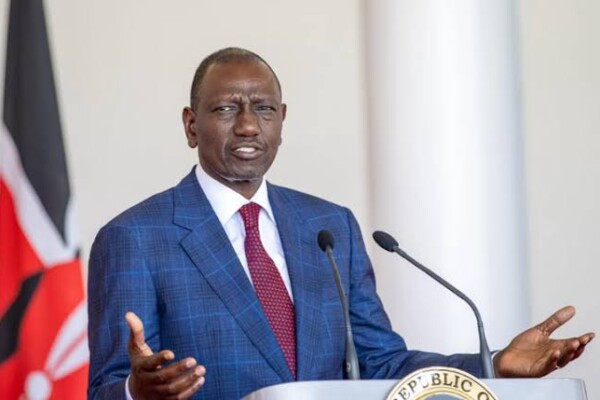
President William Samoei Ruto has ordered an immediate crackdown on foreign nationals illegally operating small-scale businesses reserved for Kenyan citizens, emphasizing that local traders must be shielded from unfair competition.

Addressing micro, small, and medium-sized enterprises (MSMEs) at State House, Nairobi, the President directed the Ministry of Investments, Trade and Industry to begin administrative enforcement starting Monday, making it clear that the government will not wait for pending legislation to pass before acting.

Trade Cabinet Secretary Lee Kinyanjui was instructed to launch the operation immediately upon returning from Addis Ababa, while foreign nationals operating within these designated sectors were given explicit notice to close their operations and exit the retail space.

To provide a permanent legal framework, a bill restricting foreign participation in designated local business sectors is currently before Parliament.

Industrialization Principal Secretary Juma Mukhwana has been tasked with collaborating alongside traders and key stakeholders to tighten the draft legislation and seal any loopholes.

Simultaneously, National Assembly Majority Leader Kimani Ichung’wah was urged to fast-track the measure through the legislature.

President Ruto underscored that the administration’s successful efforts to stabilize the national economy, curb inflation, strengthen the shilling, and boost global investor confidence were designed to attract genuine, high-value investment not international hawkers or small-scale traders competing directly with locals.

He clarified that foreign capital remains welcome, but a firm line will be drawn between investors who build production capacity, create jobs, and foster industrial growth, and foreign operators undercutting domestic micro-entrepreneurs.

Finally, the President urged Kenyan business owners to shift from simple buying and selling toward domestic manufacturing and value addition.

Encouraging local traders to leverage government support programs to scale up their operations into larger, sustainable enterprises, President Ruto reaffirmed the administration’s commitment to balancing foreign capital growth with the imperative to safeguard opportunities for Kenya’s domestic workforce and youth.

National Government moves to accelerate Nasukuta Abattoir operations in West Pokot

0

WEST POKOT — The National Government has stepped up efforts to fast-track the operationalization of the Nasukuta Abattoir in West Pokot County, in a move aimed at strengthening the livestock value chain, improving food security, and expanding economic opportunities for pastoralist communities.

A multi-agency delegation from the National Government paid a courtesy call on Governor Simon Kachapin before touring the facility to assess its technical and operational readiness and prepare the modern slaughterhouse for incoming private sector investment.

Led by Dr. David Kios, Livestock Advisor in the Office of the President, the team included key officials from the national Food Safety Division and the Food Systems Resilience Project (FSRP), evaluating Nasukuta as one of nine strategic regional abattoirs earmarked for transformation into major commercial hubs.

Governor Kachapin welcomed the joint intervention, reiterating the County Government’s commitment to resolving long-standing project delays and unlocking the region’s full economic capacity. Expressing strong keenness to see the project completed, he noted that West Pokot serves as a major meat hub and stressed that local communities must benefit directly through enhanced livelihoods and local economic empowerment.

To ensure the facility functions efficiently, the visiting team emphasized the necessity of a reliable livestock supply chain to support sustainable ongoing operations. A primary strategy discussed includes the establishment of ward-level feedlots throughout West Pokot County, which Dr. Kios noted would enhance the facility’s long-term sustainability while simultaneously improving livestock quality, farm production yields, and market access for local pastoralists.

The operationalization of the Nasukuta Abattoir is set to position West Pokot as a leading meat production and processing power center, creating direct employment, attracting investors, and boosting profits for local farmers. Furthermore, the active involvement of national food safety agencies and the Food Systems Resilience Project will ensure compliance with strict meat processing standards, clearing the pathway for the abattoir to serve expanded national and regional export markets.

The visiting delegation was joined by County Executive Committee Member for Agriculture, Livestock Development and Fisheries Wilfred Longironyang, Nasukuta Abattoir CEO Magal Losapu, and technical officers from the County Department of Agriculture.

West Pokot County and World Vision Kenya sign partnership deal to accelerate regional development

0

WEST POKOT – The West Pokot County Government and World Vision Kenya have signed a Memorandum of Understanding to strengthen joint development interventions across four targeted wards, focusing on education, agriculture, water, health, sanitation, and the protection of vulnerable groups. The agreement, hosted and signed by Governor Simon Kachapin on Wednesday, September 2, 2026, establishes a structured framework to guide future collaboration and development projects specifically in Alale, Kasei, Endough, and Masol wards.

The partnership seeks to expand school infrastructure, widen access to clean water and sanitation, strengthen agricultural and livestock production, enhance food security, and bolster support systems for women and children in rural communities. By establishing a mechanism for co-financing and joint execution, the two institutions intend to mobilize resources more effectively and streamline operations to address the immediate needs of residents across the county.

Speaking during the signing ceremony in Kapenguria, Governor Simon Kachapin commended World Vision for its sustained investment in West Pokot, noting that the organization’s programs have significantly complemented the county government’s core development goals. Kachapin highlighted that continued collaboration with international non-governmental organizations remains vital for expanding public services and sustaining community growth throughout the region.

World Vision Kenya Director of Disaster Management Dr. Gershon Mwakazi affirmed that the organization will continue aligning its community initiatives with the priorities set by the local administration. He emphasized that World Vision’s central objective is to complement the county government’s official agenda to ensure long-term, sustainable development for all residents.

The newly signed agreement builds upon several joint projects already completed in the county. In the water and sanitation sector, 12 local schools have been equipped with roof catchment rainwater harvesting systems alongside disability-friendly latrines, benefiting over 3,000 pupils. Additionally, the partnership has delivered five twin classrooms to accommodate 375 students and distributed 168 standard desks to improve classroom learning conditions.

Under the expanded framework, both parties will intensify interventions in youth development, agricultural resilience, rural health hygiene, and specialized protection programs for vulnerable children and women. World Vision’s delegation at the event was led by Dr. Gershon Mwakazi alongside Regional Director Mark Mutai, Programme Effectiveness and Impact Lead Fredrick Kasiku, and Cluster Manager Shadrack Yator. County Executive Committee Members Lucky Litole, Esther Chelimo, William Petot, and Rebecca Kide also attended the signing, which will govern all joint development activities in the four wards moving forward.

Marsabit Security Agencies launch 100-day crackdown as court frees drug suspect on bail

0

MARSABIT — National and county security agencies in Marsabit, in collaboration with the National Authority for the Campaign Against Alcohol and Drug Abuse (NACADA), have launched a 100-day Rapid Results Initiative (RRI) crackdown on illicit brews, chang’aa, and drugs such as bhang. The program is currently being rolled out across Kenya.

Presiding over the launch in Marsabit town, Marsabit County Commissioner Stanley Kamande warned traffickers that their days are numbered. He urged residents to collaborate with the government to apprehend dealers who are destroying the lives of youth in the county, emphasizing that the operation will be sustained to fully uproot drug trafficking in Marsabit.

Adding to the call for collective action, Abdo Alla, Chief of Staff in the Office of the Marsabit Governor, stated that drug trafficking especially bhang threatens to wipe out a generation of youth, urging every resident to take part in saving the county.

NACADA Marsabit County Coordinator Mohammed Wako reiterated that the authority will work closely with security agencies during the 100 days to ensure dealers face stern legal action, warning that rising drug abuse in Kenya is fueling youth involvement in criminal activities, including political exploitation.

Separately, the Marsabit Law Court has released a suspect charged with drug trafficking in Marsabit town on a Sh30,000 cash bail or Sh50,000 bond. The accused, Wako Abdirizak Wakala, was allegedly found in possession of 35 rolls of bhang with an estimated street value of Sh1,750 on August 30, 2026, at Toronto Shop in Marsabit town.

He denied the charges before Marsabit Principal Magistrate Christine Wekesa, and the case has been set for mention on September 15, 2026.

Turkana County launches strategic framework to boost development funding

0

LOKICHAR — The Turkana County Government has officially initiated the development of a Resource Mobilization Strategic Framework (RMSF). Led by the Department of Partnerships and Resource Mobilization, this initiative aims to create a coordinated system for identifying funding opportunities, strengthening partner engagement, and bridging persistent resource gaps across the county’s economic and humanitarian priorities.

The Sustainable Development Through Improved Local Government (SDLG/VNGI) program is actively supporting the development process. SDLG/VNGI representative Isaiah Lomorkai Ekai commended the county’s initiative, emphasizing that a structured system is essential to identify high-priority investment areas, streamline donor engagement, and ensure resources directly benefit local communities.

The drafting process kicked off during a multi-stakeholder workshop at the Riamakori Hotel in Lokichar. Key organizations participating in the process include SDLG/VNGI, the Adventist Development and Relief Agency (ADRA), Turkana University, and the United Nations Resident Coordinator’s Office (UNRCO).

Deputy Director for Partnerships and Resource Mobilization Coordination, Michael Aupe, highlighted that the RMSF will establish targeted thematic areas and formalize donor collaboration. Key components embedded into the framework include donor mapping, project pipeline development, structured results reporting, and ongoing capacity building for county personnel.

Upon completion, Turkana will become the third county in Kenya following Nairobi and West Pokot to establish a dedicated Resource Mobilization Framework. Aupe noted that the roadmap will eliminate duplicate development interventions and maximize project impact. Supporting this vision, Deputy Director of Youth Affairs Ekidor Linus Namoe highlighted the role of the Ushirika Plan, which maps and categorizes partners by their specific areas of development interest to streamline coordination.

Consultants from Turkana University, Dr. Obura Collins and Dr. Koross Benjamin, presented the situational analysis, roadmap, and seed budget allocation strategy required for implementation. Chief Statistics Officer Julius Ekal emphasized that the framework will align directly with the Third County Integrated Development Plan (CIDP III), noting that accurate assessments of existing funding gaps and the growth of Own Source Revenue (OSR) remain vital to sustainable internal resource mobilization.

Civil society representatives urged the county to embed key social issues directly into the final framework. Geoffrey Esibtar, representing the Girl Child Network, advocated for prioritizing girl-child education specifically Early Childhood Development Education (ECDE) alongside structured policy interventions to eliminate early marriages.

The Lokichar consultative meeting marks the start of an overarching roadmap designed to provide Turkana County with a transparent, efficient mechanism for securing and managing local and international funding.

1,800 Litres of Chang’aa destroyed as West Pokot begins 100-day war on illicit alcohol

0

WEST POKOT – Security and multi-agency administrators in West Pokot have launched an intensive 100-day war on illicit brews, counterfeit alcohol, and narcotics, publicly destroying 1,800 litres of chang’aa and 500 rolls of bhang seized during recent swoops.

The exercise, launched by West Pokot Sub-County Deputy County Commissioner Samuel Kiarie during a public baraza at Kishaunet Centre in Kapenguria, forms part of a nationwide 100-day Rapid Results Initiative (RRI) ordered by President William Ruto. Kiarie emphasized that the public destruction of the contraband was deliberate to guarantee transparency and assure residents that confiscated items would not leak back into the community.

The multi-agency drive brings together the National Government Administration Officers (NGAO), National Police Service (NPS), National Authority for the Campaign Against Alcohol and Drug Abuse (NACADA), Kenya Bureau of Standards (KEBS), Anti-Counterfeit Authority (ACA), Kenya Revenue Authority (KRA), alongside county enforcement and public health officials.

Kiarie outlined a phased approach to the operation, beginning with local illegal distillers before moving on to commercial outlets selling unauthorized second-generation alcohol, operating outside permitted hours, or violating regulatory standards. Field administrators including chiefs, assistant chiefs, and village elders have been instructed to maintain constant operations in their areas.

To address wider regional challenges, security agencies are increasing surveillance on smuggling networks, particularly motorbikes bringing illicit products across borders from neighboring counties and Uganda. Kiarie assured the public that all intelligence shared by residents regarding manufacturers, transporters, and sellers would remain strictly confidential.

Addressing local concerns regarding integrity, the administrator issued a strong warning against corruption, stating that any enforcement officer caught accepting bribes or compromising the operation would face immediate administrative action.

Local residents and community leaders have strongly backed the crackdown, citing the devastating impact of substance abuse on families and rising crime rates among youth. Daniel Rotich, a resident of Kachepkai Village in Mnagei Ward, noted that many young people turn to crime to fund their addiction and pledged local support through community policing.

NACADA West Pokot County Coordinator Scola Komen reaffirmed the agency’s commitment to pairing enforcement with public education programs, encouraging citizens to report illegal drug and alcohol trade anonymously using the toll-free helpline 1192. Authorities maintain that lasting success will depend on sustained enforcement, officer accountability, cross-border coordination, and active community participation throughout the 100-day campaign.

Turkana Benchmarks Baringo’s Successful irrigation model to boost food security

0

TURKANA – A technical agricultural delegation from Turkana County has conducted a study tour in Baringo County to examine the operational framework of its County Irrigation Development Unit (CIDU). Held on August 31, 2026, the visit forms part of Turkana’s strategic initiatives to scale up agricultural production and address food insecurity across the region.

The visiting team focused on Baringo’s methods for establishing, managing, and sustaining local irrigation infrastructure, as well as its strategies for actively involving farming communities. The benchmarking exercise builds on momentum from a November 2025 stakeholder sensitization workshop that recommended establishing a dedicated CIDU in Turkana County. Baringo County currently manages 35 active irrigation schemes, offering practical insights into expanding water coverage and supporting smallholder farmers in arid and semi-arid lands.

Highlighting the impact of the initiative, Baringo County Executive Committee Member for Agriculture, Livestock Development, and Fisheries, Risper Chepkonga, noted that the model has streamlined administrative oversight and expanded capacity building. She noted that through CIDU, Baringo has mapped all its irrigation schemes, developed a county irrigation strategy, and provided capacity building for farmers across the schemes.

Led by Turkana County Secretary Dr. Richard Ekai, the delegation engaged Baringo officials in high-level discussions regarding scheme management, policy formulation, and community-led farming. Dr. Ekai emphasized the shared geographical and climatic realities between the two counties, noting that irrigation is vital for long-term health and stability. He stated that irrigation remains the primary way to grow food and eradicate diseases and malnutrition, making the exposure visit essential to replicate Baringo’s success.

The study tour includes field assessments of selected irrigation schemes across Baringo, allowing the Turkana team to evaluate day-to-day operations and interface directly with farmers and management committees. The insights gathered will directly inform the establishment and operationalization of Turkana’s own CIDU.

Supported by the Food Systems Resilience Project (FSRP), the Turkana delegation includes members of the County Assembly led by Agriculture Committee Chairman Hon. William Etubon, County Public Service Board members led by Chairman Peter Ekunyuk, Chief Officer David Maraka, and technical officers from the Department of Agriculture, Irrigation, and Land Reclamation. The national government was represented by Lawrence Muriithi from the State Department for Irrigation.

Turkana leaders seek temporary pasture access for pastoralists in Uganda

0

TURKANA – Turkana leaders have engaged Ugandan authorities to allow Turkana pastoralists and their livestock to temporarily access pasture and water across the border, amid worsening pressure on grazing and water resources.

Turkana North MP Paul Ekwom Nabuin and Turkana West MP Daniel Epuyo Nanok led a three-day mission that began on August 31, 2026, visiting Turkana pastoralists in Usake/Morungole, Timu and Kamion kraals in Uganda.

The leaders sought the support of the Ugandan administration to enable the pastoralists to access pasture and water while peacefully coexisting with host communities.

“Our mission was to engage, sensitise, reconcile and support the Ugandan local administration to temporarily settle them to access pasture and water, while coexisting peacefully with their Ateker communities,” Nabuin said.

During the mission, the delegation and Ugandan authorities engaged both communities and stressed the need to respect Ugandan laws, promote peaceful coexistence and maintain good neighbourly relations.

The delegation also witnessed the peaceful handover of six stolen cows to the Ngidoso community of Uganda, in a move aimed at restoring trust and strengthening relations between the border communities.

Nabuin said continued engagement between communities on both sides of the border was key to addressing challenges facing pastoralists.

“The challenges facing our pastoral communities can best be addressed through mutual engagements across the borders,” Nabuin said.

The latest engagement comes amid a prolonged drought that has reduced water and grazing resources in Turkana, forcing pastoralists to move in search of pasture and water.

In July, Kenya’s Special Peace Envoy for the Ateker Region, John Munyes, warned that thousands of drought-stricken Turkana pastoralists could move into Uganda’s Karamoja region, particularly Kotido and Kaabong, as water sources and grazing land continued to dry up.

“There is no water in Kenya, but you, our brothers, have water. The only hope for our people is to push into Kotido and Kaabong,” Munyes said.

Munyes called for structured cross-border resource sharing and peaceful coexistence, urging Kenya and Uganda to establish mechanisms to manage livestock movement and prevent conflicts over shared resources.

The three-day cross-border mission is part of ongoing efforts to address pastoralists’ immediate need for water and pasture while strengthening relations between border communities and preventing tensions over shared resources.