Home Blog Page 11

Kenya’s wealth must benefit Kenyans first, Ruto says as he pledges Sh4.8 billion for Samburu roads

0

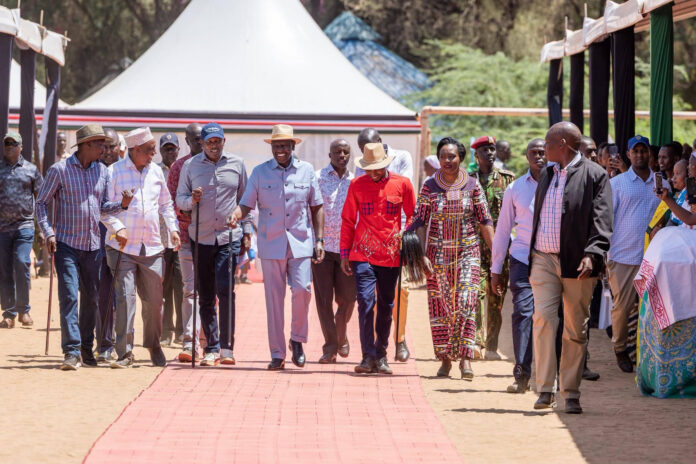
SOUTH HORR, SAMBURU — President William Ruto says it will be Government policy that Kenya’s minerals and natural resources are processed and value-added locally to create jobs and ensure Kenyans benefit from natural wealth.

Speaking on Sunday at Devolution Principal Secretary Michael Lenasalon’s thanksgiving in South Horr, Samburu North, Ruto said local processing will spur enterprise and ensure natural resources benefit Kenyans alongside investors.

The President said his government is building a Kenya where development reaches every corner, guided by constitutional principles of equity, inclusivity and sustainable development.

“We are investing Sh4.8 billion to develop and improve roads, opening up the county to trade, investment and opportunity,” Ruto said, noting the investment in Samburu is part of ensuring no region is left behind.

He said the government is also expanding electricity connectivity, access to clean water and investing in education as the great equaliser to give every child a fair chance regardless of birthplace.

“Our goal is equity and equality in Kenya’s development so that every region and every community has access to infrastructure, services and opportunities to prosper. No part of Kenya will be left behind,” he said.

He said his government is investing Sh4.8 billion to develop and improve roads in Samburu County to open up the county to trade, investment and opportunity. “We are investing Sh4.8 billion to develop and improve roads, opening up the county to trade, investment and opportunity,” Ruto said, adding the state is also expanding electricity connectivity, access to clean water and investing in education as the great equaliser.

On local infrastructure, the President said the 210-km Maralal-Baragoi road will be graveled, with Sh100 million already released to start works, following complaints by residents that poor roads hamper livestock, goods and services during rains. He also pledged Sh50 million for tree seedlings for Mt Nyiro and urged youth to lead conservation efforts for pastoral communities, and Sh10 million to support the Catholic priest in South Horr for his community work.

Leaders present included Defence CS Soipan Tuya, Suna East MP Junet Mohamed, Samburu Governor Lati Lelelit, Marsabit Governor Mohamud Ali, and host PS Michael Lenasalon, who thanked Ruto for his appointment.

Samburu West MP Naisula Lesuuda appealed to Ruto to intensify the fight against cattle rustling and banditry, saying families remain displaced despite improved security, with rustling worsening poverty. She cited the July raid in Nolkera, Samburu West that killed three herders, and last year’s Charda ambush on a convoy ferrying remandees that killed police officer Humphrey Oroba.

Governor Lelelit pledged support for Ruto’s second term, saying if it was within his powers he would amend the Constitution to allow Ruto beyond two terms, while Governor Mohamud Ali asked that host communities benefit proportionally from projects like the 310MW Lake Turkana Wind Power in Loiyangalani, noting peace between Marsabit and Samburu.
Lamu security record improves, though localized Al-Shabaab threats persist

0
oplus_2

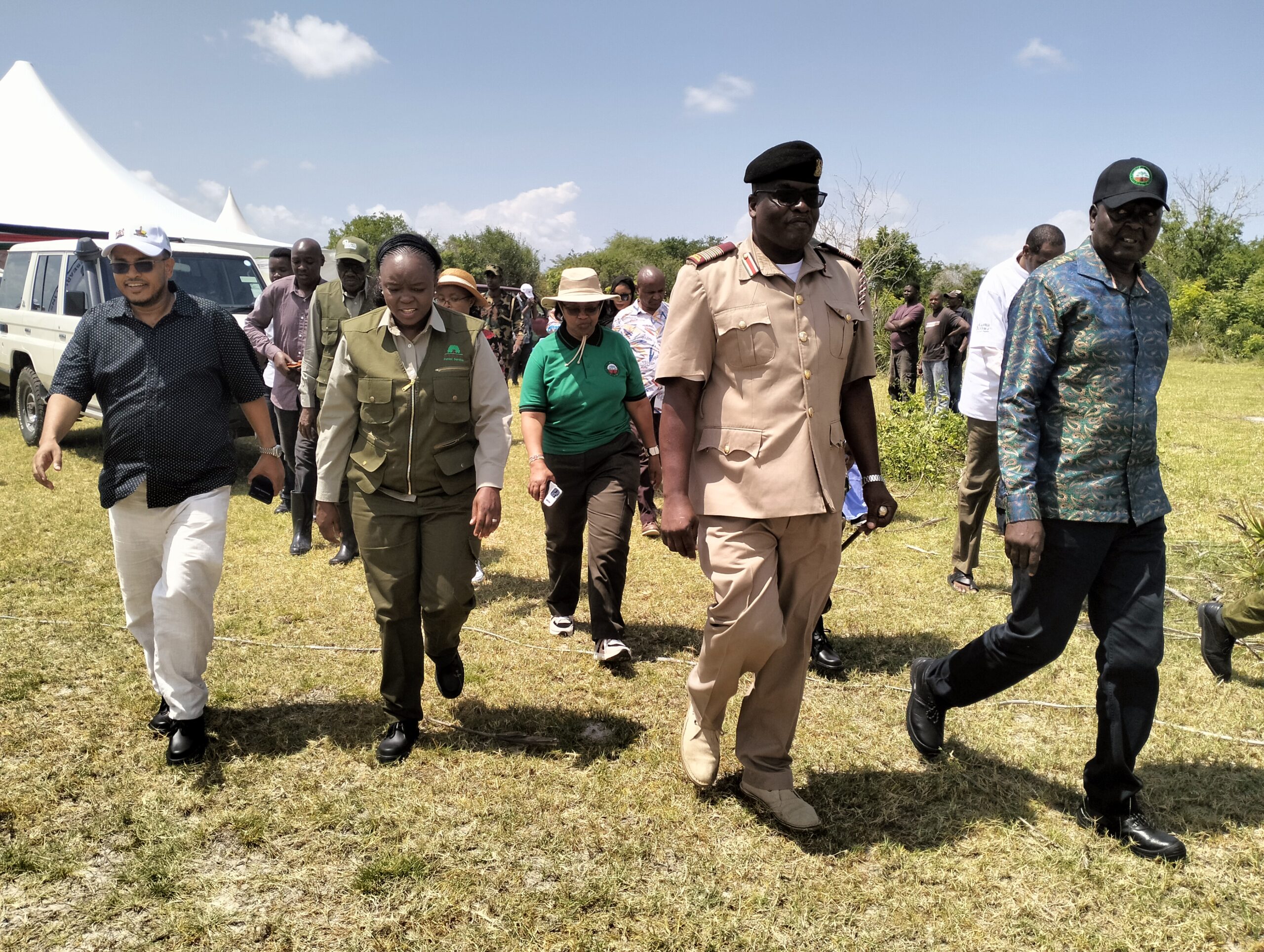
LAMU – Lamu County Commissioner Stephen Sangolo has credited the multi-agency security initiative Operation Amani Boni (OAB) with significantly lowering insurgency threats across the region, though he cautioned that isolated risks from Al-Shabaab militants still linger.

Speaking in an interview on Sifa FM, Sangolo stated that the national government initiative launched in September 2015 to counter militants operating from neighboring Somalia and within the dense Boni Forest enclave has effectively stabilized the local security landscape after years of violent disruption.

Sangolo commended the unified strategy maintained by the Kenya Defence Forces (KDF), the National Police Service (NPS), and National Government Administration Officers (NGAO). While observing that coordinated field intelligence and joint patrols have effectively neutralized main insurgent networks and prevented major attacks in recent years, he emphasized that the county is not completely out of the woods yet.

Consequently, he urged residents along the Kenya-Somalia border and inside Boni Forest to maintain close cooperation with security forces by reporting any suspicious individuals in their neighborhoods.

The marked reduction in militant activity has accelerated calls from local political leaders and community members for the national government to capitalize on the peace gains by expanding physical and social infrastructure throughout Boni Forest.

At a ceremony in Kiangwe Village marking the handover of eight new Junior Secondary School (JSS) classrooms constructed through the Lamu East NG-CDF in partnership with the KDF and the Deris Wanaag organization Lamu East MP Ruweida Obbo stressed that long-term security in the region depends heavily on opening up isolated communities through expanded educational access.

To ensure students across Boni Forest can pursue secondary education without safety hazards or long-distance travel, MP Obbo proposed constructing a centralized boarding Junior Secondary School and Senior Secondary School in Kiangwe. This planned facility would serve learners from scattered settlements, including Milimani, Basuba, Mangai, Mararani, and Bodhei.

Obbo noted that providing a secure, centralized learning environment would directly address persistent social challenges in the region, such as high dropout rates, early marriages, and teenage pregnancies.

Local residents supported the proposed educational reforms, framing infrastructure expansion as a critical step toward ending decades of economic and social marginalization.

Area residents Omar Walaba and Fatuma Shizo urged government agencies to fast-track the establishment of boarding facilities and modern transit links, maintaining that permanent road networks and functional schools will eliminate the geographical isolation that militants previously exploited, thereby reinforcing the gains achieved on the security front.

JSC names Robert Kibet Kibor new registrar after 14 years at commission

0

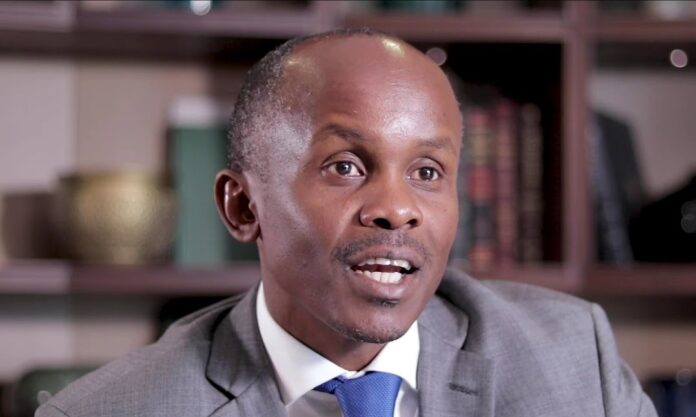
The Judicial Service Commission (JSC) has officially appointed Robert Kibet Kibor as its new Registrar pursuant to Section 10(2) of the Judicial Service Act. The decision follows a competitive recruitment process initiated earlier this year with vacancy advertisements in January and interviews held on June 30.

In a statement released on Monday, September 7, 2026, the JSC confirmed that Kibor will provide strategic leadership and oversight across the Commission’s technical and shared services functions, while spearheading institutional effectiveness, governance, and administration of justice initiatives.

The substantive position became vacant in March 2024 following the appointment of former Registrar Hon. Winfridah B. Mokaya to Chief Registrar of the Judiciary. During the interim period, Hon. Isaac Wamaasa served as the Acting Registrar to ensure operational continuity.

As Registrar, Kibor will report directly to the Chief Registrar of the Judiciary and the Secretary to the Commission.

Kibor brings over 14 years of legal practice and institutional administration experience to the office.

Joined the JSC in 2012 as a Legal Researcher and steadily rose through the ranks, most recently serving as Assistant Director of Legal Services.

Holds a Master of Arts in International Relations (Foreign Policy and Diplomacy) from United States International University (USIU), a Bachelor of Laws (LL.B) from Moi University, and a Postgraduate Diploma from the Kenya School of Law.

Graduate of the Strategic Leadership Development Programme at the Kenya School of Government.

The Commission expressed confidence in Kibor’s capabilities, citing his institutional knowledge and track record as key assets to strengthen the judicial system’s governance and operational standards.

Kalonzo warns Ruto over chaotic crackdown on foreign traders

0

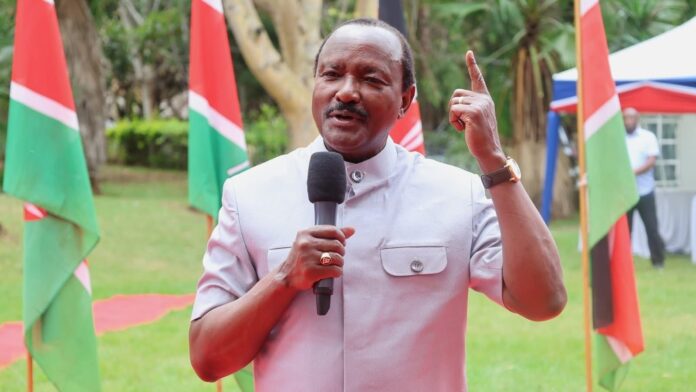
Wiper Patriotic Front leader Kalonzo Musyoka has publicly called out President William Ruto’s administration over its ongoing operation against foreign nationals engaged in small-scale trading and hawking across the country, terming the crackdown a “manufactured crisis” lacking strategy and governance.

Speaking via a statement released on Monday, the former Vice President accused the government of using the enforcement drive to project power rather than solve the underlying economic pressures facing local business owners.


Kalonzo warned that executing a “crackdown without strategy” risks stoking diplomatic fallout and escalating tensions between Kenya and neighboring East African nations. He noted that the rushed policy had caused widespread panic, forcing affected foreign traders—particularly Burundians—to scramble for emergency travel processing outside their embassies.

According to the opposition figure, foreign traders are not the primary threat to Kenya’s micro, small, and medium enterprises (MSMEs). Instead, he cited systemic corruption, punitive taxation, erratic government policies, and a high cost of doing business as the actual root causes stifling local hawkers and retailers.

Kalonzo demanded immediate transparency regarding how immigration authorities process affected individuals. He urged President Ruto to abandon aggressive administrative raids in favor of structured regional dialogue, rule of law, and fair trade processing.

The Wiper leader’s sharp rebuke follows President Ruto’s directive instructing trade and immigration officials to bar foreign nationals from small-scale retail and hawking to reserve those livelihoods exclusively for Kenyan citizens.

Dr. James Mworia appointed founding CEO of Kenya’s National Infrastructure Fund

0

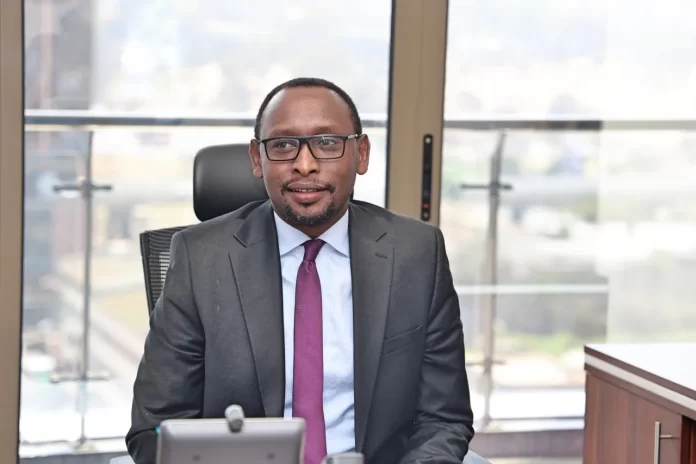
The Board of Directors of the National Infrastructure Fund (NIF) has appointed veteran corporate executive Dr. James Mworia, MBS, as the institution’s founding Chief Executive Officer, effective immediately.

The announcement comes following a competitive recruitment process as the government moves to operationalize the state-backed fund. Establish in March 2026, the NIF is tasked with mobilizing up to KSh 5 trillion in private, institutional, and international capital to finance major public infrastructure projects while reducing Kenya’s reliance on public debt and taxation.

Dr. Mworia steps into the role after serving 17 years as the Group CEO and Managing Director of Centum Investment Company PLC. During his tenure at Centum, he oversaw significant asset growth across real estate, banking, energy, and private equity.

He brings over 25 years of experience in investment management, enterprise development, and capital allocation. An Advocate of the High Court of Kenya, Dr. Mworia is also a Certified Public Accountant (CPA), Chartered Global Management Accountant (CGMA), and CFA charterholder.


“The Board is confident that Dr. Mworia’s record of building institutions and enterprises, mobilising capital and bringing investments to market will enable NIF to deliver critical infrastructure, deepen Kenya’s capital markets, raise productivity and strengthen Kenya’s competitiveness.”

As founding CEO, Dr. Mworia will transition from his previous oversight role as an NIF board member—a position to which he was appointed in July 2026 by Treasury Cabinet Secretary John Mbadi—to executive leadership.

Following Dr. Mworia’s appointment to the state agency, Centum Investment Company PLC announced that Thomas Omondi-Achola has been named as acting Group CEO to steer the firm into its next phase.

Diana Marua urges women to choose fitness over cosmetic surgery

0

Content creator and musician Diana Marua has sparked a lively conversation online after speaking out against quick-fix cosmetic surgery, encouraging women to prioritize workout routines, discipline, and healthy living instead.

Addressing rumors that she had undergone cosmetic procedures during a brief break from social media, the mother-of-three dismissed the claims, clarifying that her transformed silhouette is the result of natural weight loss, portion control, and putting in work at the gym.


“Nothing beats putting in the work consistently. Let’s hit the gym, stay disciplined with our diet, and build sustainable healthy habits instead of relying on surgical shortcuts.”

The statement comes at a time when cosmetic procedures are gaining popularity across East Africa. Diana emphasized that while plastic surgery might offer instant gratification, physical fitness builds endurance, long-term health benefits, and authentic confidence that surgery cannot replicate.

Her comments resonated with fans, with many praising her transparency about weight fluctuations, post-baby body transformations, and the effort required to stay fit naturally.

12-day diversion at Nairobi Expressway Westlands exit starting september 8

0

Motorists using the Nairobi Expressway face minor traffic diversions starting Tuesday, September 8, 2026, due to scheduled maintenance and elevated overpass deck construction past the Westlands Exit.

The operator, Moja Expressway Company, confirmed that the 12-day maintenance window will run until 5:00 PM on Sunday, September 20, 2026.

Drivers exiting at the Westlands ramp will be diverted to rejoin the lower A8 Highway along Waiyaki Way.

Traffic marshals and police officers will be stationed along the affected segment to direct traffic flow.

Commuters traveling between JKIA, the CBD, and Westlands are advised to plan for minor delays during peak hours or follow directions provided by traffic marshals throughout the maintenance period.

Doctors threaten nationwide strike over unresolved healthcare crisis

0

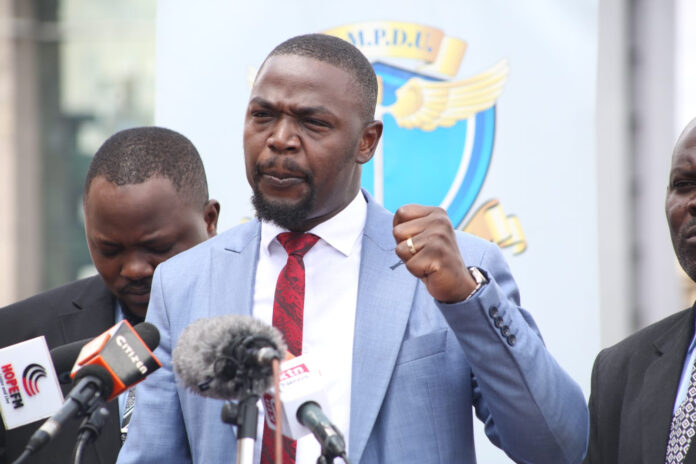
The Kenya Medical Practitioners, Pharmacists and Dentists Union (KMPDU) has issued a seven-day ultimatum, threatening a nationwide strike if the government fails to address escalating healthcare disputes.

Speaking on the brewing crisis, KMPDU Secretary General Dr. Davji Atellah declared that doctors can no longer shoulder the systemic failures burdening the country’s public health sector.


“Doctors cannot continue shouldering the heavy burden of a collapsing system while critical issues in public health remain ignored,” Atellah emphasized.

Lingering labor disputes affecting nurses and auxiliary medical personnel that directly impact healthcare delivery.

Severe understaffing, lack of essential medical supplies, and overworking of medical personnel in public health facilities.

Continued delays in fulfilling previous Collective Bargaining Agreements (CBAs) and addressing statutory obligations.

Atellah warned that if negotiations fail to yield actionable resolutions within the seven-day window, healthcare operations in public hospitals nationwide will face complete disruption.

Tanzania mourns passing of first gentleman Hafidh Ameir Hassan

0

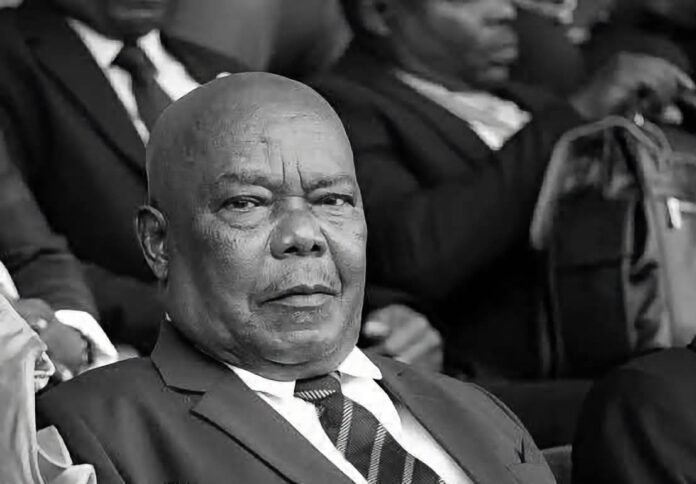
Tanzania has entered a period of national mourning following the death of Hafidh Ameir Hassan, the husband of Tanzanian President Samia Suluhu Hassan.

Tanzanian Deputy President Deogratius Ndejembi announced the news during an official address, confirming that Hassan passed away on Monday morning, September 7, at approximately 8:00 AM. He was receiving treatment for a heart condition at Mlimani Mzena Memorial Hospital at the time of his passing.

“It is with deep sorrow that I inform you of the passing of Honorable Hafidh Ameir Hassan, husband to the President of the United Republic of Tanzania, Her Excellency Dr. Samia Suluhu Hassan,” Ndejembi stated, extending official condolences to the Head of State, her family, and the nation.

Jalang’o questions Eric Omondi’s ambitious bid to slash counties from 47 to 8

0

Lang’ata MP Phelix Odiwuor, popularly known as Jalang’o, has publicly challenged activist and comedian Eric Omondi over his ambitious popular-initiative campaign to reduce Kenya’s counties from 47 to 8.

The clash unfolded as Omondi intensified his signature-collection drive under the “#PunguzaMzigo” banner, aiming to consolidate Kenya into eight regional blocks modeled after the country’s former provinces. Omondi argues that the current devolved administrative structure is an unsustainable financial burden that breeds corruption and over-representation. He claims the savings generated by abolishing 39 county governments and various nominated legislative seats could fully fund free education from primary school through university.

Jalang’o, however, threw cold water on the campaign, raising strict constitutional and procedural roadblocks that stand in Omondi’s path.

Jalang’o questioned how Omondi expects a bill to pass through Parliament when it seeks to abolish the very seats occupied by the lawmakers voting on it. “Even if you collected 50 million signatures, it will still come to Parliament to be voted on by the same people you want to do away with,” the MP noted.

Under Article 257 of the Constitution, a popular initiative requires at least one million verified signatures. Jalang’o reminded Omondi that he must also meet strict geographical thresholds, including securing signatures from at least 20% of registered voters across the counties.

Before reaching a national referendum, any draft bill amending the structure of devolved government must be approved by a majority of the 47 county assemblies—the exact administrative bodies Omondi’s plan targets for downsizing.

Jalang’o suggested Omondi should have submitted his recommendations during official constitutional review forums, such as the recent Katiba @ 16 celebrations.

Despite the criticism, Omondi remains defiant, announcing that his team has already gathered over 450,000 signatures from regions including Kakamega, Meru, and Mombasa, and aims to trigger a national referendum alongside the 2027 General Election.